
Sherry Rehman raises alarm over Rawal Dam ‘pollution’
Polluted water is currently being supplied to residents of Islamabad and Rawalpindi, posing a significant public health risk
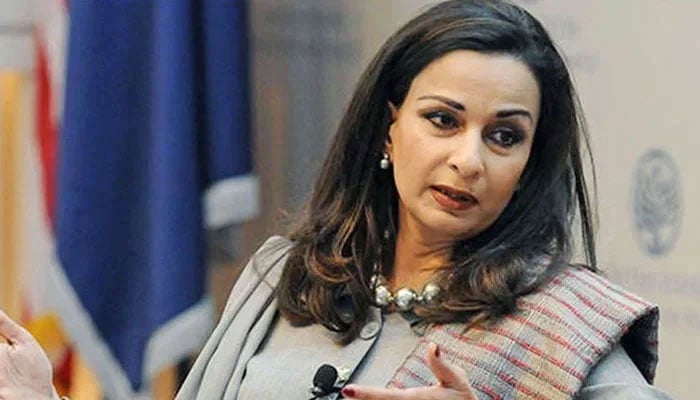
ISLAMABAD: The Senate Standing Committee on Climate Change raised serious concerns about the lack of action by the Capital Development Authority (CDA) concerning the pollution of the Rawal Dam, where 9 million gallons daily (MGD) of sewage is disposed of without treatment.
This polluted water is currently being supplied to the residents of Islamabad and Rawalpindi, posing a significant public health risk.
The meeting of the Senate Standing Committee on Climate Change was chaired by Senator Sherry Rehman here at Parliament House on Wednesday. Sherry Rehman formed a two-member sub-committee, headed by Senator Shahzaib Durrani, to inspect the pollution at Rawal Dam and submit a detailed report. The inspection would provide an assessment of the pollution levels and recommend immediate actions to mitigate the damage. Chairperson Senator Sherry Rehman asked the CDA “Will the residents of Islamabad and Rawalpindi continue to receive this contaminated water until sewage treatment plants are installed?” She also criticised the CDA for its failure to make substantial progress on the installation of sewage treatment plants, despite three years of tendering processes. She also asked the CDA to disclose the cost of desilting Rawal Dam, which is crucial for maintaining its capacity and ensuring the quality of water supplied to the capital city. She called for the initiation of the “Recharge Rawal” project and emphasised stopping the drainage of sewage and industrial effluents into the dam.
The senator also directed the Ministry of Climate Change to provide a comprehensive report on the progress in renewable energy and fossil fuel sectors. She stressed that Pakistan cannot afford to lose further market influence and emphasised the importance of evaluating the sustainability of these industries, with a particular focus on ensuring provincial cooperation. The officials reported that $441 million has already been approved for the National Adaptation Plan, and a complete costing analysis will be available by the end of November 2024. However, Senator Sherry Rehman expressed concern that climate change issues were not prioritised in the previous Economic Survey of Pakistan. She pointed out that, in other countries, climate issues are central to policy-making, with future exports being increasingly tied to environmental sustainability. Furthermore, the EU’s Carbon Border Adjustment Mechanism was highlighted as a critical issue, with Senator Rehman noting the potential impact on Pakistan’s market access in the EU. She called for provincial cooperation to ensure compliance with the new regulations and mitigate any negative effects on the country’s industrial supply chain due to carbon footprint. Sherry further highlighted that despite being a low emitter, Pakistan is on the frontlines of climate change, experiencing severe impacts such as rapidly melting glaciers. She emphasised the need for ongoing dialogue with relevant stakeholders to keep the country’s climate challenges in focus. She pointed out that Pakistan is considered one of the hottest places during summer, contributing to accelerated glacier melt. However, she noted with concern that climate financing often overlooks the need for mitigation. She also suggested that the government should prioritize community resilience in response to glacier melt, given Pakistan’s heavy reliance on glaciers for its water supply. She stressed the importance of conducting a detailed analysis of this issue and announced that the Senate Committee would visit Skardu to gain first-hand knowledge of glacier melt and evaluate the actions taken in this regard. Sherry expressed concern over the Ministry’s lack of clarity over its responsibilities, evolution, compliance with international treaties, and overall scope of work. She noted that the Ministry suffers from a shortage of technical experts, which hinders its effectiveness. To address this, she suggested establishing a dedicated occupational group for Climate Change within the civil service, similar to other specialized groups, to ensure the Ministry of Climate Change has the depth and expertise to tackle the environmental challenges. The Chairperson also expressed her disappointment at the ongoing use of single-use plastics in various ministries, despite previous directives for regulation. “The ministry was told to brief on plastic regulations, but even today, no briefing is being given,” she stated, emphasizing the need for immediate action. “Take the committee’s orders seriously. If non-seriousness is shown now, strict action will be taken.”







-
 Caitlin O’Connor Says Fiance Joe Manganiello Has Changed Valentine’s Day For Her
 -
 Rachel Zoe Sends Out Message For Womne With Her Post-divorce Diamond Ring
 -
 James Van Der Beek's Final Conversation With Director Roger Avary Laid Bare: 'We Cried'
 -
 Jaden Smith Walks Out Of Interview After Kanye West Question At Film Premiere
 -
 Why Halle Berry Wasn't Ready For Marriage After Van Hunt Popped Question? Source
 -
 Michelle Obama Gets Candid About Spontaneous Decision At Piercings Tattoo
 -
 Bunnie Xo Shares Raw Confession After Year-long IVF Struggle
 -
 Brooks Nader Reveals Why She Quit Fillers After Years
 -
 Travis Kelce Plays Key Role In Taylor Swift's 'Opalite' Remix
 -
 How Jennifer Aniston's 57th Birthday Went With Boyfriend Jim Curtis
 -
 JoJo Siwa Shares Inspiring Words With Young Changemakers
 -
 James Van Der Beek Loved Ones Breaks Silence After Fundraiser Hits $2.2M
 -
 Disney’s $336m 'Snow White' Remake Ends With $170m Box Office Loss: Report
 -
 Travis Kelce's Mom Donna Kelce Breaks Silence On His Retirement Plans
 -
 Premiere Date Of 'Spider-Noir' Featuring Nicolas Cage Announced
 -
 Pedro Pascal's Sister Reveals His Reaction To Her 'The Beauty' Role