
Polio claims life in Balochistan’s Kharan
Child developed a high-grade fever and paralysis in both lower limbs and neck muscles on July 31, 2024
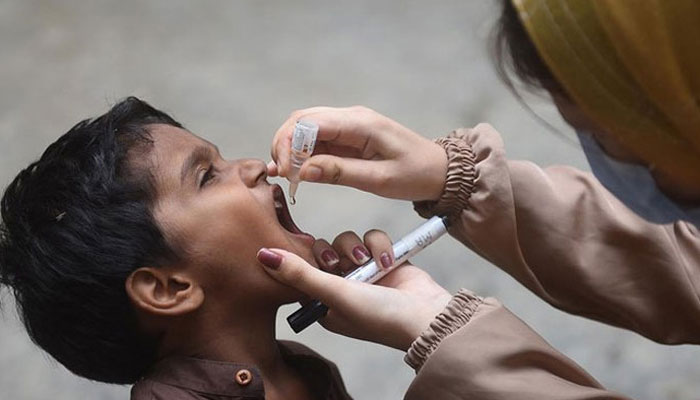
ISLAMABAD: A 23-month-old girl from Union Council South City-A, Tehsil Kharan, District Kharan, Balochistan, has died after contracting wild poliovirus type 1 (WPV1), officials reported on Tuesday. This is the 12th polio case in Balochistan and the 15th in Pakistan this year.
“A 23-month-old girl from District Kharan, Balochistan, was affected by the poliovirus and passed away yesterday at a hospital in Quetta. This is the 12th polio case from Balochistan and the 15th in Pakistan in 2024,” an official from the Polio Eradication Initiative (PEI) told The News.
According to officials, the child developed a high-grade fever and paralysis in both lower limbs and neck muscles on July 31, 2024. Despite her worsening condition, her family initially kept her at home, seeking treatment from a local informal healthcare provider on August 4.
“On August 7, the child was taken to a private hospital, where she was identified as an Acute Flaccid Paralysis (AFP) case. Health officials began investigating the case the same day and collected stool samples for laboratory analysis,” the PEI official said. Clinical examination revealed that the child had hypotonia in both lower limbs.
The child passed away on August 19, 2024, at Quetta Hospital, where she had been admitted for treatment, officials confirmed. Efforts are currently underway to verify the child’s vaccination history, including her participation in routine immunization (RI) with Oral Polio Vaccine (OPV), Inactivated Polio Vaccine (IPV), and Supplementary Immunization Activities (SIAs), according to PEI officials.
“This tragic case underscores the persistent risk of polio in Pakistan, particularly in regions like Balochistan, where access to healthcare and vaccination coverage remains challenging. Despite ongoing polio eradication efforts, the virus continues to paralyze and, in some cases, claim young lives, highlighting the urgent need for enhanced vaccination campaigns and public awareness,” the official added.
With this latest case, a total of 12 children have been affected by the poliovirus in Balochistan, while two cases have been reported in Karachi and one in Punjab this year.
“Balochistan is facing an intense outbreak of WPV1 following disruptions to polio vaccination campaigns last year, and vulnerable children are now suffering the consequences of missing a crucial vaccine that offers protection from this terrible disease,” said Prime Minister’s Focal Person on Polio Eradication, Ayesha Raza Farooq.
“The virus is extremely efficient in finding those children with weak levels of immunity, showing us where we have consistently missed children, not just in polio campaigns but also in routine immunization,” she added, noting that the affected child was also diagnosed with malnutrition and unfortunately passed away.
Farooq emphasized, “Over the past few weeks, we have been preparing for the next polio campaign, working with our provincial teams to strategize on localized approaches to reach missed children and strengthen routine immunization rates. We have been very focused on identifying our weak points and working to plug these gaps ahead of the next campaign. We should soon see progress in reversing virus spread.”
The Polio Programme has conducted an extensive self-assessment in consultation with all provinces and is implementing a comprehensive roadmap to interrupt virus transmission, particularly in the high-risk districts of Balochistan, Khyber Pakhtunkhwa, and Sindh.
Anwarul Haq, Coordinator of the National Emergency Operations Center, said the Polio Programme has begun preparations for a vaccination campaign in early September to rapidly increase vaccination rates and build population immunity in polio hotspots. This campaign is being synchronized with a polio campaign in Afghanistan to ensure enhanced immunity across the cross-border region.
“Poliovirus has been found in 59 districts so far, with the most detections in the Quetta and Karachi blocs of Balochistan and Sindh. High-risk districts are our top priority, and we will make every effort to ensure that no child is missed during this campaign,” he said.







-
 Tucker Carlson Says Passport Seized, Staff Member Questioned At Israel Airport
 -
 Taylor Swift Made Sure Jodie Turner-Smith's Little Girl Had A Special Day On 'Opalite' Music Video Set
 -
 Eric Dane Says Touching Goodbye To Daughters Billie And Georgia In New Netflix Documentary
 -
 Channing Tatum Reveals What He Told Daughter After Violent Incident At School
 -
 King Charles Lands In The Line Of Fire Because Of Andrew Mountbatten-Windsor
 -
 Denise Richards Doubles Down On Abuse Claims Against Ex Husband Aaron Phypers Amid Show Return
 -
 Russia Set To Block Overseas Crypto Exchanges In Sweeping Crackdown
 -
 Gwyneth Paltrow Reveals Deep Personal Connection With Kate Hudson
 -
 Prince Harry, Meghan Markle’s Game Plan For Beatrice, Eugenie: ‘Extra Popcorn For This Disaster’
 -
 OpenAI To Rollout AI Powered Smart Speakers By 2027
 -
 Is Dakota Johnsons Dating Younger Pop Star After Breakup With Coldplay Frontman Chris Martin?
 -
 Hilary Duff Tears Up Talking About Estranged Sister Haylie Duff
 -
 US Supreme Court Strikes Down Trump’s Global Tariffs As 'unlawful'
 -
 Kelly Clarkson Explains Decision To Quit 'The Kelly Clarkson Show'
 -
 Inside Hilary Duff's Supportive Marriage With Husband Matthew Koma Amid New Album Release
 -
 Daniel Radcliffe Admits To Being Self Conscious While Filming 'Harry Potter' In Late Teens