
REAP opposes new hybrid tax system
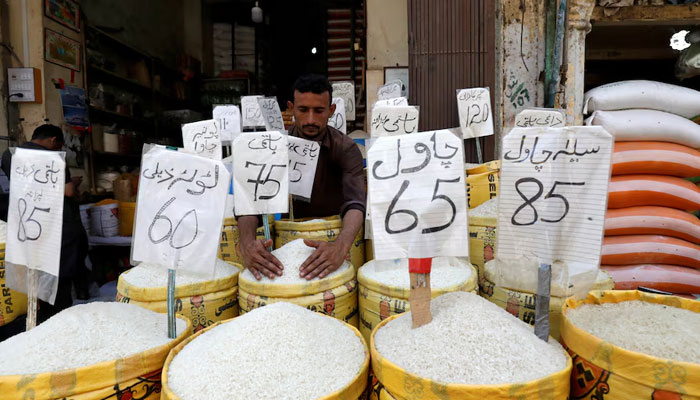
KARACHI: The Rice Exporters Association (REAP) has voiced strong opposition to the proposed hybrid tax system, arguing it could impose a hefty 60 per cent tax on profits, potentially fostering corruption within the Federal Board of Revenue (FBR) and leading to increased harassment of traders.
Acting Chairman Haseeb Ali Khan led a delegation from REAP in a meeting with Federal Minister for Finance & Revenue Senator Muhammad Aurangzeb held in Islamabad. The delegation, which included key officials such as Member-Custom Policy FBR and Member-IR Policy Ch Samee Ullah Naeem and REAP members Faisal Garib, Shahid Tawawalla, Adnan Shaikh, and Rana Faisal Shabbir, communicated the fears of traders.
During the meeting, Khan highlighted Pakistan’s robust performance in rice exports, reaching 5.9 million tonnes valued at $3.88 billion in the current fiscal year, marking a substantial 78 per cent increase in value and 65 per cent increase in volume compared to the previous year.
Khan also noted the significant contributions of REAP members in the export of sesame and maize, collectively exceeding $800 million this fiscal year. Maize exports surged by 200 per cent, while sesame exports increased by 150 per cent in volume over the past year. He emphasized that these sectors have thrived without government subsidies, relying on the private sector’s initiatives and backward farm integration, leading to substantial growth.
However, Khan expressed serious concerns over the recent shift from the final tax regime (1.0 per cent) to a hybrid tax regime (1.0 per cent minimum tax and 1.0 percent advance tax). He warned that this change could severely impact exporters, as the thin operating margins of 2-3 percent in commodity trading would be further strained. He cited that the 1-per cent minimum tax already constituted a 30 per cent tax on income, and the new regime could increase the effective tax burden to 60 per cent. Khan pointed out that this policy could lead to corruption and harassment due to FBR audits, creating an uneven playing field and discouraging exporters.
He indicated that exporters are hesitant to commit to future orders due to the fear of tax audits and recovery notices, which could have a cascading effect on farmers, particularly those expecting a bumper rice crop of over 11 million tonnes and a sesame crop of 350,000 tonnes. High markup rates, rising electricity costs, and the added tax burden could render exports unsustainable, potentially reducing export value to $2.5 billion in the coming fiscal year.
He stressed that with the sector’s average profits at 3.0 per cent, the additional Rs12.5 billion in taxes would severely impact liquidity, especially given the FBR’s track record of delayed tax refunds.
Khan urged for the swift processing of sales tax refund claims for rice exporters, as the industry struggles to bear additional financial burdens, threatening their competitiveness in global markets. He concluded by advocating for the retention of the FTR Regime of 1.0 per cent, stating that additional taxes would diminish exports, harming both foreign exchange earnings and revenue.







-
 Japan: PM Takaichi Flags China ‘Coercion,’ Pledges Defence Security Overhaul
 -
 Angorie Rice Spills The Beans On Major Details From Season 2 Of ' The Last Thing He Told Me'
 -
 Questions Raised Over Andrew Mountbatten-Windsor's Line Of Succession
 -
 'Shameless' Sarah Ferguson 'pressuring' Princess Eugenie, Beatrice For Major Reason
 -
 Teacher Arrested After Confessing To Cocaine Use During Classes
 -
 Paul McCartney Talks 'very Emotional' Footage Of Late Wife Linda In New Doc
 -
 Princess Beatrice, Princess Eugenie's Response To Andrew's Arrest Revealed
 -
 King Charles And Princess Anne Bestow Honours At Windsor Castle
 -
 King Charles 'worried' As Buckingham Palace, Royal Family Facing 'biggest Crisis'
 -
 Milo Ventimiglia Recalls First Meeting With Arielle Kebbel On The Sets Of 'Gilmore Girls' Amid New Project
 -
 Eric Dane Infuriated After ALS Diagnosis As He Feared The Disease Would Take Him Away From His Girls
 -
 It's A Boy! Luke Combs, Wife Nicole Welcome Third Child
 -
 Leading Astrophysicist Shot Dead At Southern California Home
 -
 Johnny Depp's Kind Gesture Towards Late 'Grey's Anatomy' Actor Eric Dane Before Death Laid Bare
 -
 How Princess Eugenie, Beatrice React To Andrew Arrest?
 -
 Kylie Jenner 'convinced' Gwyneth Paltrow Is 'crushing' On Timothee Chalamet: 'It's Disrespectful'