
Incidence of illicit cigarettes trade: A case study for ICT
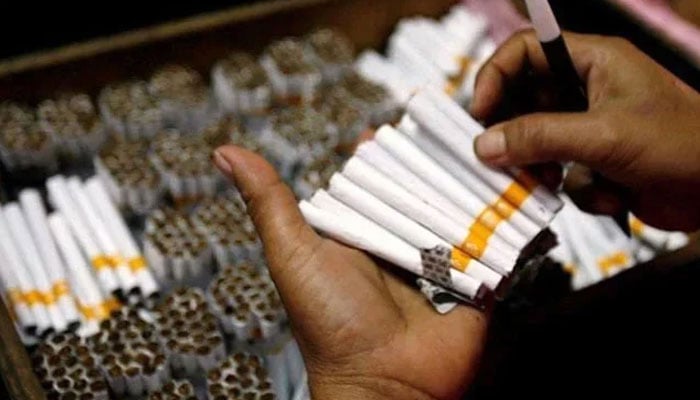
Islamabad:The World Health Organisation (WHO) refuting the claims of tobacco companies regarding the illicit cigarette trade has said that Pakistan’s actual share in this connection is 23 per cent.
The WHO study revealed, “Overall, the illicit trade of cigarettes in Pakistan accounted for 23.1% of the total trade. Locally produced cigarettes without a stamp of the tax authority are considered illicit products and account for 10.4% of the total number of packs.” The study was titled as, ‘Study on incidence of illicit trade of cigarettes in Pakistan: A case study for Islamabad Capital Territory.’ In terms of the number of packs with counterfeit tax stamps as a percentage of total packs, it was 1.9%, and smuggled cigarettes account for 10.7% of the total consumption, it stated.
The world health body in its latest report has debunked myths and the tactics employed by multinational tobacco companies to evade taxes. There had been several studies on the volume of illicit trade in Pakistan during past but they were conducted before the Track and Trace System was enforced in the country (July 2022). These studies found that illicit trade market in Pakistan ranges from 9 to 17% but they did not estimate the extent of the counterfeit issue, according to the WHO.
Quoting data from Pakistan Bureau of Statistics (PBS), the report said that tax evasion on domestically produced cigarettes in 2015-16 amounted to Rs53.8 billion. An amount of Rs38.9 billion (72.7%) was evaded by the legitimated sector by under-reporting the production and Rs14.6 billion (27.3%) was evaded, it added. Country Head of the Campaign for Tobacco-Free Kids (CTFK), Malik Imran Ahmed said, “With over 60% of the population comprising youth, it’s crucial for the government to protect them from the ills of tobacco use,” he said, “as the move is expected to generate additional revenue, surpassing Rs200 billion by year-end.”
“The most effective way to reduce tobacco consumption is to increase the price of tobacco products through higher taxes. In Pakistan, the cigarette industry claims that higher taxes trigger illicit trade, claiming smokers do not quit and opt for non-duty-paid cigarettes because they cost less,” the study said. The world’s top health body emphasized that the prices of tobacco products in Pakistan should be increased by taxing the tobacco industry.


