
Green loans
Declining costs have made EVs and distributed solar photovoltaic systems (rooftop solar) feasible alternatives
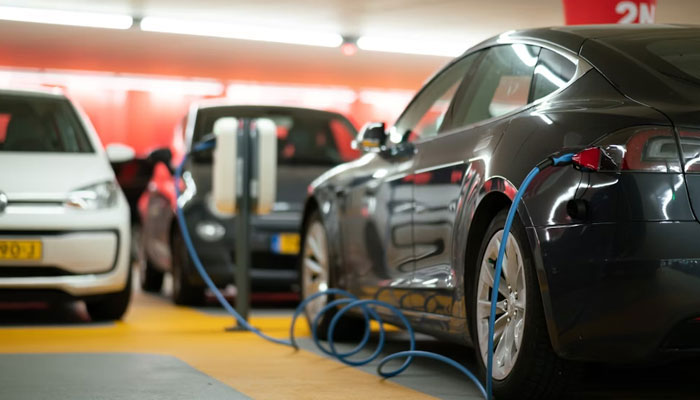
Pakistan finds itself at a critical juncture in its energy transition narrative, facing the dual challenge of meeting its energy demands while addressing environmental concerns.
With a goal of slashing emissions by 50 per cent by 2030, Pakistan’s national determined contribution (NDC) ambitiously plans to shift 60 per cent of its energy mix to renewables and ensure that 30 per cent of new vehicle sales are electric by the end of the decade. However, despite these aspirations, the transition to sustainable energy in the transport and residential sectors is hampered by financial obstacles.
The declining costs and improved efficiency have made electric vehicles (EVs) and distributed solar photovoltaic (DSPV) systems (rooftop solar) feasible alternatives to traditional means of transport and electricity generation. Yet, their high initial costs present a significant barrier for adopters. While financial institutions play a pivotal role in bridging this gap, their reluctance to engage in green lending persists.
Only 41 per cent of private banks are extending loans for DSPV. While the State Bank has launched a green financing scheme called the State Bank of Pakistan Renewable Energy Financing Scheme (SBPREF), not all banks have chosen to embrace the facility or extend financing under it. Only 4.0 per cent of banks in Pakistan are involved in financing EVs.
This reluctance stems from concerns such as high default risk in case of non-payment from consumers; low returns in terms of low profit margins; non-existent formal secondary markets for the resale of solar panels or EVs; low demand of green products; and process complexity associated with green lending. Even the extension of the concessional financing scheme from the SBP could not persuade most private banks to fully commit to green lending initiatives.
The SBP launched the renewable energy (RE) scheme with the goal of promoting renewable energy adoption. Nevertheless, most banks opted out of the lending facility because the scheme was voluntary. Banks which provided funding under this scheme increased securitization by altering loan requirements (collateral requirements, high down payments and short loan tenors for instalments) which restricted the scope of the facility to a small group of population.
The RE scheme is currently paused, as the central bank has stopped providing funds to banks for the programme. Due to the restricted coverage of the SBP scheme, a separate programme was created to address EV financing needs. However, the subsidized loan programme for e-bikes and e-rickshaws, approved in April 2023, has not been put into effect.
To overcome these challenges and unlock Pakistan’s green potential, a multifaceted approach is necessary. This approach involves revisiting regulatory frameworks, enhancing public-private partnerships, establishing confidence-building measures with improved monitoring and evaluation, and exploring innovative financing mechanisms. Similarly, drawing insights from peer countries like Bangladesh, China, India and Thailand can also provide valuable lessons for effective policy interventions.
Revisiting regulatory frameworks is a critical first step in creating a conducive environment for green financing. Strengthening existing regulations through improved taxonomy, obligatory financing, and effective implementation can provide the necessary impetus for green investments. Countries like Bangladesh and India have already revised their regulatory frameworks governing renewable energy financing schemes, offering attractive interest rates of 5-6 per cent and loan tenor of eight years to incentivize sustainable consumer lending of green products.
Similarly, India’s Faster Adoption and Manufacturing of Electric Vehicles (FAME) scheme provides direct subsidies under the revised regulatory framework. The scheme also focuses on establishing public charging stations to scale up EV adoption among people.
Establishing confidence-building measures is also crucial to address banks’ concerns regarding investment risks. Effective risk-sharing mechanisms and formal secondary markets for green products can mitigate perceived risks and encourage greater participation from financial institutions.
Exploring innovative financing mechanisms is another key aspect of overcoming financial barriers. Green bonds, revolving funds and specialized financing models with favourable terms can incentivize participation and mobilize capital for green investments. Countries like Thailand have pioneered innovative financing approaches, such as the energy efficiency revolving fund and a unique ‘solar to zero’ initiative offering zero per cent interest with no collateral, highlighting an innovative financing approach.
Public-private partnerships play a pivotal role in incubating funding platforms, leveraging international funding, and paving the way for the implementation of guarantor models for risk mitigation. Collaborating with international organisations and private entities can provide the funding and expertise to accelerate the green energy transition.
Successful initiatives like Bangladesh’s IDCOL SHS programme and India’s Surya Shakti Scheme offer great insights into effective partnership models utilizing dedicated credit lines from international financial institutions and extending social collateral for risk mitigation.
Lastly, implementing rigorous monitoring and evaluation mechanisms are essential to ensure transparency, accountability, and simultaneously expediting green lending. Like Bangladesh’s CAMELS rating for private banks, the SBP can implement robust rating mechanisms to enhance participation in green banking activities from the private banks.
Pakistan stands at a pivotal moment in its energy trajectory, with the opportunity to embrace renewable energy and electric vehicles as catalysts for sustainable development. By addressing financial hurdles and creating an enabling environment through policy interventions, Pakistan can unlock its green potential and pave the way for a sustainable energy future.
The writers are research associates at the Policy Research Institute for
Equitable Development (PRIED).


