
Secondary market yields drop, Kibor falls as investors bet on rate cut
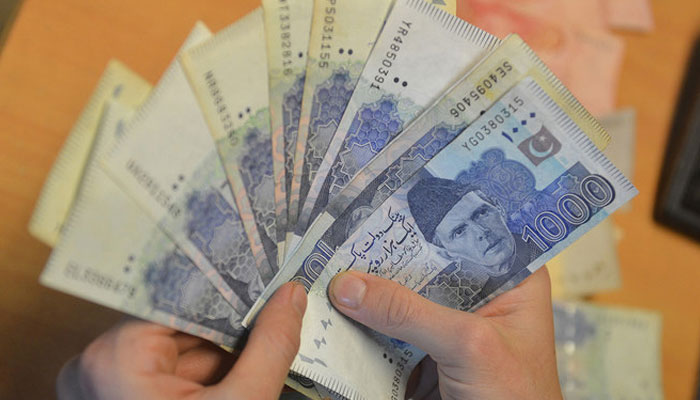
KARACHI: The yield on one-year Market Treasury Bill fell to more than 14-month lows in the money market on Thursday following a decline in yields across all tenors in the previous day's auction, which raised expectations of rate cuts in the upcoming policy review scheduled for next month.
The cut-off yields in the secondary market saw a day-on-day decline across the board, with a notable decline of 62 basis points (bps) witnessed in a 12-month note (cut-off lowest since March 2, 2023), according to data on the secondary market treasury and bond rates from brokerage Arif Habib Limited.“This day-to-day decline comes in anticipation of the likelihood of a rate cut in June 2024 monetary policy,” the brokerage said.
Three-month paper yields fell by 52 bps, while six-month T-bill yields declined by 39 bps. Pakistan Investment Bonds (PIBs) with terms of three years, five years, and ten years had rate decreases of 17 bps, 11 bps, and 6 bps, respectively.
Investors are flocking to buy one-year T-Bills following Wednesday’s auction, where a whopping 9 out of 10 investors missed out on securing the 1-year paper, said Muhammad Sohail, the CEO of Topline Securities.“As a result, the yield on 1-year T-Bills has dipped below 20 percent (20.4 percent cut-off) for the first time in 14 months, signaling a significant shift in market sentiment,” Sohail added.“With this development, the market is now anticipating a more substantial cut in interest rates, setting the stage for potential changes in monetary policy.”
The Karachi interbank offered rate (KIBOR ), the average interest rate at which banks want to lend money to other banks, also declined.The six-month KIBOR fell by 21 bps on a day-on-day basis to 21.35 percent. The nine-month KIBOR decreased by 55 bps to 20.97, while the 12-month KIBOR declined by 55 bps to 20.55 percent.
Now that the situation is interesting it will be notable to see how the State Bank of Pakistan reacts to the sentiment and expectations of the market. Whether it will follow the International Monetary Fund's advice and maintain interest rates higher for longer, despite indications that inflationary pressures are abating.
The government is holding discussions with the IMF on a new loan programme.Despite pressure from stakeholders to start monetary easing due to declining inflation, which has increased the difference between the 22 percent interest rate and the anticipated 13 to 15 percent estimated consumer price index inflation in May, the IMF country report made it apparent that the Fund was willing to see no change in the interest rate.“Considering the risks to inflation and the criticality of re-anchoring expectations to the SBP’s medium-term inflation objective, staff welcomed the MPC’s decision to keep policy rates on hold,” the IMF said in its latest staff report.“The authorities agreed that any loosening of the policy stance should be supported by further evidence that inflation remains on a declining trend, pass-through remains contained, and possible exchange rate pressures from FX market normalization are limited,” it said.
“Monetary policy should remain data-driven and attentive of stickiness in core inflation, as well as resolutely address any emerging risk. Guiding inflation back to target is imperative not only to buttress a sustainable recovery but also to build central bank credibility”.
In addition to the burden of paying high interest on domestic debt, businesses are also feeling the heat from rising borrowing costs.The SBP’s data showed that the interest payment on domestic debt rose to Rs4.758 trillion in July-March FY24 from Rs3.087 trillion last year.
According to the SBP's most recent report, interest payments as a percentage of GDP climbed from 3.7 percent in FY23 to 4 percent in July–December of this fiscal year.Additionally, in the first half of FY24, interest payments as a percentage of total revenue increased to 61.6 percent from 59.1 percent in the same period last year.


