
Scientists claim to have found another distinct genetic form of Alzheimer’s
The variant, known as ApoE4, has long been known to increase the risk of developing Alzheimer’s
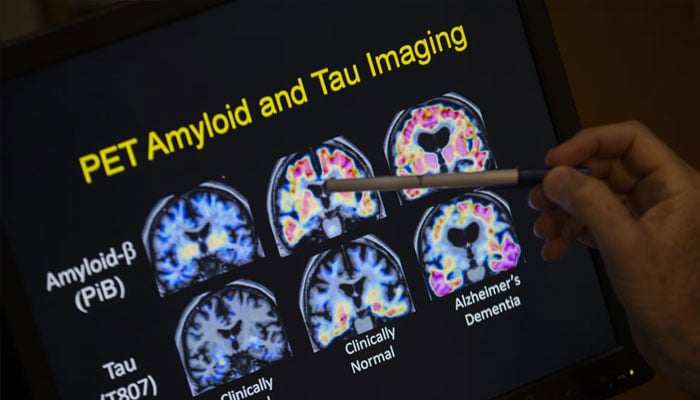
CHICAGO: Having two copies of a gene variant known to predispose people to Alzheimer’s could in fact represent a distinct genetic form of the disease, researchers have said.
The variant, known as ApoE4, has long been known to increase the risk of developing Alzheimer’s, with two copies conferring greater risk than one.Now research has revealed almost everyone with two copies of the variant goes on to develop Alzheimer’s disease (AD), suggesting it is not only a risk factor but a cause.
“Over 95 percent of the individuals (with two copies of ApoE4), have AD pathology either in the brain or in the biomarkers that we analysed,” said Dr Juan Fortea, the co-author of the research from the Sant Pau hospital in Barcelona.
His team said the predicability of the age at which symptoms began was similar to other genetic forms of the disease such as autosomal-dominant Alzheimer’s disease (ADAD) and Alzheimer’s disease in Down syndrome (DSAD).
Dr Victor Montal, a co-author from Barcelona Supercomputing Center, said the research had catalysed a paradigm shift in the understanding of the disease.“Whereas previously, the etiology of dementia was known in less than 1 percent of cases, our work has now enabled the identification of causative factors in over 15 percent of instances,” he said.
However, the study did not shed light on the risk of developing dementia itself for people with two copies of ApoE4.Writing in the journal Nature Medicine, the researchers reported how postmortem results from 3,297 brain donors revealed nearly all of the 273 donors with two copies of ApoE4 showed signs of Alzheimer’s in the brain.
The researchers also analysed clinical data from more than 10,000 people, revealing that by the age of 65, almost all of the 519 people with two copies of ApoE4 had abnormal levels of a protein involved in Alzheimer’s, known as amyloid beta, in their cerebrospinal fluid, and 75 percent had positive amyloid scans. The prevalence of biomarkers for the disease also increased with age.
The team added that the age of symptom onset was about seven to 10 years earlier in people with two copies of ApoE4, at about 65 years, compared with those without the variant.







-
 'Elderly' Nanny Arrested By ICE Outside Employer's Home, Freed After Judge's Order
 -
 Keke Palmer On Managing Growing Career With 2-year-old Son: 'It's A Lot'
 -
 Key Details From Germany's Multimillion-euro Heist Revealed
 -
 David E. Kelley Breaks Vow To Cast Wife Michelle Pfeiffer In 'Margo's Got Money Troubles'
 -
 AI-powered Police Robots To Fight Crime By 2028: Report
 -
 Everything We Know About Jessie J's Breast Cancer Journey
 -
 Winter Olympics 2026: What To Watch In Men’s Hockey Today
 -
 Winnie Harlow Breaks Vitiligo Stereotypes: 'I'm Not A Sufferer'
 -
 Apple Martin Opens Up About Getting 'crazy' Lip Filler
 -
 Why Did OpenAI Remove One Crucial Word From Its Mission Statement?
 -
 Prince William Warned His Future Reign Will Be Affected By Andrew Scandal
 -
 Amy Madigan Reflects On Husband Ed Harris' Support After Oscar Nomination
 -
 Is Studying Medicine Useless? Elon Musk’s Claim That AI Will Outperform Surgeons Sparks Debate
 -
 Margot Robbie Gushes Over 'Wuthering Heights' Director: 'I'd Follow Her Anywhere'
 -
 'The Muppet Show' Star Miss Piggy Gives Fans THIS Advice
 -
 Sarah Ferguson Concerned For Princess Eugenie, Beatrice Amid Epstein Scandal