
Black carbon challenge, game-changing solutions
Amid Lahore’s annual battle with a suffocating haze, a groundbreaking study led by scientists Dr Zaeem Bin Babar and Mashhood Urfi exposes critical insights into the pervasive issue of black carbon (BC). Found in fine particulate matter (PM2.5), BC results from incomplete combustion of fossil fuels and biomass, particularly from vehicular emissions. Commonly known as soot, BC significantly contributes to urban air pollution, with far-reaching global and local consequences, including its capacity to disrupt global radiative balance and impact health.
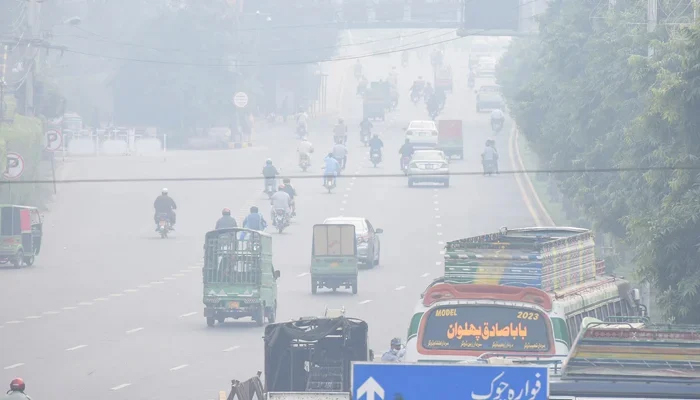
In a first-of-its-kind initiative, scientists from the Global Change Impact Studies Centre (GCISC), Ministry of Climate Change and Environmental Coordination (MOCC&EC), Pakistan, and the Institute of Energy and Environmental Engineering (IEEE), University of the Punjab Lahore, collaborated with international experts, shedding light on a comprehensive BC emissions inventory and scenario analysis in Pakistan. This pioneering research provides a baseline for tracking progress, identifies the primary sources of BC emissions, and equips policymakers with evidence-based insights for effective interventions.
The study, employing the GAINS model, evaluated BC emissions across seven major sectors and fifteen sub-sectors, highlighting the significant role of residential fuel consumption, particularly fuelwood usage, in contributing to 58.5% of total BC emissions. The transport and industry sectors emerged as major contributors, demanding targeted policies to address diesel-fueled vehicles and industrial processes.
Projected trajectories under different scenarios emphasise the urgency of implementing strategies to reduce BC emissions. The study advocates for residential fuel-switching programmes, emission standards for vehicles, and measures to control the open burning of waste. The National Clean Air Policy (NCAP) and provincial initiatives in Punjab are recognised as essential frameworks, emphasising the need for sustained monitoring and enforcement.
Implementing electric vehicle (EV) policies and expanding electricity-based mass transit are recommended measures to control BC emissions. The study underscores the government’s role in promoting cleaner technologies, public awareness campaigns, and stakeholder engagement to ensure successful implementation.
As Pakistan stands on the cusp of transformative change, combating BC emissions becomes pivotal for creating a healthier environment. Dr. Zaeem Bin Babar and Mashhood Urfi, the authors of this study, envision a cleaner, more sustainable future for the nation, shaped by collective efforts to address this critical environmental challenge— Dr. Zaeem Bin Babar and Mashhood Urfi (The former is an assistant professor at the Institute of Energy and Environmental Engineering, University of the Punjab, Lahore and the latter is an SDG counsellor and senior academic and research student at the Institute of Energy and Environmental Engineering, University of the Punjab, Lahore.)


