
Climate change behind extreme Amazon drought: study
Some experts have suggested arrival of naturally occurring El Nino weather phenomenon behind tinderbox conditions
PARIS: Climate change was the chief driver of the devastating drought that gripped the Amazon last year, say researchers, as warming threatens one of the world´s most important ecosystems for stabilising the global climate.
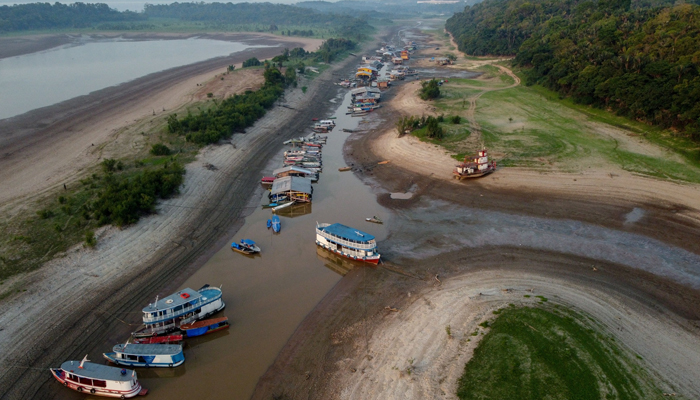
The historic agricultural drought affected millions of people across the Amazon basin, stoking huge wildfires, shrinking key waterways and taking a calamitous toll on wildlife.
Some experts have suggested that the arrival of the naturally occurring El Nino weather phenomenon was behind the tinderbox conditions.
But a new study from scientists at the World Weather Attribution (WWA) group, published Wednesday, found that climate change caused by humanity´s planet-heating carbon pollution was the main culprit. They said it had made the drought 30 times more likely from June to November 2023.
And they warned that the situation would only get worse as the climate warms, pushing the Amazon towards a climate “tipping point”.
Scientists fear that climate change and deforestation combined could intensify drying and warming in the Amazon. They say that would trigger an accelerating transition from tropical forest to savannah and reducing its capacity to store carbon.
The Amazon is estimated to store more than 100 billion tonnes of carbon in its trees and soils, over twice the worldwide annual emissions from all sources.
“The Amazon could make or break our fight against climate change,” said Regina Rodrigues, Professor of Physical Oceanography and Climate at the Federal University of Santa Catarina.
“If we protect the forest, it will continue to act as the world´s largest land-based carbon sink.
“But if we allow human-induced emissions and deforestation to push it through the tipping point, it will release large amounts of carbon dioxide, further complicating our fight against climate change.”
Drought conditions in the Amazon basin have been driven since mid-2023 by low rainfall and high temperatures.
River levels were dramatically reduced, devastating a region that relies on its labyrinth of waterways for transportation and basic needs.
Crops failed and communities faced shortages of food and drinking water.
Very warm water temperatures were also linked to the deaths of around 150 dolphins in the space of a week in one lake in the Brazilian Amazon.


