
SBP keeps inflation forecast unchanged; sees significant risk from high food, energy prices
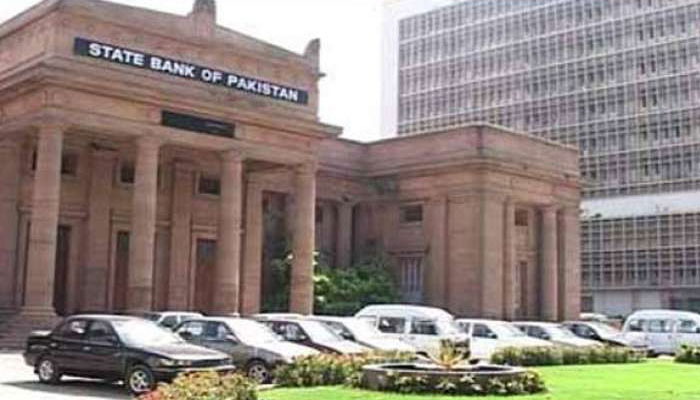
KARACHI: The State Bank of Pakistan (SBP) on Wednesday kept its inflation forecast unchanged for the current fiscal year of 2021/22 but warned higher food prices and rising energy costs could fuel significant risks to consumer price index inflation (CPI) outlook.
“The national CPI inflation is expected to remain within a range of 7.0 to 9.0 percent,” the SBP said in its annual report on the State of Pakistan’s Economy for the last fiscal year of 2020-21.
The report said better commodity management practices, especially the build-up of reserves for wheat and sugar, would likely contain supply-side pressures from seeping into the inflation during the current fiscal year and the headline inflation is likely to retreat more visibly in the second half of the year, “with the phasing out of the base impact of the hike in power tariffs”.
“… these projections are subject to multiple upside risks, including from a greater-than-anticipated increase in global commodity prices and upward revision in utility tariffs,” the SBP said.
“In addition to triggering a sharp increase in domestic prices, these developments may also give rise to significant second-round impacts on inflation,”
With inflation already running at 9.2 percent, Pakistan and the International Monetary Fund reached a staff-level agreement to complete the sixth review under the $6 billion Extended Fund Facility.
The IMF deal, which still must be approved by the Fund’s board in Washington, contained several painful actions including an increase in the petroleum levy, higher energy tariffs.
Analysts see the CPI inflation to average at 9.5-10 percent in FY2022.
The SBP’ projected the current account deficit to be in the range of 2-3 percent of the GDP in FY2022. In the external sector, pressures are emerging from the import side.
The surge in imports is broad-based, partly reflecting the increasing pace of economic activity, a further increase in the global commodity prices, continued imports of agricultural commodities, automobiles, and many consumption related items, the SBP’s report said.
On a positive note, this increase in imports also reflects an increase in machinery, much of which is supported by the Temporary Economic Refinance Facility that should help to augment future productive capacity.
Imports are likely to rise to $62.5-63.5 billion this fiscal year, higher than the government target of $55.3 billion, SBP’s projected. Exports have potential to grow at $26.5-27.5 billion, against the $26.8 billion target set by the government for FY2022.
“A part of the expansion in the import payments is projected to be financed through a consistent increase in the workers’ remittances and export receipts,” it said.
The SBP sees remittances to remain upbeat and rise to $30.5-32.5 billion. The recovery in the global economy, pickup in international demand and a range of incentives announced by the government to lower the domestic cost of production, would likely bolster the export performance.
The services deficit is projected to expand, in line with some resumption in international air travel.
Meanwhile, the outlook for financial flows is likely to remain conducive, on the back of the $3.8 billion already received from the global SDR allocations and from a Eurobond, along with further loan disbursements from multilateral and bilateral creditors, and inflows into the Roshan Digital Accounts, the bank noted.
The SBP said economic recovery during FY21 is projected to gain further momentum in FY2022 due to the significant increase in machinery and raw material imports, continued expansion in consumer financing, and strong uptrend in domestic sales as seen from high frequency demand indicators during the initial months of FY2022.
Partly capturing these dynamics, the SBP is projecting GDP growth in the range of 4-5 percent.
The government plans to continue with the adjustment measures, which are projected to reduce the deficit to 6.3 percent of GDP, from 7.1 percent in FY2021. The SBP envisages the fiscal deficit within a range of 6.3 to 7.3 percent of GDP for FY2022. This outcome would be driven by the continued check on non-priority current spending and an expansion in both tax and non-tax revenues.


