
Ballot to continue till one of them clinches majority
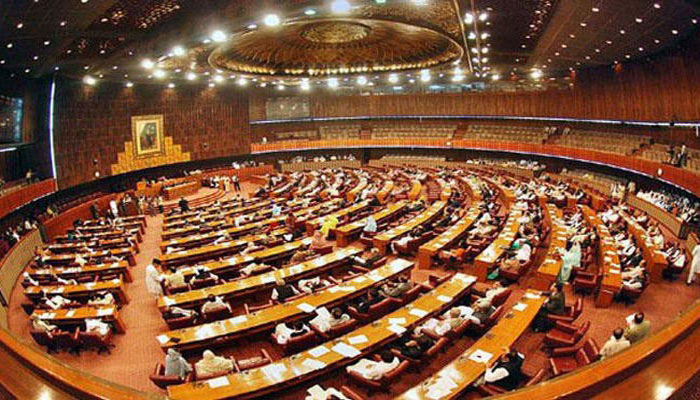
ISLAMABAD: In the upcoming Senate thriller, if the two candidates contesting for the office of the chairman of the Upper House secure an equal number of votes, a fresh ballot will be held until one of them gets more votes than the other. The aspirant securing more votes will be declared elected.
There will be no drawing of lots or a toss of the coin in case the two contestants bag an equal number of votes ; the poll will continue until one of them clinches more ballots than the other. Rule 9 of the Rules of Procedure & Conduct of Business in the Senate provides for the election of the Senate chairman and takes care of different possibilities in such a poll.
Clause 6 says where, after withdrawals, there remain only two candidates for election, a ballot will be held between them and the candidate who secures more votes than the other will be declared elected. If both the candidates receive an equal number of votes, a fresh ballot will be held between them until one of them secures more votes than the other.
Such a possibility may not be dismissed as inconsequential in view of the claims of the two sides of an impending close contest between ruling coalition candidate Sadiq Sanjrani and Pakistan Democratic Movement (PDM) nominee former prime minister Yusuf Raza Gilani.
Intense lobbying by the government coalition and the opposition PDM is currently taking place to make inroads into each other’s domain for a poll that will be held by secret vote. Both sides have taken the contest as a do-or-die battle. The constitutional defection clause will not apply to any senator who opts to vote against the directives of his/ her parliamentary party. As a result, it will be difficult to identify the floor-crossers.
Clause 8 says “where at any ballot three or more candidates get an equal number of votes and one of them has to be excluded from election, the question as to which one of such candidates is to be ousted will be determined by drawing of lots.”
Another possibility discussed by the rules will arise where, after withdrawals, there remain more than two candidates in the field. In such an eventuality, the candidate receiving more votes than the aggregate of votes bagged by the other contestants will be declared to have been elected.
If no candidate gets more votes than the aggregate of votes secured by the other aspirants, there will be a fresh ballot at which the competitor who secured the lowest number of votes at the last ballot will be excluded from the election, and the balloting will in like manner proceed until one candidate bags more votes than the remaining candidate or, as the case may be, the remaining candidates in the aggregate, and such candidate will be declared elected.
The rule further says at the first meeting of the Senate, after the members have taken oath and to the exclusion of any other business including privilege and adjournment motions, the Senate will proceed to elect from amongst its members a chairman, and so often as his office becomes vacant the Senate will elect another member as its head in accordance with the rules.
The first meeting of the Senate for election of the chairman will be chaired by the outgoing chairman or, in his absence, by a presiding officer, nominated by the president. However, no person will preside over the meeting for the election in which he himself is a candidate.
The subsequent meeting for the election of the chairman will be chaired by the outgoing chairman or, in his absence, by the deputy chairman or when this office is also vacant or he is otherwise unable to preside over such a meeting, by a presiding officer nominated by the president. But no person will chair the meeting for the election in which he himself is a candidate.
At any time before 12:00 noon on the day fixed for the election, any member may propose another senator for election as chairman by delivering to the secretary a nomination paper signed by him and accompanied by a statement by the MPs whose name is proposed that he is willing to serve as chairman, if elected. A member who has been nominated may, in writing, withdraw his candidature at any time before the Senate proceeds to elect a chairman.
On the day of election, the presiding officer will read out to the Senate the names of the members who have been duly nominated and have not withdrawn their candidature, as also the names of their proposers, and, if there is only one such member, will declare that member to have been elected.
Rule 10 says immediately after the election of chairman, the Senate will proceed to elect his deputy and the procedure prescribed for the election of chairman will apply to the election of deputy chairman.


