
Ignoring the skill barrier
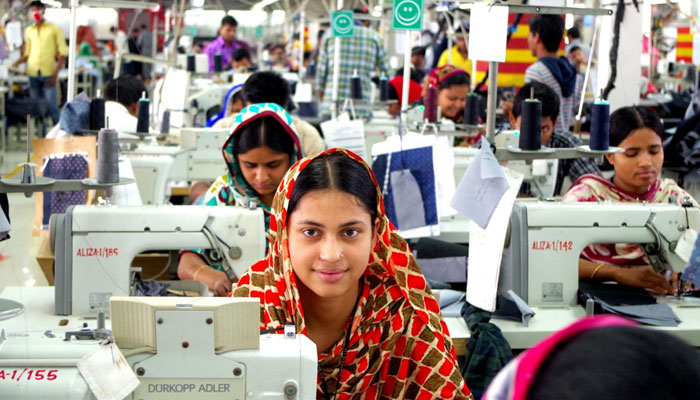
LAHORE: As far as skill training is concerned, the public sector gives importance to the number of skilled forces it rolls out annually, continuing with obsolete skills and ignoring skills needed by high tech industries.
Quality and value-added products the world over are produced by state of art high tech machines. For commissioning state of art high tech machines, we need to establish greenfield projects.
Technology in most of the existing domestic industry is obsolete and good for producing low value products. The existing industries therefore cannot be upgraded.
The dilemma of high cost of doing business is also resolved by high tech industries where the efficiencies are so elevated and value-addition is so high that they compensate for high costs.
One kilogram of steel when converted into an ordinary drum has low value, but the same quantity of steel used to produce a car carburettor has sometimes 100-1000 percent higher value.
Labour, energy, and administrative costs for both are almost the same or 10-20 percent higher for value-added item. The selling price of low value-added item may be 100 times less than the selling price of high value-added product. We are talking about engineering goods and not software technology where the costs are even lower.
Greenfield projects have been scarce in Pakistan. May be some 10-12 greenfield projects were commissioned in the country in the last two decades.
This is the reason that Pakistan remains a low value and low-cost exporter. The number of greenfield projects could be counted on fingers because investors did not find the required skills available among the workers to run up modern efficient plants.
In fact, even the existing industries have to compromise on the skill standards because of unavailability of competent staff. They recruit semi-skilled workers and provide them on job training.
This they cannot do for high tech new projects. Low education among most of the workers impedes imparting full skills.
According to skill development experts, there is a grave mismatch between demand and quality skills as around 55 percent of the unemployed are literate or semi-literate. Around 30 percent of the labour force possesses less than one year of education, while 15 percent have less than eight years of schooling.
The public sector vocational institutes boast of rolling out the largest number of skilled force. They impart training in rudimentary technologies that are mostly not required by even the low valued regular industries.
Most of the skills imparted keep the trainees in the bracket of poor throughout their career. The skills imparted include hairdresser, plumber, beautician, welder and so many other professions that are not needed in the market.
Most of the trainees after passing out open their own outlets and for years earn less than the minimum wage. They have one or two state of art stitching units, while most of the garment making institutes train girls to stitch complete dress, and trainees are of no use for modern garment and knitwear units.
We are losing a great opportunity today because of an acute shortage of skilled garment workers. The garment factories are operating at full capacity based on availability of skilled garment workers.
They could immediately add more capacity if they are assured of the availability of skilled workforce. Pakistan’s public sector is rolling out around 300,000 skilled workers, most of them with low skill and very few with skills in garment manufacturing.
Despite the fact that Pakistan produces low-cost garments; still, this accounts for highest value-addition in textiles.
About two decades back, many private sector entrepreneurs and non-government organisations established high tech vocational institutes for training educated youth in different skills needed in the market. The roll out was limited, but high quality.
The equipment and raw materials needed to impart high tech skills are pretty expensive. The private sector is maintaining the quality of equipment and upgrading it periodically (it takes almost a decade to upgrade equipment in public sector vocational institutes, some are operating on 25 years old technology).
The quality skilled workforce rolled out by the private sector is not enough to fulfil the requirements of existing industries in the country. They are not trained for the latest machines that investors would want to bring in greenfield projects.







-
 All You Need To Know Guide To Rosacea
 -
 Princess Diana's Brother 'handed Over' Althorp House To Marion And Her Family
 -
 Trump Mobile T1 Phone Resurfaces With New Specs, Higher Price
 -
 Factory Explosion In North China Leaves Eight Dead
 -
 Blac Chyna Opens Up About Her Kids: ‘Disturb Their Inner Child'
 -
 Winter Olympics 2026: Milan Protestors Rally Against The Games As Environmentally, Economically ‘unsustainable’
 -
 How Long Is The Super Bowl? Average Game Time And Halftime Show Explained
 -
 Natasha Bure Makes Stunning Confession About Her Marriage To Bradley Steven Perry
 -
 ChatGPT Caricature Prompts Are Going Viral. Here’s List You Must Try
 -
 James Pearce Jr. Arrested In Florida After Alleged Domestic Dispute, Falcons Respond
 -
 Cavaliers Vs Kings: James Harden Shines Late In Cleveland Debut Win
 -
 2026 Winter Olympics Snowboarding: Su Yiming Wins Bronze And Completes Medal Set
 -
 Trump Hosts Honduran President Nasry Asfura At Mar-a-Lago To Discuss Trade, Security
 -
 Cuba-Canada Travel Advisory Raises Concerns As Visitor Numbers Decline
 -
 Anthropic Buys 'Super Bowl' Ads To Slam OpenAI’s ChatGPT Ad Strategy
 -
 Prevent Cancer With These Simple Lifestyle Changes