
OPEC agrees modest hike in oil supply after Saudi and Iran compromise
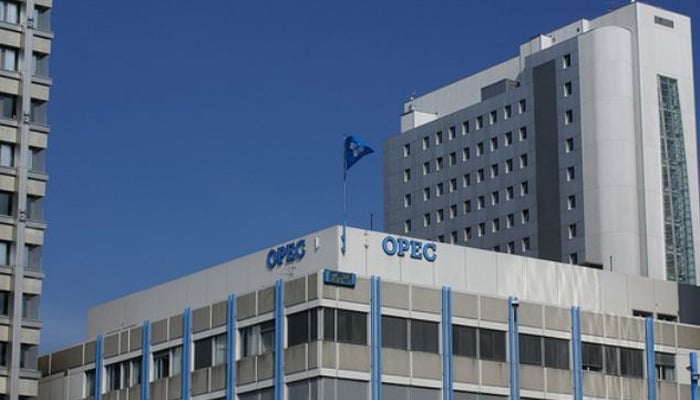
VIENNA: OPEC agreed on Friday on a modest increase in oil production from next month after its leader Saudi Arabia persuaded arch-rival Iran to cooperate, following calls from major consumers to help reduce the price of crude and avoid a supply shortage.
The Organization of the Petroleum Exporting Countries agreed that it and allies led by Russia should increase production by about 1 million barrels per day (bpd), or 1 percent of global supply.
The real increase will be around 770,000 bpd, according to OPEC member Iraq, because several countries that recently suffered production declines will struggle to reach full quotas.
But the deal nevertheless gave a tacit green light to Saudi Arabia to produce more than currently allowed by OPEC as the 14-nation organisation avoided setting individual country targets.
The United States, China and India had urged Vienna-based OPEC to release more supply to prevent an oil deficit that would hurt the global economy.
"Hope OPEC will increase output substantially. Need to keep prices down!" U.S. President Donald Trump wrote on Twitter less than an hour after OPEC announced its decision.
Iran, OPEC´s third-largest producer, had demanded OPEC reject calls from Trump for an increase in oil supply, arguing that he had contributed to a recent rise in prices by imposing sanctions on Iran and Venezuela.
Trump slapped fresh sanctions on Tehran in May and market watchers expect Iran´s output to drop by a third by the end of 2018. That means the country has little to gain from a deal to raise OPEC output, unlike top oil exporter Saudi Arabia.
However, Saudi Energy Minister Khalid al-Falih convinced his Iranian peer Bijan Zanganeh to support the increase just hours before Friday´s OPEC meeting.
OPEC and its allies have since last year been participating in a pact to cut output by 1.8 million bpd.
The measure has helped rebalance the market in the past 18 months and lifted oil to around $75 per barrel from as low as $27 in 2016. But unexpected outages in Venezuela, Libya and Angola have effectively brought supply cuts to around 2.8 million bpd in recent months.
Falih has warned the world could face a supply deficit of up to 1.8 million bpd in the second half of 2018 and that OPEC´s responsibility was to address consumers´ worries.
"We want to prevent the shortage and the squeeze that we saw in 2007-2008," Falih said, referring to a time when oil rallied close to $150 per barrel.
OPEC´s deal to release more supply centres on returning to 100 percent compliance with existing, agreed cuts.
Current compliance is around 40-50 percent above target because of production outages in Venezuela, Libya and Angola.
"As a group we can meet the 100 percent compliance. As individual countries, it is challenging," said United Arab Emirates Energy Minister Suhail bin Mohammed al-Mazroui.







-
 'The Muppet Show' Star Miss Piggy Gives Fans THIS Advice
 -
 Sarah Ferguson Concerned For Princess Eugenie, Beatrice Amid Epstein Scandal
 -
 Uber Enters Seven New European Markets In Major Food-delivery Expansion
 -
 Hollywood Fights Back Against Super-realistic AI Video Tool
 -
 Meghan Markle's Father Shares Fresh Health Update
 -
 Pentagon Threatens To Cut Ties With Anthropic Over AI Safeguards Dispute
 -
 Samsung Galaxy Unpacked 2026: What To Expect On February 25
 -
 Travis Kelce Takes Hilarious Jab At Taylor Swift In Valentine’s Day Post
 -
 NASA Confirms Arrival Of SpaceX Crew-12 Astronauts At The International Space Station
 -
 Can AI Bully Humans? Bot Publicly Criticises Engineer After Code Rejection
 -
 Search For Savannah Guthrie’s Abducted Mom Enters Unthinkable Phase
 -
 Imagine Dragons Star, Dan Reynolds Recalls 'frustrating' Diagnosis
 -
 Steve Jobs Once Called Google Over Single Shade Of Yellow: Here’s Why
 -
 Barack Obama Addresses UFO Mystery: Aliens Are ‘real’ But Debunks Area 51 Conspiracy Theories
 -
 Selma Blair Explains Why Multiple Sclerosis 'isn't So Scary'
 -
 Will Smith Surprises Wife Jada Pinkett With Unusual Gift On Valentine's Day