
Nato gambit
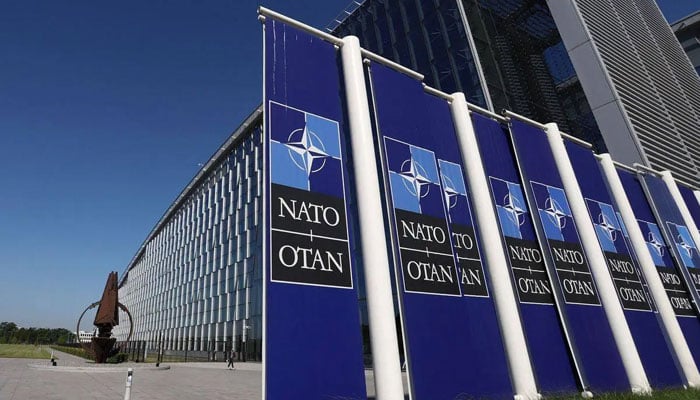
Donald Trump is embracing new military goals for NATO that may lead to an additional trillion dollars in military spending and the greater militarization of Europe.
In pressuring the members of the North Atlantic Treaty Organization (NATO) to vastly increase their military spending, the president is setting Europe on a pathway to becoming a major center of military power. Although a far more militarized Europe holds great dangers for the world, including a greater risk of war, the president is boasting about his move, enthralled by how much more money European countries are pledging to spend on their war-making capabilities.
“It’s over a trillion dollars more a year,” Trump marveled at a June 27 press briefing. “Think of that, a trillion dollars.”
Trump’s Position: Since rising to power, Trump has made it one of his primary goals to make European countries spend more on their militaries. Claiming that he is putting America first, the president has demanded that European countries rely less on the United States for their security and take on greater responsibility.
Trump has focused his efforts on NATO, the transatlantic military alliance that is led by the United States. Unlike other US presidents, who have embraced the alliance as a tool for reinforcing US military power and maintaining US dominance over Europe, Trump has criticized the alliance as a way for Europe to take advantage of the United States.
At the core of Trump’s critique has been military spending. One of his constant complaints has been that the United States spends far more overall on its military than other members of NATO. Rather than calling for reductions in US military spending to achieve parity, however, Trump has pushed for a record-setting trillion dollar Pentagon budget while demanding that NATO members increase their military spending.
One of the ways in which Trump has pressured NATO countries to increase their military spending is by equivocating on US treaty obligations. Repeatedly, Trump has indicated that he will not uphold the North Atlantic Treaty’s Article 5 to defend member states under attack, just as the European powers did when they came to the assistance of the United States after 9/11.
“If they don’t pay, I’m not going to defend them,” Trump said in March.
Another one of Trump’s moves has been to exploit past commitments by member states to increase their military spending. During his first term, for example, Trump demanded that each NATO member achieve military spending of at least 2 percent of its gross domestic product (GDP), a target that NATO had established in 2014 as a long-term aspiration.
Since the start of his second term, however, Trump has demanded even more of Europe, urging NATO countries to increase their military spending to 5 percent of their GDP. Although the United States will not meet Trump’s threshold under its new Pentagon budget, Trump insists that all other NATO members must meet the target.
“I don’t think we should, but I think that the NATO countries should, absolutely,” Trump told reporters on June 20.
Long-Term Implications: Despite the fact that several US leaders have been wary of Trump’s tactics, especially the manner in which he has berated Europe, they have remained quiet about the potentially dangerous long-term consequences of a more militarized Europe. As officials in Washington are well aware, Trump’s moves to militarize Europe put the people of Europe and the world at great risk.
One of the major risks to the people of Europe concerns social spending. If Europe follows through on its new military commitments and starts investing vast sums of money on its war-making capabilities, then it may try to offset costs by cutting social programs.
In a June 25 interview with Politico, Secretary of State Marco Rubio pointed to the possibility of reductions in social spending when he indicated that Europe’s “vast social safety network programs” may be at risk. Every dollar “spent on military is money you’re taking away from education, health care, all the stuff that people have come to benefit from in your government,” Rubio said.
Another danger is that Europe may become more prone to war. With greater military capabilities, European powers will find it tempting to increasingly turn to war and aggression, just as they had done during the early twentieth century, when they led the world into two catastrophic world wars.
Excerpted: ‘Trump Trillion Dollar NATO Gambit’. Courtesy: Counterpunch.org


