
Why Pakistan must establish a drone army
Simultaneously, a minimum of 10,000 certified drone operators must be trained, including personnel from Frontier Corps, Rangers, and Police
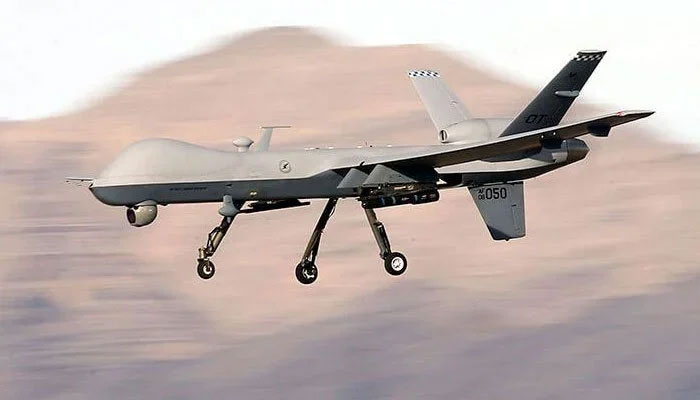
Pakistan must establish a ‘national drone army’. The Pakistan National Drone Army (PNDA) should aim to build and deploy at least 15,000 military-grade drones over the next three years.
Simultaneously, a minimum of 10,000 certified drone operators must be trained, including personnel from the Frontier Corps, Rangers, and Police. Yes, each army corps should establish dedicated drone regiments to ensure integrated, theatre-level operations. Yes, the PNDA must prioritise the development of AI-enabled and swarming drones to offset Indian advantages in artillery, airpower, and armoured formations. The PNDA should also pursue the export of dual-use drone technologies to generate revenue and cultivate strategic partnerships.
The National Defence University (NDU) should establish a dedicated Drone Warfare School (DWS) comprising three specialised operator tracks: Army Tactical, Air Force ISR (Intelligence, Surveillance, Reconnaissance), and Navy Maritime Operations. The DWS must focus on three critical competencies: AI-enabled target recognition, first-person view (FPV) precision strike capability, and resilience against electronic warfare (EW) alongside secure communications protocols.
The federal government must allocate a budget of $500 million for R&D, operator training and at least 3,000 drones. Imagine: $500 million = 1.25 Rafale jets.
The PNDA must form partnerships with NESCOM, Suparco, NUST and Air University. The PNDA must also form joint development programmes with Turkey (STM/Kargu) and China (CASC, CETC).
The PNDA fleet should comprise a balanced mix of platforms: tactical reconnaissance drones (Shahpar); first-person view (FPV) kamikaze drones (Lioutyi-class); loitering munitions (Burraq); AI-enabled swarm drones (Brave1); vertical take-off and landing (VTOL) logistics drones; and naval UAVs comparable to the Bayraktar TB2 for maritime operations.
The PNDA will be our next-generation asymmetric deterrent tied to Pakistan’s nuclear doctrine. We must replace vulnerable Main Battle Tanks (MBTs) and frigates with low-cost autonomous strike assets. We must reduce our long-term defence costs by replacing manned sorties and risking fewer lives.
The PNDA must position Pakistan as the Islamic world’s leader in drone warfare capabilities. To this end, Pakistan must pursue targeted drone exports to key partners, including Sudan and Nigeria in Africa, Saudi Arabia, the UAE, and Qatar in the Gulf Cooperation Council (GCC), and Malaysia and Indonesia in Southeast Asia.
On July 1, 2022, Ukraine became the first country to openly declare the creation of a ‘drone army’ -- mobilising civilian production and military coordination. In 2023, two Ukrainian drones targeted the Kremlin dome, the heart of Russian political power. In 2024, Ukrainian drones brought down a Russian A-50 strategic airborne aircraft. In 2025, Ukrainian drones destroyed 41 Russian strategic bombers, including models like the Tu-95 and Tu-22M.
Iran has established a semi-autonomous drone force under the Islamic Revolutionary Guard Corps (IRGC). China’s drone programme is among the most advanced globally, with a highly structured national force integrated into the People’s Liberation Army (PLA). The Turkish Armed Forces have integrated UAV units into their air and ground operations, with dedicated command structures for drone warfare. Israel, a pioneer in drone technology, maintains a highly advanced and structured UAV force integrated into its multi-layered defence strategy.
Drones are revolutionising modern warfare tactics. Drones are shaping the future of military operations. The PNDA will redefine Pakistan’s national security. It will be a transformative shift -- autonomous precision warfare and budget-efficient force projection. Partnering with Turkey, China, and local institutions, and establishing a Drone Warfare School, the PNDA will bolster strategic alliances and cement Pakistan’s role as a regional drone power.


