
Digital payments play crucial role in reducing shadow economy, curbing corruption, says Jazz CEO
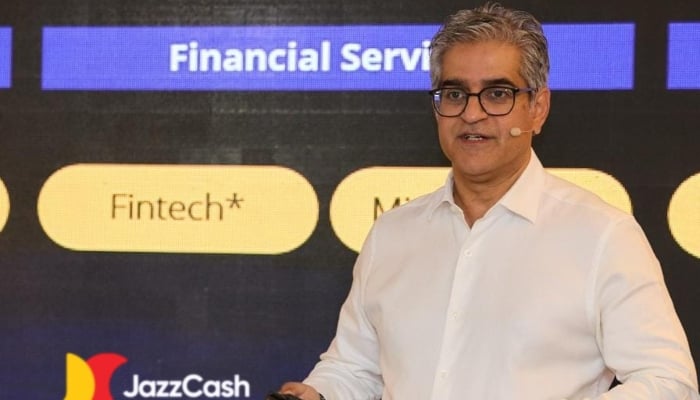
KARACHI: Digital payments are crucial for reducing Pakistan’s shadow economy and combating corruption, Jazz CEO Aamir Ibrahim said on Tuesday.
Transitioning to a cashless society represents not just a technological shift but a vital step towards the country’s economic transformation, Ibrahim said.“A cashless society is an integral part of the digital economy,” Ibrahim said in a statement, emphasising that when every citizen has a smartphone, every home is connected to broadband and every shop accepts QR payments, Pakistan can unlock unprecedented levels of transparency, security and productivity.
As per reports, Pakistan remains among the countries with the lowest share of digital payments, which has directly contributed to a persistently large shadow economy -- 35.7 per cent of GDP -- and a troubling position as the second highest on the Corruption Perception Index in the region. Aamir explains that cash transactions leave little trace, making tax evasion easy and enforcement difficult. In contrast, digital payments create a documented trail, enabling better policymaking and making it much harder to evade taxes. Analysts suggest that even a modest reduction in the shadow economy is likely to result in a corresponding decrease in corruption levels.
The benefits of a cashless society are far-reaching. Increased tax compliance is one of the most significant dividends, as tracked transactions and audit trails strengthen enforcement and broaden the tax base. For businesses, digital payments mean instant, convenient transactions, improved cash flows and reduced losses from cash handling. Society at large benefits from greater safety, fewer thefts and robberies, and a decline in black market activity. Countries like India, Brazil and Kenya have demonstrated that digitising payments leads to substantial fiscal savings, higher financial inclusion, and an even stronger digital ecosystem.
However, Ibrahim warns that Pakistan’s slow adoption of digital payments is a key reason the country is lagging its peers in the digital economy. To accelerate progress, he recommends a series of targeted interventions: mandating digital payment acceptance -- especially through RAAST QR codes -- at all government and large retail touchpoints; incentivising digital transactions with reduced sales tax and exemptions on payment device duties; discouraging cash payments at government interfaces with surcharges and caps; and digitizing all government disbursements, including welfare, pensions and subsidies, through digital wallets. He also calls for real-time monitoring of progress at the Prime Minister’s Office, time-bound targets for financial institutions, and a nationwide awareness campaign to drive adoption, particularly among women and rural communities.
“Branchless banking players like JazzCash are uniquely positioned to lead this agenda, given their reach and ability to serve unbanked and underbanked populations,” he said.
“With decisive policy action and strong public-private collaboration, Pakistan can realise the full dividends of a cashless society: greater tax compliance, reduced corruption and a dynamic, inclusive digital economy,” he added.


