
Reimagining Pakistan’s financial architecture
Around new year, devastating floods strike town of Utrecht in the low-lying Netherlands
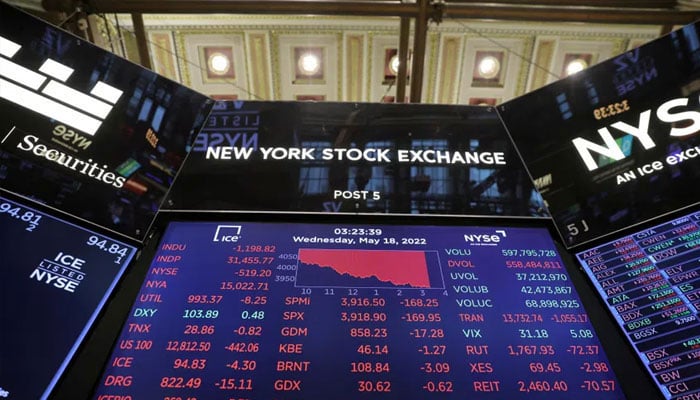
Imagine the year 1624. The world has not yet imagined New York, let alone the Stock Exchange that would one day shape global finance. The Industrial Revolution is still more than a century away. Only two decades earlier, the Dutch East India Company had established the world’s first stock exchange in Amsterdam, pioneering a financial revolution that would stretch across continents.
Around the new year, devastating floods strike the town of Utrecht in the low-lying Netherlands. Dikes collapse, fields drown, and livelihoods are swept away. With no central aid system and few reserves, local authorities are unable to finance the urgent tasks of recovery and reconstruction.
The flooding brings not only physical destruction but also mounting governance risks – the credibility of Utrecht’s institutions is at stake. Faced with this existential crisis, a small Dutch water board makes a radical choice: it issues a bond. Not to finance war or conquest, but to fund protection, to rebuild the dikes and hold back the sea.
That bond, remarkably, still pays interest today – more than four centuries later. A timeless act of climate foresight, now held by a foundation affiliated with the New York Stock Exchange, in a world that would not have recognised itself in 1624.
Fast forward to the year 2022. Four hundred years later, the setting is different, but the crisis is eerily familiar. This time, it is not Utrecht, but Pakistan. A historic monsoon season unleashes unprecedented flooding across the country. Over 33 million people are affected. Crops, homes, schools, and critical infrastructure are swept away. According to post-disaster assessments, the scale of destruction is staggering: over $30 billion in damages and losses. As in Utrecht, urgent questions arise: Who will rebuild the bridges, restore the schools, replant the fields? And how will we protect against the next disaster?
In response, the government of Pakistan launches an international appeal. Development partners pledge support. Humanitarian assistance trickles in. And yet, months later, only a fraction of the required financing materialises.
The financing gap remains wide, well over 80 per cent of the estimated needs are left unmet. The contrast is striking: In 1624, a small town facing ruin created a financial instrument to safeguard its people and infrastructure – one that outlived empires and continues to pay interest today. In 2022, a nation of 240 million – with institutions, financial markets, and international partnerships – struggles to muster timely and adequate funding for recovery. Despite all the progress in economics, institutions, and global finance, we have not taken as bold or lasting a step as Utrecht did four centuries ago.
The reason? Our public finance system wasn’t built to anticipate climate shocks. It reacts – slowly and often inadequately – to crises that are becoming more frequent and severe. Pakistan’s debt obligations are growing, while fiscal space for climate adaptation is shrinking. We spend more servicing past loans than preparing for future risks.
And yet, there is ambition. Pakistan has pledged to achieve net-zero emissions by 2050. It has drafted a national green taxonomy and is submitting a Request for Support under the Global Shield Against Climate Risks, a new initiative aimed at helping vulnerable countries secure pre-arranged, risk-layered financing that will empower Pakistan to deploy more ex-ante financial instruments.
These efforts, however, remain fragmented. We have yet to issue a sovereign green bond or a climate resilience sukuk. A national resilience facility to crowd in private finance is still lacking. Climate policy and financial planning remain largely disconnected, when they should be speaking the same language. Beyond physical risks like floods and droughts, Pakistan is increasingly vulnerable to transition risks – the economic fallout of a world shifting rapidly toward green finance, carbon pricing and climate-aligned trade. Without a coherent climate-finance architecture, Pakistan may find itself locked out of green capital markets, excluded from carbon-adjusted trade regimes or unable to attract foreign investment. The risk is environmental, economic and deeply structural.
Tweaking the current system isn’t enough. Pakistan needs to reimagine its financial architecture to make it fit for the climate era. This means five shifts. One, climate-smart public investment: We need to embed climate risk into public financial management. Every rupee spent should be screened for climate resilience, not just cost-effectiveness. Public investment must become an engine of adaptation and mitigation.
Two, sovereign green bonds and sukuks: Pakistan must confidently enter global green capital markets. A resilience-linked sukuk could fund flood infrastructure, early warning systems, or climate-smart agriculture. These instruments show that Pakistan is not just climate-vulnerable but climate-ready.
Three, risk-layered financial protection: Our financial response must match the structure of risk. That means contingency funds for high-frequency, low-impact events; parametric insurance for seasonal droughts or floods; and catastrophe bonds for low-frequency, high-impact disasters. These proposals are already part of Pakistan’s Global Shield request, but implementation must follow ambition.
Four, a green financing facility and not just another fund: Some experts warn against creating more funds. That’s fair. But this isn’t about duplication – it’s about consolidation. A Green Financing Facility can pool public, donor and private capital under one roof. It can coordinate projects, provide de-risking instruments, and support subnational financing windows. Instead of scattered efforts, we need a national engine that drives climate-smart investment.
Five, local access and just transitions: Resilience is local. Provinces and cities must be technically and financially empowered to finance their climate solutions. Whether it’s water management in Balochistan or rooftop solar in Sindh, a national system must enable localised action.
Pakistan is also underperforming in two key global shifts: ESG investing and carbon markets. Global capital is rapidly moving towards portfolios aligned with Environmental, Social, and Governance (ESG) standards. But without clear disclosure frameworks, ESG incentives or sustainability reporting infrastructure, Pakistan risks being left out of this realignment. Simultaneously, Pakistan holds significant potential in voluntary carbon markets through mangrove restoration, regenerative farming, renewable energy and beyond. But we lack a transparent carbon registry, a credible MRV (monitoring, reporting, verification) system, and governance structures to ensure revenues are shared equitably. With the right policy and oversight, carbon finance could become a new revenue stream – not for the treasury alone, but for communities on the frontlines.
To make all this work, we need coordination instead of chaos. Institutions like the Ministry of Finance, NDMA, NDRMF, State Bank of Pakistan, SECP, and the Ministry of Climate Change must align around a shared framework for climate finance. This is not a one-agency job but a whole-of-government mandate. We also need better project pipelines, simplified access to multilateral funds like the Green Climate Fund and readiness to deploy emerging instruments like debt-for-climate swaps.
In 1624, the Dutch issued a bond to protect their people from rising waters. It still functions centuries later because it was rooted in responsibility, vision and design. Today, Pakistan faces a similar choice. We can continue reacting to crisis after crisis, or we can build a system that’s anticipatory, inclusive, and green.
This is about more than climate. It’s about sovereignty. About economic resilience. About future-proofing a nation of 240 million.
The Dutch built a dike. We must build a financial architecture that can hold back a rising tide – and carry us toward a fairer, greener future.
The writer is a freelance contributor.


