
Political survival
This was rare but necessary moment of unity in landscape otherwise marked by extreme political polarisation
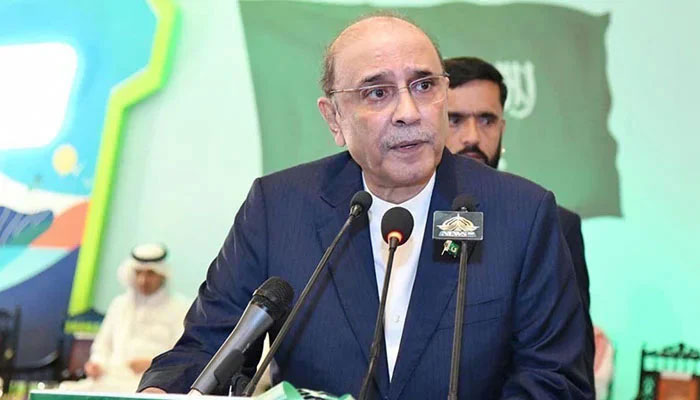
President Asif Ali Zardari’s recent statement that “if there is a Pakistan, then all political parties exist” could not have come at a more critical time. Amid the heightened tensions following the recent Indo-Pak conflict, this reminder of political unity should resonate with the people. The president has touched upon the need for a spirit of national cohesion, the kind that emerged during the recent crisis with India – where rival political parties set aside their differences to express solidarity with Pakistan’s armed forces. This was a rare but necessary moment of unity in a landscape otherwise marked by extreme political polarisation. Zardari’s words are really a call to action. The fact is that the health of any democracy depends on the continuity and coexistence of its political institutions. It is also a not-so-subtle message to external adversaries who mistakenly believe that Pakistan’s internal discord is ripe for exploitation. But more importantly, it is a reminder to domestic actors, particularly the PTI, that political progress will not be achieved through backdoor channels or appeals to non-political forces.
Despite the clear call for political reconciliation, the PTI has pursued an unproductive path. Just days ago, Aleema Khan publicly appealed to the country’s ‘unseen forces’ for a “give and take” arrangement, asking what wrongs her brother has committed. At the same time, the PTI maintains its traditional contradictory stance that Imran Khan is unwavering and will not submit to ‘tyrants’. This confusing double messaging may serve a political purpose – perhaps reassuring supporters of Khan’s resolve – but it does little to build credibility or achieve any real political breakthrough. It is increasingly apparent that Imran Khan’s continued appeals to the establishment are being met with silence. Reports suggest the military has reaffirmed its stance of non-involvement in political dealings, urging political actors to resolve their disputes themselves. Yet, the PTI appears unable, or unwilling, to internalise this message. The belief that mass protests or electoral performance would force anyone’s hand has failed to materialise and only further distanced the party from potential allies. The violent fallout of the May 9 and November 2024 protests weakened the party’s street power and political leverage.
In this climate, Imran Khan and his party must come to a hard but necessary realisation: the way forward is through political dialogue, not confrontation, not defiance and certainly not desperate appeals for covert deals. This is not a matter of pride or surrender, but of political survival and relevance. Imran’s decision to forego a possible coalition with the PPP following the February 2024 general elections was a missed opportunity that could have significantly altered the political calculus. Instead, the PTI has cornered itself by refusing to engage with the very political actors it must work with to regain space and legitimacy. As President Zardari rightly emphasised earlier this year, unity among political parties is essential to tackling Pakistan’s myriad challenges – from economic instability and internal security to regional tensions and climate emergencies. No single party, not even one with popular backing, can address these alone. The PTI must step out of its political isolation and embrace the democratic principle of dialogue with its rivals. The time for slogans and shadowboxing is over. Pakistan needs mature leadership from all quarters – and that includes the PTI. If Imran Khan truly wishes to serve his country and his supporters, he must begin by talking to those across the aisle, not those behind the curtain.






-
 South Korea: Two Killed As Military Helicopter Crashes During Training
 -
 Elon Musk Unveils SpaceX’s Moon-first Strategy With ‘self Growing Lunar City’
 -
 Donald Trump Slams Bad Bunny's Super Bowl Performance: 'Absolutely Terrible'
 -
 Jake Paul Criticizes Bad Bunny's Super Bowl LX Halftime Show: 'Fake American'
 -
 Prince William Wants Uncle Andrew In Front Of Police: What To Expect Of Future King
 -
 Antioxidants Found To Be Protective Agents Against Cognitive Decline
 -
 Hong Kong Court Sentences Media Tycoon Jimmy Lai To 20-years: Full List Of Charges Explained
 -
 Coffee Reduces Cancer Risk, Research Suggests
 -
 Katie Price Defends Marriage To Lee Andrews After Receiving Multiple Warnings
 -
 Seahawks Super Bowl Victory Parade 2026: Schedule, Route & Seattle Celebration Plans
 -
 Keto Diet Emerges As Key To Alzheimer's Cure
 -
 Chris Brown Reacts To Bad Bunny's Super Bowl LX Halftime Performance
 -
 Trump Passes Verdict On Bad Bunny’s Super Bowl Halftime Show
 -
 Super Bowl 2026 Live: Seahawks Defeat Patriots 29-13 To Win Super Bowl LX
 -
 Kim Kardashian And Lewis Hamilton Make First Public Appearance As A Couple At Super Bowl 2026
 -
 Romeo And Cruz Beckham Subtly Roast Brooklyn With New Family Tattoos