
Bangladesh consensus commission fails to reach agreement
Yunus has said it required comprehensive overhaul to prevent future return to authoritarian rule
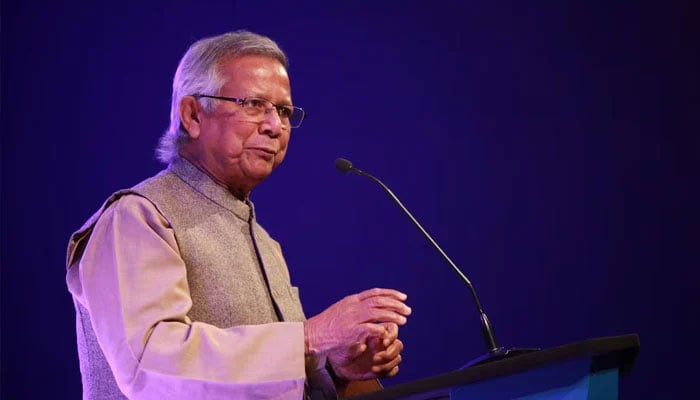
DHAKA: Bangladesh’s National Consensus Commission, tasked by the caretaker government to lead critical democratic reforms after a mass uprising last year, said Monday that political parties had failed to reach agreement.
The South Asian nation of around 170 million people has been in political turmoil since former prime minister Sheikh Hasina was ousted by a student-led revolt in August 2024, ending her iron-fisted rule of 15 years.
Muhammad Yunus, the 84-year-old Nobel Peace Prize winner who is leading the caretaker government as its chief adviser until elections are held, has previously said he inherited a “completely broken down” system of public administration.
Yunus has said it required a comprehensive overhaul to prevent a future return to authoritarian rule. He set up six commissions to do that work, overseen by the Consensus Commission, which he heads.
Ali Riaz, the commission’s vice president, said that despite marathon efforts they had not reached a deal.“It wasn’t possible to reach a consensus on several significant constitutional issues,” Riaz told reporters in Dhaka, saying talks stretched over 45 sessions.
“We have been discussing 166 recommendations with 38 political parties and alliances.” Riaz, a political science professor at Illinois State University, said the teams would not give up.“We are going to begin a second round of talks,” he said, adding that the country’s statistics bureau would “conduct a household survey to gauge public opinion”. The commission plans to include 46,000 families in the survey.
Contentious issues include whether a prime minister can serve more than two terms, and the process for selecting the president.The procedure for appointing the chief of the interim government, and the duration of its tenure, has also divided parties, Riaz said.
Parties also debated recommendations to change the terms of the constitution from “secularism” to “pluralism”.Bangladesh is a Muslim-majority nation, with Hindus accounting for less than a tenth of the population.
“Although most parties rejected the idea of pluralism, they recommended incorporating some form of protection for minorities,” he said. Yunus warned on Saturday that political power struggles risked jeopardising gains that have been made, carrying out two days of talks with more than 20 political party leaders.







-
 Prince William Warned His Future Reign Will Be Affected By Andrew Scandal
 -
 Amy Madigan Reflects On Husband Ed Harris' Support After Oscar Nomination
 -
 Is Studying Medicine Useless? Elon Musk’s Claim That AI Will Outperform Surgeons Sparks Debate
 -
 Margot Robbie Gushes Over 'Wuthering Heights' Director: 'I'd Follow Her Anywhere'
 -
 'The Muppet Show' Star Miss Piggy Gives Fans THIS Advice
 -
 Sarah Ferguson Concerned For Princess Eugenie, Beatrice Amid Epstein Scandal
 -
 Uber Enters Seven New European Markets In Major Food-delivery Expansion
 -
 Hollywood Fights Back Against Super-realistic AI Video Tool
 -
 Pentagon Threatens To Cut Ties With Anthropic Over AI Safeguards Dispute
 -
 Meghan Markle's Father Shares Fresh Health Update
 -
 Samsung Galaxy Unpacked 2026: What To Expect On February 25
 -
 Travis Kelce Takes Hilarious Jab At Taylor Swift In Valentine’s Day Post
 -
 NASA Confirms Arrival Of SpaceX Crew-12 Astronauts At The International Space Station
 -
 Can AI Bully Humans? Bot Publicly Criticises Engineer After Code Rejection
 -
 Search For Savannah Guthrie’s Abducted Mom Enters Unthinkable Phase
 -
 Imagine Dragons Star, Dan Reynolds Recalls 'frustrating' Diagnosis