
Russia’s cooling economy facing ‘hypothermia’ risks, minister warns
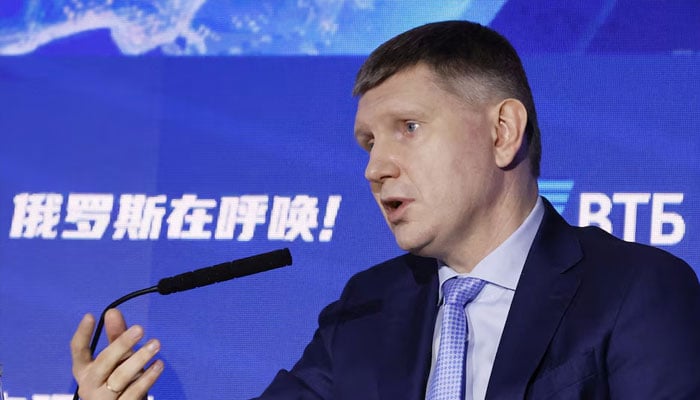
MOSCOW: Russia’s economy is facing “hypothermia” risks, Economy Minister Maxim Reshetnikov said on Monday as he urged the central bank to take slowing inflation into account when it meets to set interest rates next week.
Grappling with stubbornly high inflation, Russia’s central bank has kept its key interest rate at 21 per cent since October, a stance that has stifled investment just as the economic support provided by soaring military spending starts to decline.
Russian authorities usually present a united front on policy matters, but high interest rates, hefty budget spending and the efficacy of capital controls have all led to public disagreements in the last few years.
Sometimes the Kremlin gets involved.
In August 2023, the central bank made an unscheduled, 350-basis-point rate hike the day after receiving a public rebuke from President Vladimir Putin’s then economic adviser Maxim Oreshkin, blaming what he called its soft monetary policy for weakening the rouble.
Then in March this year Putin urged his economic officials not to freeze the Russian economy as if it were in a “cryotherapy chamber” with high borrowing costs, which many analysts interpreted as a call to start an easing cycle.
Reshetnikov, speaking on Monday in the State Duma, Russia’s lower house of parliament, said that inflation in recent weeks had been in the 3-4 per cent range when recalculated in annual terms.
“We expect that May data will consolidate this trend and we of course expect that the central bank will duly take this into account when taking decisions because we also see risks of economic hypothermia in the current regime,” Reshetnikov said.
The ministry forecasts annual inflation for 2025 at 7.6 per cent, an estimate that Reshetnikov described as “realistic”.
Major Russian exporters including Rusal and Gazpromneft have cut the planned volume of commodities such as metal and oil products they send by rail, a Russian Railways document seen by Reuters showed last week, demonstrating the real-world impact of subdued demand as the country’s economy slows.
Many businesses in the industrial sector have complained of prohibitive borrowing costs and some have scaled back investment plans. The economy ministry forecasts economic growth of 2.5 per cent this year, compared with a central bank prediction of 1-2 per cent. The central bank’s next rate-setting meeting is scheduled for June 6.






-
 EU Rejects Any Rise In US Tariffs After Court Ruling, Says ‘a Deal Is A Deal’
 -
King Charles Congratulates Team GB Over Winter Olympics Success
-
 Meryl Streep Comeback In 'Mamma Mia 3' On The Cards? Studio Head Shares Promising Update
 -
 Woman Allegedly Used ChatGPT To Plan Murders Of Two Men, Police Say
 -
 UK Seeks ‘best Possible Deal’ With US As Tariff Threat Looms
 -
 Andrew Arrest Fallout: Princess Beatrice, Eugenie Face Demands Over Dropping Royal Titles
 -
 Rebecca Gayheart Breaks Silence After Eric Dane's Death
 -
 Kate Middleton 2026 BAFTA Dress Honours Queen Elizabeth Priceless Diamonds
 -
 Sterling K. Brown's Wife Ryan Michelle Bathe Reveals Initial Hesitation Before Taking On New Role
 -
 BAFTA Film Awards Winners: Complete List Of Winners
 -
 Millie Bobby Brown On Her Desire To Have A Big Brood With Husband Jake Bongiovi
 -
 Backstreet Boys Admit Aging Changed Everything Before Shows
 -
 Biographer Exposes Aftermath Of Meghan Markle’s Emotional Breakdown
 -
 Ryan Coogler Makes Rare Statements About His Impact On 'Black Cinema'
 -
 Rising Energy Costs Put UK Manufacturing Competitiveness At Risk, Industry Groups Warn
 -
 Kate Middleton Makes Glitzy Return To BAFTAs After Cancer Diagnosis