
The sky has shifted
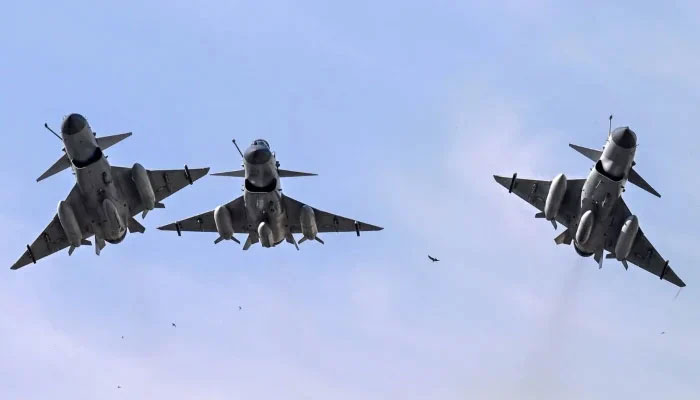
The recent aerial confrontation between India and Pakistan has not only intensified regional tensions but also sent shockwaves through global military establishments. According to The U.S. Sun, on May 7, 2025, approximately 125 fighter jets from both nations engaged in a fierce dogfight over the contested skies of Kashmir. Described as the largest aerial battle since World War II, the encounter reportedly lasted over an hour and signaled a seismic shift in South Asia’s military dynamics.
At the center of this confrontation was Pakistan’s deployment of the Chinese-made J-10C fighter jets, equipped with the advanced PL-15 long-range air-to-air missiles. According to multiple reports, these jets successfully shot down several Indian aircraft, including, most notably, a French-made Rafale - marking what is being reported as the first combat loss of the highly regarded jet. The effectiveness of the J-10C platform and the PL-15 missiles demonstrated not just tactical superiority in this engagement but also the growing credibility of Chinese defense exports on the global stage.
Military observers have been quick to analyze the implications. Antony Wong Dong, a Macau-based military analyst, remarked, “From China’s perspective, this is essentially a powerful advertisement.” He added that the performance of Chinese hardware would force even global powers like the United States to ask hard questions about how they might confront such capabilities in future conflicts. For nations considering defense procurements, the outcome of this dogfight will likely spark reconsiderations of long-standing preferences for Western military platforms.
The battle is now being discussed alongside some of the most iconic aerial engagements in modern history - the Battle of Britain, the Battle of Kursk, and the 1973 Battle of El Mansoura. But beyond its place in military lore, the Kashmir dogfight reflects a broader, more consequential shift: the maturing of the China-Pakistan defense alliance into a regional force multiplier with global implications. This confrontation also casts light on the changing nature of military deterrence and power projection in Asia. While India has long held air superiority in the region, bolstered by acquisitions such as the Rafale and Su-30MKI, Pakistan’s ability to challenge that superiority with Chinese platforms will alter future strategic calculations. The dogfight has not only demonstrated parity in air combat but has also underlined the depth of Pakistan’s interoperability with China, forged through years of joint development and military exercises.
Globally, this event may prompt a reassessment of the prevailing narrative surrounding defense technology. Nations in Africa, Southeast Asia, and the Middle East - many of which have historically leaned on Western military aid and acquisitions - may now see the China-Pakistan model as a compelling alternative. As geopolitical rivalries intensify, arms deals are not just transactions but reflections of strategic alignment. The May 7 confrontation may influence not just what countries buy, but whom they choose to ally with. That said, the engagement should not be seen purely through the lens of technological triumph or strategic one-upmanship. The sheer scale of the clash - 125 jets engaged over one of the most militarized borders on Earth - underscores the hair-trigger volatility of South Asia. A single miscalculation could have spiraled into full-scale war. In that sense, the dogfight is a sobering reminder of the need for robust conflict resolution mechanisms and renewed diplomatic engagement between India and Pakistan.
As the dust settles over the Himalayas, one thing is clear: the sky above South Asia is no longer the same. The 2025 dogfight has redefined the contours of regional air power, but it has also reopened urgent questions about stability, escalation, and the high stakes of geopolitics in a nuclear-armed neighborhood. In this new era of rapidly shifting alliances and arms races, the true challenge for global leadership will not just be about winning battles, but about preventing them.







-
 King Charles ‘worried’ For Prince William As Heir Doesn’t Have Temperament To Be King
 -
 France Records Around 1,000 Excess Deaths During Deadly Heatwave
 -
 Kris Jenner Crowns Khloe Kardashian 'most Amazing Mother' In Birthday Tribute
 -
 David Beckham Melts Hearts With His Unseen Baby Snaps As Celebrated Mom Sandra
 -
 Which Countries Will Ban Grand Theft Auto VI At Launch?
 -
 Prince Harry’s ‘emotional Safe Haven’ In UK Revealed
 -
 North West Debuts Daring New Facial Piercings At Paris Fashion Week
 -
 Why Tech Firms Are Blaming AI For The Massive Surge In Device And Console Prices
 -
 Prince William’s Secret To A Successful Marriage With Kate Middleton Comes To Light
 -
 Google Gemini AI Capacity Shortage Delays Meta's AI Projects: Report
 -
 Holly Madison Reveals Why She Underwent Plastic Surgery After Pregnancies
 -
 Dean McDermott Expresses Gratitude As He Marks Three Years Of Sobriety
 -
 South Korea, Japan Deepen Defense Ties In Major Security Push
 -
 Andrew Mountbatten-Windsor’s Fears Over His Own Life And Life Span Turn Worrying: ‘You Can’t Erase This!’
 -
 Katy Perry's Long-awaited Return Ends In Disappointment
 -
 Eva Green Hospitalized After Injury On ‘Wednesday’ Set