
India’s war
Global rights organisations must probe Indian attacks and ensure that it is held accountable for its actions
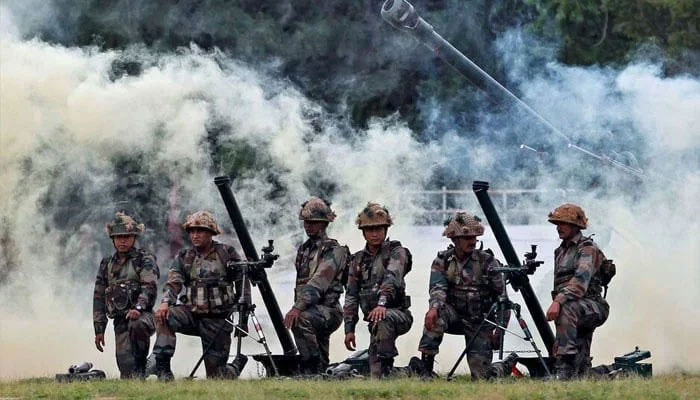
What was feared happened in the early hours of May 6 and 7, as India launched a coordinated series of missile, air and drone strikes deep within Pakistan’s sovereign territory. From Sialkot and Muridke to Muzaffarabad and Bahawalpur, Indian aggression targeted not only military installations but also civilian areas and places of worship. The most harrowing of these was the attack on Masjid Subhanallah in Ahmedpur East, which killed 13 civilians, including two young girls and seven women. In total, dozens of innocent lives have been lost, and scores wounded. Let this be clear: this was an unwarranted and brazen violation of international law and basic human decency. But horrific as it was, Pakistan’s response has been swift and measured, the Pakistan Air Force shooting down five Indian Air Force jets and a drone, and destroying an Indian brigade headquarters. No PAF aircraft was lost in the engagement. But even as Pakistan responded decisively, it is clear that this attack was a calculated attempt by the Indian government to destabilise the region, provoke wider conflict and appease domestic hardliners ahead of crucial elections.
Let there also be no doubt: this was an unprovoked act of war by India. Despite Pakistan’s consistent condemnation of the April 22 terrorist attack in Pahalgam and its repeated calls for an impartial investigation, the Modi regime pursued its own narrative – one untethered to fact and driven instead by the fascist impulses of majoritarian politics. As we have warned before, the Indian state, under the BJP’s ultra-nationalist leadership, has increasingly abandoned the path of diplomacy and international law in favour of militaristic bravado and disinformation. The targeting of mosques, homes, and even the Neelum-Jhelum Hydropower Project, marks a dangerous new precedent. This – the deliberate targeting of civilians – is a war crime. The National Security Committee has rightly described this action as a “heinous and shameful crime” and reserved Pakistan’s right, under Article 51 of the UN Charter, to respond at a time and place of its choosing.
That moment of choice is upon us and a spirited national debate is now underway: Should Pakistan retaliate further, or should it show restraint and pursue diplomatic redress? Those who argue for a measured response emphasise the value of maintaining the moral high ground, especially given that Pakistan has already retaliated militarily, and suggest that escalation serves no long-term strategic interest and engaging the international community is a more sustainable path. Others weigh this argument against a stark and uncomfortable reality: restraint has not deterred India. Over the past decade, we have seen a pattern emerge. Each time an attack occurs in India, regardless of proof or context, Pakistan is blamed. And each time, we bear the brunt of India’s aggression, whether militarily or through moves like the suspension of the Indus Waters Treaty.
While Pakistan must never descend into the madness that grips Modi’s India, it must also make clear that its sovereignty is not up for violation. A doctrine of measured deterrence must be developed and communicated: that any future aggression will be met with swift, proportionate and decisive response. But Pakistan must also redouble its diplomatic efforts to expose India’s reckless behaviour, to internationalise the issue and to build pressure for accountability. This is where the role of regional and global powers becomes critical. China, Iran and the Gulf countries must use their influence to condemn the targeting of civilians and urge restraint on all sides. The US, which has increasingly courted India as a strategic partner, must take stock of the consequences of emboldening a regime that uses military aggression as a political tool. The UN and global human rights organisations must investigate these attacks and ensure that India is held accountable for its actions. Strategic silence or false equivalence will only embolden further aggression and erode the norms that protect civilian lives in conflict zones. India has crossed a red line. We owe it to the innocent lives lost, to the principle of sovereignty, and to future generations who deserve a region not held hostage by the whims of fascist warmongers to make sure India does not do this again.







-
 Daniel Radcliffe Admits To Being Self Conscious While Filming 'Harry Potter' In Late Teens
 -
 Director Beth De Araujo Alludes To Andrew's Arrest During Child Trauma Talk
 -
 Video Of Andrew 'consoling' Eugenie Resurfaces After Release From Police Custody
 -
 'Harry Potter' Alum Daniel Radcliffe Gushes About Unique Work Ethic Of Late Co Star Michael Gambon
 -
 Japan: PM Takaichi Flags China ‘Coercion,’ Pledges Defence Security Overhaul
 -
 Angorie Rice Spills The Beans On Major Details From Season 2 Of ' The Last Thing He Told Me'
 -
 Questions Raised Over Andrew Mountbatten-Windsor's Line Of Succession
 -
 'Shameless' Sarah Ferguson 'pressuring' Princess Eugenie, Beatrice For Major Reason
 -
 Teacher Arrested After Confessing To Cocaine Use During Classes
 -
 Paul McCartney Talks 'very Emotional' Footage Of Late Wife Linda In New Doc
 -
 Princess Beatrice, Princess Eugenie's Response To Andrew's Arrest Revealed
 -
 King Charles And Princess Anne Bestow Honours At Windsor Castle
 -
 King Charles 'worried' As Buckingham Palace, Royal Family Facing 'biggest Crisis'
 -
 Milo Ventimiglia Recalls First Meeting With Arielle Kebbel On The Sets Of 'Gilmore Girls' Amid New Project
 -
 Eric Dane Infuriated After ALS Diagnosis As He Feared The Disease Would Take Him Away From His Girls
 -
 It's A Boy! Luke Combs, Wife Nicole Welcome Third Child