
5 local refineries promise sustainable fuel supply to military
Refineries say that all necessary arrangements are in place to support national defence needs in any scenario
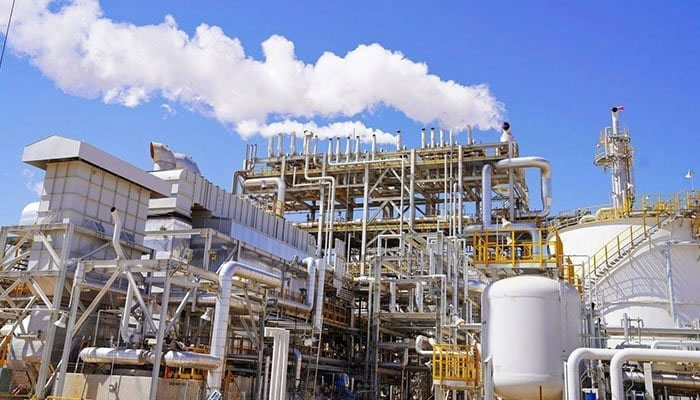
ISLAMABAD: Pakistan’s five local refineries have assured the government of their full operational readiness to ensure a sustainable supply of high-speed diesel and JP-8 to Pakistan’s Armed Forces, which are at high alert after the false flag operation of Pahalgam by India.
They emphasised on Monday with Petroleum Minister Ali Pervaiz Malik that all necessary arrangements, including strategic fuel reserves and uninterrupted production capabilities, are in place to support national defence needs in any scenario.
However, the Managing Director of refineries also agitated for the loss of Rs26billion, they and oil marketing companies (OMCs) have so far suffered in the first 10 months of the ongoing fiscal, which may reach the staggering figure of Rs32 billion by the end of CFY25. The petroleum minister, however, assured that the ministry is going to move ECC (Economic Coordination Committee), pleading for increasing the IFEM (Internal Freight Equalisation margin) by Rs1.50-2 per litre and OMCS’ margin by Rs1.20 per litre to recover the loss in the next 12 months. The Petroleum Division will try to get it approved before the next fortnight.
From May 16, 2025, the country would have another opportunity to accommodate refineries and OMCs, which are suffering from a loss on account of the sales tax exemption measure taken by the Finance Ministry in the budget 2024-25. “From May 16, 2025, the trends in international markets show that a massive decrease in POL prices is expected. So the top officials of the Petroleum Division want to shift some benefit of the expected reduction in POL prices to refineries and OMCs and this is how the end consumers will not feel the heat also.” The CEOs appreciated the minister’s proactive approach and shared insights on operational challenges, seeking government support in upgradation and fiscal incentives. Both sides agreed to maintain regular consultations to drive the sector forward.
The delegation included Zahid Mir, CEO of Pakistan Refinery Limited, Irtiza Qureshi-MD PARCO, Adil Khattak-CEO Attock Refinery Limited, Amir Abbasi-CEO Cynergico, and Asad Hasan, CEO National Refinery Limited. Secretary Petroleum Momin Agha, Additional Secretary Zafar Abbas, and Director General Oil Imran Ahmed were also present in the meeting.
However, it is yet to be determined in the ECC meeting how FBR functionaries would react to the summary of the Petroleum Division, as the tax collecting agency will advocate for the increase in petroleum levy to show improvement in non-tax revenue. In 10 months, FBR faced a revenue shortfall of Rs 833 billion. “Let’s see what happens in the ECC meeting,” a top official who was a part of the meeting of CEOS of refineries with the Petroleum Minister.
Later on, the refineries’ top men also met with Finance Minister Aurangzeb and FBR Chairman Rashid Langrial pleading either for restoration of the zero-rated status of refineries on POL products or abolishment the sales tax exemption on petrol, diesel, kerosene, and LDO (light diesel oil) arguing it has barred the refineries from initiating their upgrade project of $6 billion as upgradation has become unviable in the presence of sales tax exemption on POL products.
The Finance Minister and FBR chairman, however, acknowledged the issue and promised to meet with the Petroleum Secretary on the subject. The meeting gave positive indications that the Finance Ministry will undo the sales tax exemption on POL products in the next budget for 2025-26.
Adil Khattak, Managing Director of Attock Refinery Limited and Chairman of OCAC (Oil companies’ Advisory Council) said: “We met the Petroleum Minister and later the Finance Minister to resolve the issue created by exemption of petroleum products from sales tax in the Finance Act 2025 which does not allow the refineries and OMCs to adjust sales tax paid at the input stage.
This anomaly has not only made normal operations unsustainable but has also nullified the incentives given under the Brownfield Refineries Upgradation Policy, making the US dollar 6 billion investment unviable. The refineries also pointed out that the delay in implementation of the Refineries Upgradation Policy over the last five years has caused about five billion dollars in loss to the country. Both the Petroleum and Finance ministers assured the refineries’ delegation that they fully understand the problem and would take all possible measures to resolve the issue.”


