
CM’s climate vision: Punjab govt to launch major expansion of environmental protection force
Expanded force will be equipped with advanced tools including drones
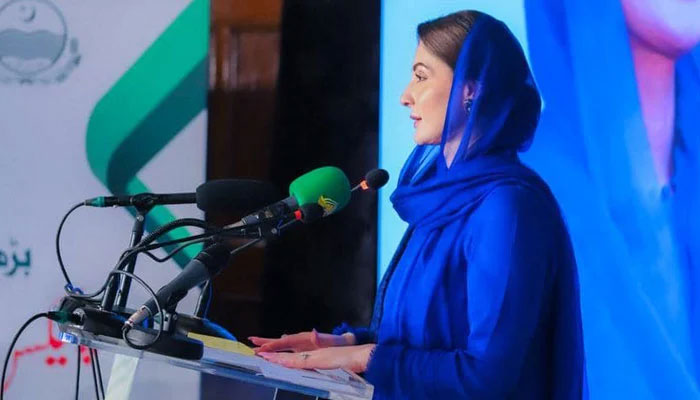
LAHORE: In a landmark initiative aimed at transforming Punjab’s environmental governance, Chief Minister Maryam Nawaz has ordered a province-wide expansion of the Environmental Protection Force (EPF), with the recruitment of an additional 1,000 officers and personnel to be completed by September this year.
This strategic move comes as part of her administration’s broader agenda to address the intensifying environmental and climate-related challenges confronting Pakistan’s most populous province. The Environmental Protection Force, originally launched as a “Smart Force” with a modest deployment of 250 personnel, is now being scaled up both in manpower and operational capability.
According to sources within the Punjab Environment Protection Department, this force will not follow the model of a conventional regulatory body instead, it will operate as a modern, technologically-enabled task force with a mandate to monitor, prevent, and respond to environmental violations and ecological risks in real-time.
The expanded force will be equipped with advanced tools including drones, satellite-based monitoring systems, mobile air quality monitoring stations, smog analyzers, hybrid vehicles, electric motorbikes, and mobile water testing laboratories. These resources are expected to greatly enhance the force’s surveillance and enforcement capacities, enabling swift interventions in pollution hotspots and more accurate assessments of environmental health indicators across urban and semi-urban landscapes.
Secretary of Environment Punjab, Raja Jahangir Anwar, in an exclusive conversation with Jang, confirmed that seven major cities have been identified as critical environmental hotspots. These include Lahore, Rawalpindi, Murree, Gujranwala, Sialkot, Multan, and Faisalabad. According to the secretary, these urban centers are grappling with deteriorating air quality and groundwater pollution due to unregulated urbanisation, rampant industrialisation, a surging number of vehicles, and the widespread use of non-biodegradable materials, particularly plastic bags.
He noted that scientific assessments and environmental audits conducted in these cities revealed alarming degradation in air and water quality, which not only poses ecological risks but also represents a significant threat to public health. “These cities are no longer just environmentally vulnerable — they are environmentally hazardous,” Anwar stated, emphasising the urgency for structured and science-based interventions.
To ensure accountability and performance transparency, the Environment Department is formulating Key Performance Indicators (KPIs) for the EPF. These metrics will be used to evaluate the impact and effectiveness of the force’s operations, with particular attention to reducing air and water pollution, enforcing compliance with environmental laws, and initiating public awareness campaigns on climate resilience.
The secretary further elaborated that the initiative is not limited to enforcement alone. The expanded EPF will also spearhead environmental awareness campaigns, engage in school- and community-level education drives, and support local governments in implementing climate adaptation strategies.







-
 Melania Trump Appears With Humanoid Robot At White House
 -
 ‘Addictive By Design’: Meta, YouTube Found Liable In Historic Verdict
 -
 Bruce Willis' Mom Marlene Makes Another Family Amid Son's Battle With Dementia
 -
 Roblox Safety Warning For Parents: Developer Says Kids Need 24/7 Monitoring
 -
 Chelsea Handler Explains Why She Dates Younger Men
 -
 Chappell Roan's Security Guard Takes 'full Responsibility' For His Interaction With Jorginho's Daughter?
 -
 Rosalía Cuts Concert Short Over Sudden Illness, Fans Shocked
 -
 'Buffy' Star Nicholas Brendon's Death Case Takes Massive Turn
 -
 FKA Twigs Takes Legal Stand Against Ex Shia LaBeouf
 -
 ‘Progressive’ Kate Middleton Snubs Outdated Royal Etiquette
 -
 Kylie Kelce Explains Why She Avoids Raising Kids With 'silver Spoon'
 -
 Meghan Markle Is Above Royal Family ‘empty Threats,’ Says Insider
 -
 Anne Hathaway Opens Up About 'defeated' Feeling As Working Mom
 -
 Shamed Andrew Should Testify In Epstein Case As ‘act Of Service’
 -
 What Really Happened Before Nicholas Brendon Was Found Dead At Home?
 -
 Sarah Ferguson Branded ‘most Famous Missing Person’ In UK Right Now