
A woman’s choice
There is no credible evidence to suggest that women wearing hijabs in sports are linked to radicalisation
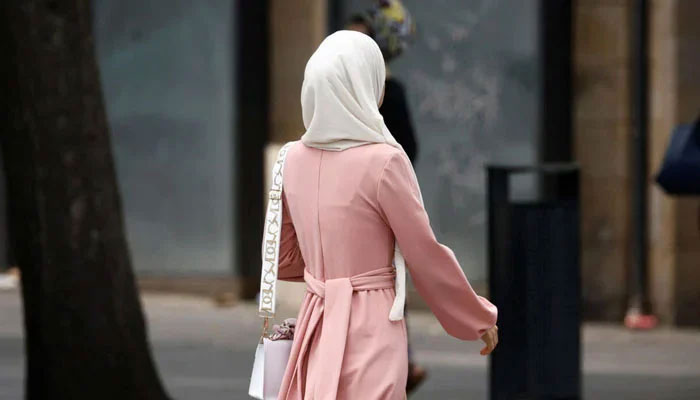
There is an uncomfortable truth that cuts across geography, culture and political systems: the global obsession with controlling women’s choices. Whether it is the forced imposition of a veil in countries like Afghanistan or the proposed ban on hijabs in domestic sports competitions in France, the message is clear: authority figures around the world are remarkably eager to dictate what women can or cannot wear. France’s latest legislative move to ban the wearing of hijab in all domestic sports events is a troubling example of how states exploit the language of secularism to enforce exclusion. While proponents of the law argue that the measure ensures uniform regulations, strengthens secular values and curbs extremism, the reality is far more sinister. There is no credible evidence to suggest that women wearing hijabs in sports are linked to radicalisation. On the contrary, hijab-wearing athletes have consistently proven that their attire poses no hindrance to their performance or their professionalism.
It is deeply ironic – and frankly, hypocritical – that while Western feminists are often quick to denounce oppressive dress codes in Eastern societies, many fall silent when discriminatory policies emerge closer to home. When a regime in the East passes an anti-women law, there is a global uproar, protests and performative displays of solidarity. But when liberal democracies like France push through policies that restrict women’s rights under the guise of secularism, many progressives in the West prefer to look the other way or even applaud. This double standard must be called out. Discrimination does not become acceptable simply because it is cloaked in the language of liberal values. A hijab, for many women, is not a symbol of oppression, but a part of their identity and faith. Denying them the right to wear it in sports – or in any public setting – is no different than forcing someone to wear it.
Targeting an entire community based on the perceived actions of a few is also a form of collective punishment that should have no place in a civilised society. Muslims in France, like anywhere else, are not responsible for the actions of extremists, and conflating religious visibility with radicalism is both irresponsible and dangerous. In a world where nations are racing to explore the universe and unlock the secrets of artificial intelligence, it is absurd that we remain caught in such regressive debates. Let us be clear: women’s clothing is no one’s business but their own. Whether a woman chooses to wear a hijab or not, the choice must be hers and hers alone. Any state – regardless of its religion or geographic location – that polices women’s bodies under any pretext must be held accountable.







-
 Kylie Kelce Explains Why She Avoids Raising Kids With 'silver Spoon'
 -
 Meghan Markle Is Above Royal Family ‘empty Threats,’ Says Insider
 -
 Anne Hathaway Opens Up About 'defeated' Feeling As Working Mom
 -
 Shamed Andrew Should Testify In Epstein Case As ‘act Of Service’
 -
 What Really Happened Before Nicholas Brendon Was Found Dead At Home?
 -
 Sarah Ferguson Branded ‘most Famous Missing Person’ In UK Right Now
 -
 Why King Charles Does Not Need A Driving License? Expert Reveals
 -
 Did Graham Norton Really Sign NDAs For Taylor Swift’s Wedding?
 -
 ‘Polite’ King Charles Treats Staff Better Than ‘boorish’ Andrew
 -
 Princess Beatrice's Husband Raises Eyebrows With Deleted Instagram Post
 -
 Dua Lipa 'snubs' Priyanka Chopra
 -
 Will Taylor Frankie Paul Still Get Her 'Bachelorette' Salary?
 -
 'Harry Potter' Returns: First Glimpse Of HBO's New Series
 -
 Ryan Gosling Credits His Kids For Key Detail In New Role
 -
 Prince William, Kate Middleton Mark 'historic Moment'
 -
 Why Roberts Pattinson Says Couples 'ruin' Their Big Day Amid Suki Waterhouse Wedding Rumors?