
Teachers of FG colleges decry ‘marginalisation’ in FDE leadership roles
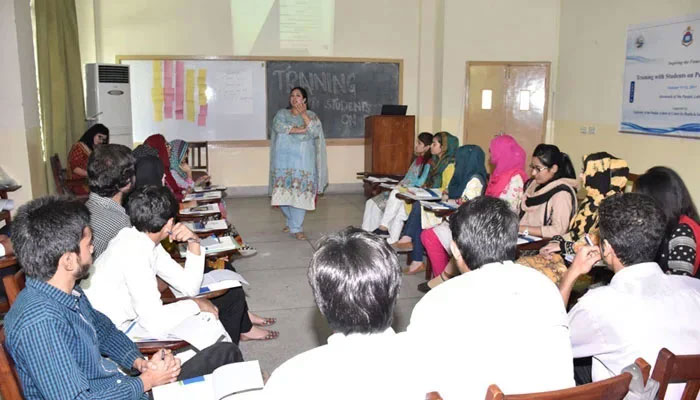
Islamabad:The recent transfer of teachers from Federal Government (FG) colleges to model colleges in Islamabad has sparked a wave of discontent among teachers fraternity of FG educational institutes, who resent 'irrational decisions and a lack of proper representation in administrative matters' at the Federal Directorate of Education (FDE).
The uproar follows the appointment of Shahid Mahmood Abbasi, a principal from a model college, as the FDE director (colleges) - a position that oversees both model and FG colleges. Teachers from FG colleges argue that Abbasi’s background in model colleges leaves him unfamiliar with the structure, challenges and administrative nuances of FG institutions.
A senior associate professor from an FG college expressed deep disappointment with the 'ineffective resolution of core issues facing FG colleges, including the creation of posts, the house rent ceiling, and the transfer and posting of teachers.'
The recent transfers came under fire from a senior faculty member at H-8 college, who complained about the "imbalance in staff allocation." “Teachers are being moved without regard to subject availability or student needs. For instance, an Economics teacher transferred from H-8 college to ICB, G-6/3 was reassigned to teach banking—a subject outside his area of expertise. Similarly, an assistant professor of political science from H-9 college was shifted to ICB, where political science is not even offered.
He was asked to teach ancient history and Pakistan Studies, which is simply ridiculous,” he said, calling the decisions detrimental to both teacher performance and student learning. Teachers insisted that such incidents could have been avoided had the director been appointed from FG colleges-someone who understood their academic framework and challenges.
“If we had a director from our own system, these irrational decisions wouldn’t happen,” another associate professor noted. The growing discontent has reignited calls for a separate FDE director for FG colleges or, at the very least, a rotational appointment system between FG and model colleges.
FG college teachers argue that for over a decade, key administrative roles had been monopolised by individuals from model colleges, with the last director (colleges) appointed from the FG stream was Professor Mehmood Akhtar Malik in 2012-13.
Since then, FG colleges have been consistently overlooked for leadership positions. “There is a clear bias,” said a senior teacher from an FG college. “It’s been over 10 years since an FG college teacher was given the opportunity to lead as director. This exclusion is unfair and damaging.”
When contacted, Federal Government College Teachers Association president Prof Akram Khan Khosa expressed concern about the continued marginalisation of FG college staff members in FDE leadership appointments.
“FG colleges have highly qualified and experienced teachers who are more than capable of serving in administrative roles. Yet, their talents are persistently ignored,” he said. Professor Khosa demanded the establishment of a rotational system in which directors are alternately selected from Model and FG colleges.
“This initiative will not only ensure equity but also foster a sense of inclusivity and fairness among teachers.” He said the voices of FG colleges' teachers must be heard as they're not just stakeholders-they’re frontline teachers shaping the future of students.







-
 Trump Announces A Rise In Global Tariffs To 15% In Response To Court Ruling, As Trade Tensions Intensify
 -
 Chappell Roan Explains Fame's Effect On Mental Health: 'I Might Quit'
 -
 AI Processes Medical Data Faster Than Human Teams, Research Finds
 -
 Sarah Ferguson’s Friend Exposes How She’s Been Since Andrew Mountbatten-Windsor’s Release
 -
 Jelly Roll Explains Living With 'severe Depression'
 -
 Charli XCX Applauds Dave Grohl’s 'abstract' Spin On Viral ‘Apple’ Dance
 -
 Anna Sawai Opens Up On Portraying Yoko Ono In Beatles Film Series
 -
 Eric Dane's Wife Rebecca Gayheart Shares Family Memories Of Late Actor After ALS Death
 -
 Palace Wants To ‘draw A Line’ Under Andrew Issue: ‘Tried And Convicted’
 -
 Eric Dane's Girlfriend Janell Shirtcliff Pays Him Emotional Tribute After ALS Death
 -
 King Charles Faces ‘stuff Of The Nightmares’ Over Jarring Issue
 -
 Sarah Ferguson Has ‘no Remorse’ Over Jeffrey Epstein Friendship
 -
 A$AP Rocky Throws Rihanna Surprise Birthday Dinner On Turning 38
 -
 Andrew Jokes In Hold As BAFTA Welcomes Prince William
 -
 Sam Levinson Donates $27K To Eric Dane Family Fund After Actor’s Death
 -
 Savannah Guthrie Mother Case: Police Block Activist Mom Group Efforts To Search For Missing Nancy Over Permission Row