
Trade may be diverted in Pakistan’s favour due to tariffs on BD, Vietnam, China: analysts
This potential downturn is attributed to tariffs’ influence on Pakistan’s trade balance and overall economic performance
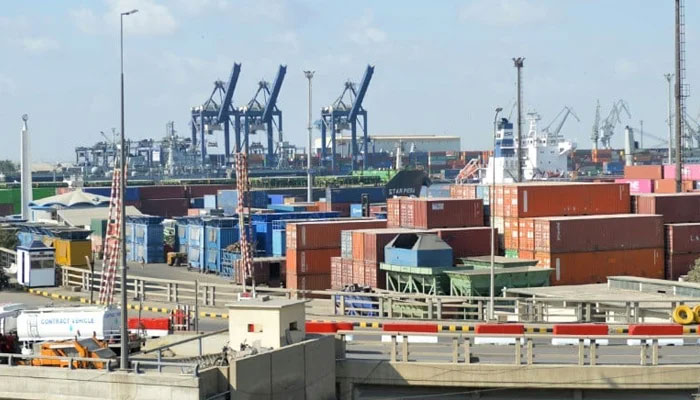
ISLAMABAD: Pakistani economists warn that the newly imposed US tariffs could have a significant impact on Islamabad’s exports. Initially, the effects might be relatively contained, but if the tariffs persist, they could lead to a more substantial decline in exports over time. This potential downturn is attributed to the tariffs’ influence on Pakistan’s trade balance and overall economic performance.
According to a Lahore School of Economics policy paper written by Dr Azam Amjad Chaudhry, Professor and Dean, Faculty of Economics, and Dr Gul Andaman, Teaching and Research Fellow, Innovation and Technology Center, with Bangladesh, Vietnam, and China facing even higher tariffs, there may be some trade diversions in Pakistan’s favour. Moreover, US buyers might negotiate for Pakistani exporters to absorb part of the tariff, further softening the blow to the country’s exports to the US.
With the US being an important trading partner, particularly in textiles and apparel, 39pc imposed tariff can adversely impact export revenues. If the price of Pakistan’s exports increases, we can use the price elasticity of demand to calculate the expected decrease in demand and the resulting impact on export revenues. For instance, if the price elasticity of demand is -0.4, then a 10pc increase in export price, assuming all burden of increased price is transferred to the consumer, it will reduce export revenues by 4pc.
Pakistan’s exports to the USA in three sectors from 2003 to 2023: We can observe a steady increase, amounting to $5.18 billion in 2023. Notable products include apparel and clothing accessories, articles such as worn clothing and rugs, cotton, raw hides and skins, and furniture to the end consumer, then the reduction in export revenues could be lower.
Our analysis reveals that the price elasticity of demand is -0.4. Hence, a tariff of 29pc may lead to a 15.6pc fall in exports to the US assuming that the entire burden of the tariff is passed on to the US consumer. This is equivalent to a fall of $0.8 billion in 2024 and an aggregate fall of $4.22billion from 2024-2028.
If only some of the increased tariff is passed on as higher prices to the US consumer, the effective increase in export prices could be lower. For effective price increases of 29pc and 19pc, the export revenues may fall by $0.6 billion and $0.4 billion in 2024 respectively whereas the aggregate fall for five years could be $3.14 billion and $2.06 billion respectively. Another important possibility to consider is the impact of a global recession that may result from a trade war.
Our export income elasticity, derived from the long-run export demand function, shows that if the growth rate of foreign income decreases by 1pc, then demand for Pakistan’s exports falls by an average of 1.445pc. This indicates that for 2024, the exports could decline between the range of $55.5 million to $92.5 million. If the foreign income growth rate remains 1pc lower for the foreseeable future, the aggregate impact for five years could be between $0.29 billion to $0.49 billion. Note that this impact is only if foreign income growth falls due to a global recession and the combined impact of US tariffs and a global recession on Pakistan’s exports would be higher.
If we analyze the impact of the rise in export prices due to tariffs for the manufacturing sector and specifically the textile sector exports, the results show that with the export elasticity of demand of -0.4, a tariff of 39pc can lead to a fall of $0.76 billion in 2024 and an aggregate fall of $4.02 billion from 2024-2028 in the manufacturing sector. If the effective increase in export price is instead 29pc and 19pc, the export revenues could fall by $0.56 billion and $0.37 billion in 2024 whereas the aggregate fall for five years could be $2.99 billion and $1.96 billion respectively.
A similar analysis for the textiles sector shows that a tariff of 39pc can lead to a fall of $0.66 billion in 2024 and an aggregate fall of $3.48 billion from 2024-2028. If the effective increase in export price is instead only 29pc and 19pc, the export revenues may fall by $0.49 billion and $0.32 billion in 2024 whereas the aggregate fall for five years could be $2.59 billion and $1.69 billion respectively.


