
PIA set to post first annual profit in over 20 years: report
PIA’s return to operational profitability follows several internal reforms undertaken over the past three years
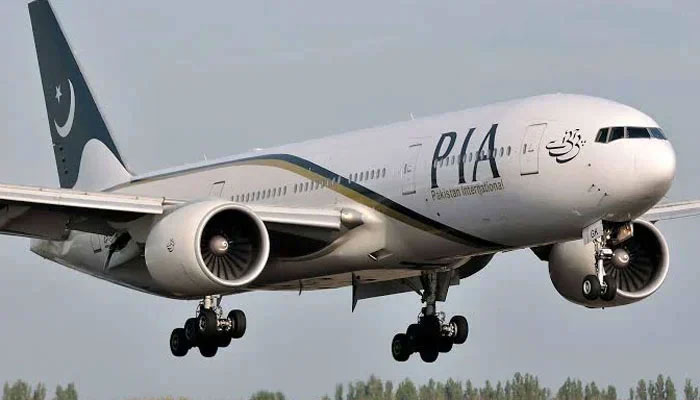
KARACHI: Pakistan International Airlines Holding Company, the country’s national airline, is all set to post its first annual profit in more than two decades, Bloomberg reported, citing documents it had seen. This marks a significant turnaround ahead of the government’s renewed efforts to privatise the national carrier,
According to Bloomberg, the airline recorded earnings per share of Rs5.01 for the year ended December 2024, its first full-year profit since 2003. The audited financial statements are expected to be submitted to the airline’s board for approval prior to being released publicly. The airline has not responded to a request for comment, the report said.
The development comes as a major milestone for PIA, which has long struggled with mounting losses, leading to impounded aircraft at foreign airports, flight cancellations, and a close brush with default in recent years. The carrier has historically relied on regular government bailouts, which have now ceased.
Pakistan has made several attempts at privatising the airline. Last year, the only bid received fell below the government’s minimum valuation of $306 million. A fresh attempt is currently underway, with new bids expected this month.
In an effort to make the transaction more appealing, the government transferred around 75 percent of PIA’s debt onto public accounts during the previous bidding round. According to Bloomberg, all outstanding debt has now been removed. Companies that had earlier expressed interest in the privatisation are reportedly re-engaging in the process, Secretary at the Privatisation Commission Usman Bajwa said in February.
PIA’s return to operational profitability follows several internal reforms undertaken over the past three years. These include workforce reductions of nearly 30 per cent, the closure of loss-making routes, and improved fleet utilisation, Bloomberg added.







-
 'Buffy' Star Nicholas Brendon's Death Case Takes Massive Turn
 -
 FKA Twigs Takes Legal Stand Against Ex Shia LaBeouf
 -
 ‘Progressive’ Kate Middleton Snubs Outdated Royal Etiquette
 -
 Kylie Kelce Explains Why She Avoids Raising Kids With 'silver Spoon'
 -
 Meghan Markle Is Above Royal Family ‘empty Threats,’ Says Insider
 -
 Anne Hathaway Opens Up About 'defeated' Feeling As Working Mom
 -
 Shamed Andrew Should Testify In Epstein Case As ‘act Of Service’
 -
 What Really Happened Before Nicholas Brendon Was Found Dead At Home?
 -
 Sarah Ferguson Branded ‘most Famous Missing Person’ In UK Right Now
 -
 Why King Charles Does Not Need A Driving License? Expert Reveals
 -
 Did Graham Norton Really Sign NDAs For Taylor Swift’s Wedding?
 -
 ‘Polite’ King Charles Treats Staff Better Than ‘boorish’ Andrew
 -
 Princess Beatrice's Husband Raises Eyebrows With Deleted Instagram Post
 -
 Dua Lipa 'snubs' Priyanka Chopra
 -
 Will Taylor Frankie Paul Still Get Her 'Bachelorette' Salary?
 -
 'Harry Potter' Returns: First Glimpse Of HBO's New Series