
SC moved against amendment that allows unelected persons to contest mayor, deputy mayor polls
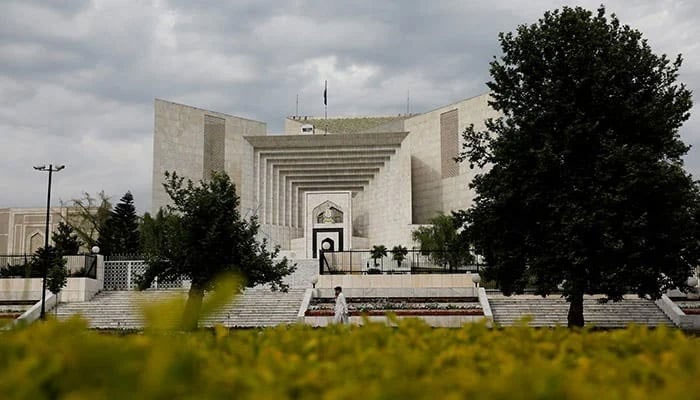
A leave to appeal has been filed in the Supreme Court against the Sindh High Court judgment that dismissed a petition challenging an amendment to the local government law that allows unelected persons to contest elections for the posts of mayor and deputy mayor.
The SHC had earlier dismissed petitions challenging an amendment that allows unelected persons to contest polls of mayor and deputy mayor, observing that the concept of being elected after being selected is not an alien concept in our redesigned constitution via wisdom of legislature.
Filing a petition in the SC, the petitioner’s counsel Tariq Mansoor submitted that high court failed to appreciate that after the announcement of the election schedule April 29, 2022 no modifications or amendment in the local government act could be made by the Sindh government with retrospective effect as this was tantamount to a malafide, violation of the constitution, election laws and the rules.
He said that promulgation of the impugned amendment was unlawful and violative of the provincial assembly rules of business. The counsel submitted that the principle of democracy does not allow any unelected person to exercise the state power and authority under the constitution and not even the local government provisions under the local government provision.
He submitted that the impugned amendment was unlawful and liable to be set aside. The court was requested to set aside the SHC order with regard to the dismissal of the petition.
The SHC had observed that the law can only be struck down on the grounds of lack of legislative competence, being violative of fundamental rights preserved by the constitution and if it offends any article of the constitution. The court had earlier dismissed the petitions through a short order.
The SHC observed that it seems that the provisions similar to the one inserted under 18-B (amended Section impugned in the instant petition) are present in the constitution for the federal and provincial ministers who, if so appointed, are required to be elected within a span of six months.
It said that any Muslim member of the National Assembly can be elected as prime minister of the country; hence, even a Muslim individual from reserved seats (who are not directly elected) can theoretically be prime minister of Pakistan. “Similarly the chief ministers could be any one from amongst the members of the provincial assembly; hence, any individual from the reserved seats including the woman and minority can theoretically be elected as chief minister.”
The court also observed that analysis of the counsel for the petitioners seems to have challenged the wisdom of the legislature and this attempt could only succeed if an amendment falls beyond the basic frame of the constitution, not otherwise.







-
 Prince William Warned His Future Reign Will Be Affected By Andrew Scandal
 -
 Amy Madigan Reflects On Husband Ed Harris' Support After Oscar Nomination
 -
 Is Studying Medicine Useless? Elon Musk’s Claim That AI Will Outperform Surgeons Sparks Debate
 -
 Margot Robbie Gushes Over 'Wuthering Heights' Director: 'I'd Follow Her Anywhere'
 -
 'The Muppet Show' Star Miss Piggy Gives Fans THIS Advice
 -
 Sarah Ferguson Concerned For Princess Eugenie, Beatrice Amid Epstein Scandal
 -
 Uber Enters Seven New European Markets In Major Food-delivery Expansion
 -
 Hollywood Fights Back Against Super-realistic AI Video Tool
 -
 Pentagon Threatens To Cut Ties With Anthropic Over AI Safeguards Dispute
 -
 Meghan Markle's Father Shares Fresh Health Update
 -
 Samsung Galaxy Unpacked 2026: What To Expect On February 25
 -
 Travis Kelce Takes Hilarious Jab At Taylor Swift In Valentine’s Day Post
 -
 NASA Confirms Arrival Of SpaceX Crew-12 Astronauts At The International Space Station
 -
 Can AI Bully Humans? Bot Publicly Criticises Engineer After Code Rejection
 -
 Search For Savannah Guthrie’s Abducted Mom Enters Unthinkable Phase
 -
 Imagine Dragons Star, Dan Reynolds Recalls 'frustrating' Diagnosis