
Trump’s tariffs reshape global textile trade
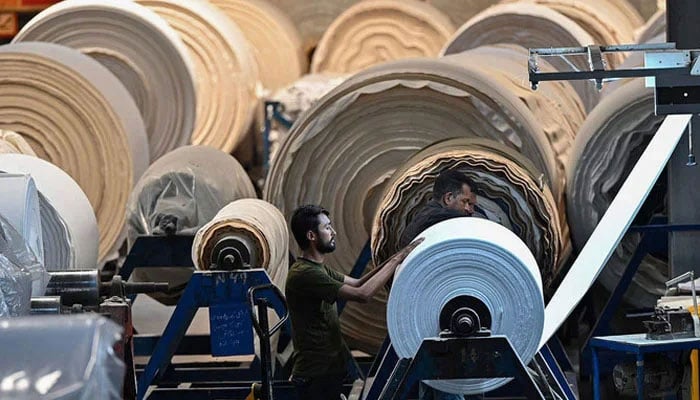
LAHORE: The impact of former US President Donald Trump’s tariff measures is expected to shrink global trade, at least in the short to medium term. Trade wars often trigger retaliatory tariffs, increasing costs for businesses and consumers while disrupting global supply chains.
The latest US tariff measures have imposed varying rates on textile exports from several Asian and South Asian countries. The tariffs on major textile exporters to the US are as follows: Vietnam (46 per cent), Thailand (36 per cent), Bangladesh (37 per cent), Sri Lanka (44 per cent), India (26 per cent) and Pakistan (29 per cent).
India’s textile exports to the US face a 26 per cent tariff, which is lower than those imposed on its regional competitors, potentially giving Indian exporters a relative advantage in the US market. This could make Indian textiles more competitively priced compared to those from countries facing higher tariffs. Although India is affected by the tariffs, it has not taken any significant retaliatory measures. Officials in Delhi pointed out that the 26 per cent tariff imposed on India is still lower than those on other Asian and South Asian competitors, which could provide Indian exporters with a “comparative advantage”.
Pakistan could potentially benefit from the U.S. tariff hikes on other Asian textile exporters, but several factors will determine whether it can effectively capitalise on this opportunity. With a 29 per cent tariff, Pakistan faces lower duties than Vietnam, Thailand, Bangladesh and Sri Lanka, making its textiles relatively more attractive to US buyers looking to shift sourcing from higher-tariff countries.
Pakistan is already a key textile supplier to the US, particularly in home textiles such as bedsheets and towels, as well as garments. If Pakistan maintains quality and cost advantages, buyers may increase orders to offset higher costs from other countries. Some US importers may reduce orders from Vietnam, Thailand or Sri Lanka and shift to Pakistan if its price competitiveness improves. However, India’s 26 per cent tariff is still lower than Pakistan’s 29 per cent, making India a preferred choice for buyers if it maintains efficiency. India’s diverse textile base and strong integration with global brands provide it with a competitive edge.
To capitalise on this opportunity, Pakistan must scale up production, improve logistics and reduce lead times. Supply chain inefficiencies could limit its ability to attract new orders. Moreover, Pakistan imports a significant amount of cotton, making it vulnerable to currency fluctuations and higher raw material costs. To fully leverage this relative tariff advantage, Pakistan should strengthen trade ties with US buyers by offering long-term pricing deals to secure new orders. Improving production efficiency through investment in automation, energy-efficient processes and cost reduction will also be crucial. Negotiating trade agreements and exploring special tariff relief measures, such as GSP+ benefits, could enhance Pakistan’s position in the US market.
Pakistan has a window of opportunity due to its lower tariffs compared to most competitors. However, India still holds a stronger position, and Pakistan’s ability to convert this advantage into actual growth depends on addressing supply chain and policy challenges. It is important to note that these tariffs are part of broader US trade actions affecting multiple sectors and countries, leading to significant shifts in global trade dynamics. These developments are likely to influence the competitive landscape of textile exports to the US, potentially altering market shares among exporting nations.
The real impact depends on how affected countries respond -- whether they impose direct countermeasures, seek alternative trade partners, or negotiate new agreements. The uncertainty caused by tariff wars also affects business confidence, investment decisions, and long-term trade relationships. Once counter-tariffs are announced, they will determine the extent to which US exports decline due to reduced market access. It remains unclear which businesses may shift production to avoid tariffs.
Historically, trade wars have not benefited any party in the long run. They tend to reduce efficiency, distort comparative advantages, and slow economic activity.






-
 Daniel Radcliffe Admits To Being Self Conscious While Filming 'Harry Potter' In Late Teens
 -
 Director Beth De Araujo Alludes To Andrew's Arrest During Child Trauma Talk
 -
 Video Of Andrew 'consoling' Eugenie Resurfaces After Release From Police Custody
 -
 'Harry Potter' Alum Daniel Radcliffe Gushes About Unique Work Ethic Of Late Co Star Michael Gambon
 -
 Japan: PM Takaichi Flags China ‘Coercion,’ Pledges Defence Security Overhaul
 -
 Angorie Rice Spills The Beans On Major Details From Season 2 Of ' The Last Thing He Told Me'
 -
 Questions Raised Over Andrew Mountbatten-Windsor's Line Of Succession
 -
 'Shameless' Sarah Ferguson 'pressuring' Princess Eugenie, Beatrice For Major Reason
 -
 Teacher Arrested After Confessing To Cocaine Use During Classes
 -
 Paul McCartney Talks 'very Emotional' Footage Of Late Wife Linda In New Doc
 -
 Princess Beatrice, Princess Eugenie's Response To Andrew's Arrest Revealed
 -
 King Charles And Princess Anne Bestow Honours At Windsor Castle
 -
 King Charles 'worried' As Buckingham Palace, Royal Family Facing 'biggest Crisis'
 -
 Milo Ventimiglia Recalls First Meeting With Arielle Kebbel On The Sets Of 'Gilmore Girls' Amid New Project
 -
 Eric Dane Infuriated After ALS Diagnosis As He Feared The Disease Would Take Him Away From His Girls
 -
 It's A Boy! Luke Combs, Wife Nicole Welcome Third Child