
Trump tariff puts Pakistan at disadvantage against regional competitors
Baseline 10% tariff will apply from April 5, 2025, with additional 29% reciprocal tariff, starting April 9, 2025
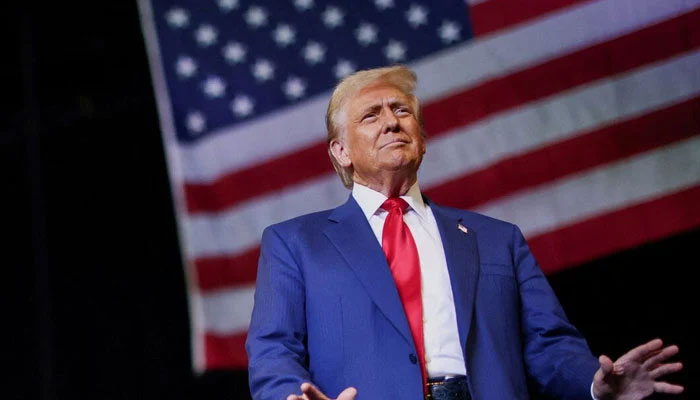
ISLAMABAD: The tariff hike announced by US President Donald Trump will reduce Pakistan’s price competitiveness, making it harder to maintain sales in the US market against “lower-tariff countries” such as India and Turkey, a senior official at the Commerce Ministry told The News.
The United States has imposed a 29 per cent reciprocal tariff on imports from Pakistan, in addition to a 10 per cent baseline tariff applied to all imports, bring the total tariff on Pakistani products to 39 per cent. This has reshaped the competitive landscape for textile exports.
This is part of Trump’s sweeping trade policy announced earlier this week. The reciprocal tariff, effective April 9, 2025, targets Pakistan among over 180 countries and territories, aiming to address trade imbalances and perceived unfair trade practices. The Trump administration claims Pakistan imposes tariffs and barriers equivalent to 58 per cent on US goods, though this figure includes non-tariff measures such as currency manipulation and is not independently verified here.
The baseline 10 per cent tariff will apply from April 5, 2025, with the additional 29 per cent reciprocal tariff, starting April 9, 2025.
This has virtually replaced Pakistan’s trade status under the Generalised System of Preferences (GSP), which offered lower duties (typically 4-5 per cent) on certain goods.
The US is Pakistan’s largest single-country export market, with exports valued at approximately $6 billion annually, predominantly textiles.
Certain goods such as copper, pharmaceuticals, semiconductors, lumber, gold, and energy are exempt from the reciprocal tariffs, as per a White House fact sheet, though they may still face the 10 per cent baseline unless otherwise specified.
However, the new reciprocal tariffs established by the US president’s order are in addition to any other duties, fees, taxes, exactions, or charges applicable on some articles such as if the existing tariff on synthetic apparel is 32 per cent, the new tariff will be 61 per cent (32+29), reveals a paper prepared for the premier by the Commerce Ministry about the impact of the US tariffs on Pakistan exports.
However, All Pakistan Textile Mills Association (Aptma) Secretary General Shahid Sattar said Pakistan will have a “marginal impact” on exports, as the regional economies face more tariffs than Pakistan.
He highlighted that Bangladesh faces 37 per cent reciprocal tariff plus 10 per cent baseline tariff, Sri Lanka 44 per cent plus 10 per cent, Vietnam 40 percent plus 10 percent baseline tariff, and China 34 percent plus 10 percent baseline tariff. However, Washington says if any country reduces tariffs on US products, it will further reduce duties on that country’s products. He suggested that Pakistan should reduce the tariffs on US products. He said textile industry is importing cotton from the US on zero duty.
The paper prepared by the Commerce Ministry says the tariff hike significantly increases the cost of Pakistani goods in the US, potentially reducing export competitiveness, especially in textiles, which account for a major share of its $6 billion in annual exports to the US. This could lead to job losses in export-driven industries, a wider trade deficit, and higher consumer prices domestically if Pakistan retaliates or shifts trade elsewhere.
While some analysts suggest lower global commodity prices from trade disruptions might offset import costs for Pakistan, the immediate effect on its US-bound exports is likely to be negative, given the market’s importance (about 19 per cent of Pakistan’s total exports in the first half of FY25).
This policy aligns with Trump’s broader strategy to shrink the US trade deficit ($918.4 billion in 2024) and boost domestic manufacturing, though Pakistan’s trade surplus with the US ($3 billion in 2024) is relatively small compared to giants like China.
The exact impact will depend on Pakistan’s response, potential negotiations and whether it can redirect exports to other markets. For now, the 39 per cent total tariff marks a sharp escalation from prior concessionary rates, reflecting the administration’s aggressive stance on reciprocity.
Under the latest scenario, Pakistan will have a cost advantage of 46 percent over Vietnam, 49 percent over Indonesia, 49 percent over Cambodia, 54 percent over China, and 37 percent over Bangladesh. However, Pakistan will face a cost disadvantage of 26 percent over India, 10 percent over Turkey and 23 percent over Jordan, Egypt, and Central America.
This means Pakistan may still be competitive against higher tariff-hit nations but may struggle against lower tariff markets such as India and Turkey.
Textiles dominate Pakistan’s exports to the US, accounting for a significant portion of the $5.01 billion in trade (2023) including miscellaneous textiles of $3.87 billion, Knit/crochet clothing of $785.8 million, leather clothing & accessories of $591.8 million and cotton-related products of $1.03 billion
Pakistan will benefit relatively as Vietnam, Bangladesh, and Sri Lanka face even higher tariffs, potentially making them less competitive.
Turkey and Far Eastern countries could gain if they can fill supply gaps left by affected nations. Lesotho (50 per cent) faces the highest tariff, while Myanmar (44 per cent) and Cambodia (49 per cent) are among the hardest-hit in Asia.
This new tariff is not applicable on the goods having more than 20 per cent of the US originating material. Pakistani entrepreneurs will still have an option for the industry to use US cotton more and avail exemption.
More generally, the ad valorem rates of duty set forth in this order shall apply only to the non-US content of a subject article, provided at least 20 percent of the value of the subject article is US originating 29 per cent is over and above the existing tariffs, as per the following provision of US Presidential Order.







-
 Magic Vs Clippers: Clippers Announce Kawhi Leonard Status After Exit
 -
 BTC Price Today: Bitcoin Sinks Below $65K On Trade Uncertainty
 -
 'A Knight Of The Seven Kingdoms': All You Need To Know About The Finale
 -
 NYC Travel Ban: Mamdani Shuts Down Roads Amid Blizzard Conditions
 -
 Alicia Keys Celebrates 25 Years Of Breakout Single ‘Fallin’’
 -
 Akinola Davies Jr. Gives His Immigrant Parents A Shoutout In 2026 BAFTAs Acceptance Speech
 -
 Princess Beatrice, Eugenie Told 'first Thing They Should Do' After Andrew Arrest
 -
 Jennifer Garner Reveals What Her Kids Think Of Her Acting Career
 -
 Prince William Should Focus On 'family Business' After Andrew Blunder
 -
 Katherine Schwarzenegger Pratt 'brought To Tears' By Sister-in-law's Gesture
 -
 Prince William Makes Bold Claim About Britain's Creative Industry At BAFTA
 -
 Andrew Mountbatten Windsor Insulting 'catchphrase' That Degarded Staff
 -
 Kate Middleton, Princess Beatrice 'undercurrent Tension' Comes To Surface
 -
 'Grey's Anatomy' Alum Katherine Heigl Reveals Why She Stayed Silent After Eric Dane Loss
 -
 Host Alan Cumming Thanks BAFTAs Audience For Understanding After Tourette’s Interruption From Activist
 -
 Jennifer Garner Reveals Why Reunion With Judy Greer Makes Fans 'lose Their Minds'