
Lahore crime
Numbers disclosed in performance report, which includes 15 murdered women and 103 cases of sexual assault
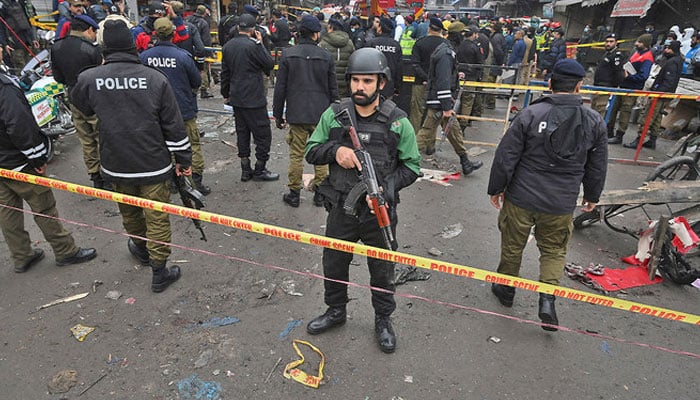
The latest crime statistics from Lahore paint a rather depressing picture of the safety and security of women and children. Over the first three months of 2025, more than 100 children were kidnapped -- and an equal number of women faced assault. These alarming figures essentially highlight the persistent vulnerabilities faced by some of the most at-risk segments of our society. Despite the Punjab police’s claims of action, the sheer scale of these crimes demands a stronger and more sustained response from the government and law-enforcement agencies. Crimes against women and children, including domestic violence, child trafficking and sexual crimes, continue to be a growing menace in Pakistan. The numbers disclosed in the performance report, which includes 15 murdered women and 103 cases of sexual assault, should be a wakeup call regarding our basic security as citizens. While the police claim to have arrested 110 suspects involved in these crimes and recovered over 1,000 abducted individuals, the need for proactive prevention rather than post-crime intervention remains paramount.
The Punjab government must take immediate and concrete measures to address these rising crimes. Strengthening laws, ensuring effective implementation and making the judicial process swifter are essential steps. The conviction rate for crimes against women and children remains low, often due to flawed investigations, lack of evidence, and pressure on victims to withdraw cases. The Punjab police must prioritise training its officers in handling cases of gender-based violence with sensitivity and professionalism, ensuring that victims are not further traumatised during legal proceedings. There also needs to be a multi-pronged approach to crime prevention. Community policing, surveillance systems and rapid response units must be strengthened to provide immediate protection. The use of technology, such as digital databases and AI-driven predictive policing, can be instrumental in tracking habitual offenders and preventing crimes before they occur.
Beyond policing, awareness campaigns must be conducted to educate the public about the importance of reporting crimes. Safe houses and rehabilitation centres for survivors must be adequately funded, and collaboration with civil society organisations working on women's and children’s rights should be encouraged. There is also a need to acknowledge that crimes against women and children are a deep-rooted societal crisis that requires urgent intervention. A society where women and children live in fear is a society that has failed its most fundamental duty of protecting its most vulnerable.







-
 UK Asylum System Faces Changes As Refugees Will Get Temporary Protection Only
 -
 Meghan Markle Has Realised ‘star Power’ Is Not Enough After Jordan Trip
 -
 USC Leading Scorer Chad Baker-Mazara Leaves Program Amid Losing Streak
 -
 Google Is Winding Down Popular App 'Pixel Studio': Here's Why
 -
 Zendaya, Tom Holland Secretly Married?
 -
 Dove Cameron Reveals Why She's Limiting Relationship Talk After Damiano David Engagement
 -
 Bulls Vs Bucks: Giannis Out, Simons And Williams Sidelined
 -
 Princess Beatrice Is ‘haunted’ By Dreadful Shamed Andrew Arrest
 -
 Panthers Vs Islanders: Dmitry Kulikov Returns From Injured Reserve As Schwindt Hits IR
 -
 SAG-AFTRA Drops SAG Awards Name To Rebrand
 -
 Next Full Moon: How To Watch The Total Lunar Eclipse On March 3
 -
 Bhad Bhabie Shares Tender Moment With Daughter Amid Cancer Setback Hint
 -
 Silver, Gold Prices Surge Amid Geopolitical Uncertainty After US-Israel Attack On Iran
 -
 Britain To Trial Social Media Ban For Hundreds Of Thousands Of Children Under-16
 -
 Prince Harry Should Face Same Fate As Shamed Andrew, Says Expert
 -
 Oil Price Jumps, Stocks Fall After US And Israel Strike Iran