
Prelude to war or high-stakes gamble?
US Air Force maintains a fleet of 20 B-2 Spirit stealth bombers, and one-third of them seven aircraft have now been deployed to Diego Garcia
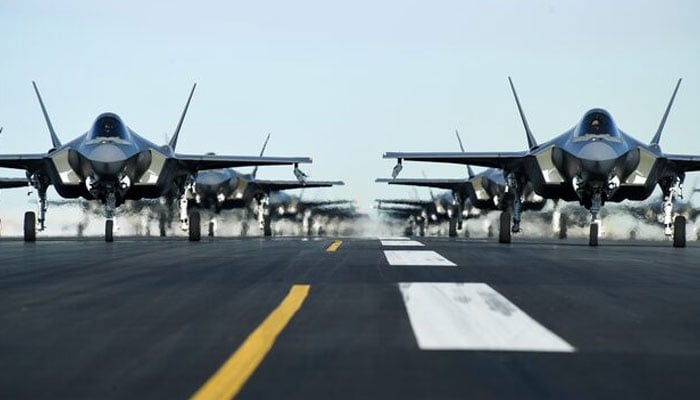
In the past 72 hours, the US has deployed seven B-2 Stealth Bombers, more than ten KC-135R Stratotanker refueling aircraft, and several C-17 transport planes -- all stationed within the 12 square miles of Diego Garcia, located approximately 3,400 miles from Iran and 2,200 miles from Yemen
The USS Harry S Truman (CVN-75), a Nimitz-class aircraft carrier, is currently stationed in the region. Additionally, the USS Carl Vinson (CVN-70), another Nimitz-class supercarrier, is en route and will soon arrive.
The US Air Force maintains a fleet of 20 B-2 Spirit stealth bombers, and one-third of them -- seven aircraft -- have now been deployed to Diego Garcia. Each B-2 is valued at approximately $2 billion, with an operating cost of about $1 million per day.
Deploying a Nimitz-class supercarrier costs around $250 million per month. Additionally, more than ten KC-135R Stratotanker refueling aircraft, costing approximately $660,000 per day for 11 units, and several C-17 transport planes, costing about $600,000 per day for five units, are part of the deployment. Together, seven B-2s, two supercarriers, 11 KC-135Rs, and five C-17s would cost approximately $750 million per month to operate.
This deployment represents a formidable projection of power, signaling an unmistakable show of force in the region. A prelude to war? A strategic deterrent? Or a hardline negotiating tactic?
Historically, such a massive buildup preceded conflicts like the 1991 Gulf War, the 2001 Afghanistan invasion, and the 2003 Iraq invasion.
In the past, the US has also employed similar buildups for strategic deterrence, as demonstrated in Persian Gulf standoffs with Iran, the 1996 Taiwan Strait Crisis with the deployment of two carrier battle groups, and the 2017 North Korea tensions when carrier strike groups underscored resolve against missile tests.
To be certain, Trump has a history of showing force to extract better deals. Yes, Trump has a history of using military manoeuvres to bolster diplomatic efforts. Yes, Trump’s negotiating style has consistently revolved around escalatory brinkmanship, where he applies maximum pressure before offering a deal. Yes, Trump is all about ‘fire and fury’ rhetoric followed by diplomacy. Yes, Trump has a history of creating intentional uncertainty.
The sheer scale of this deployment forces Iran into a dilemma: either risk escalation or come to the table under pressure. Trump’s signature approach -- escalate first and negotiate later.
Beyond the strategic calculus, there’s also a financial reality: this deployment is costing the US an estimated $750 million per month. Such an expenditure is rarely sustained without a clear objective.
Historically, comparable military buildups have preceded full-scale conflicts, including the 1991 Gulf War, the 2001 Afghanistan invasion, and the 2003 Iraq invasion.


