
Why the Pakistan resolution became necessary
Political climate of pre-partition India was marked by rising Hindu-Muslim tensions, witnessed communal violence
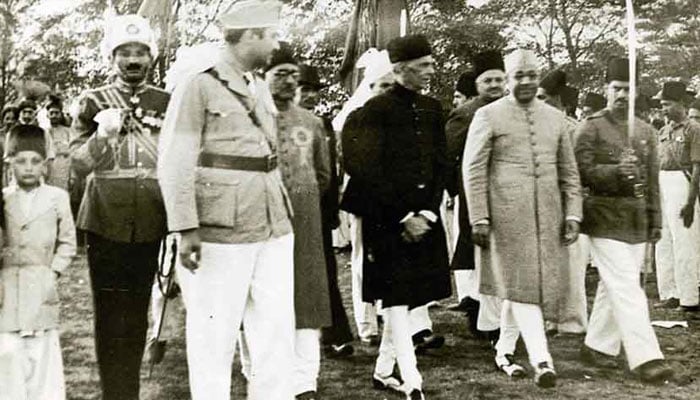
The relationship between Muslims and Hindus in India has evolved from periods of peaceful coexistence and cultural exchange to periods of violent conflict and partition, largely due to historical, socio-political, and cultural factors.
The political climate of pre-partition India was marked by rising Hindu-Muslim tensions, witnessed communal violence, particularly in the Punjab and Bengal provinces, further solidifying the idea of a separate Muslim state. The rebellion was fueled by a range of grievances, including economic exploitation, social and religious discrimination, and political oppression. While the rebellion was not solely based on religious tensions between Hindus and Muslims, these tensions did play a role in fueling the conflict.
Additionally, the British policy of divide and rule created a sense of insecurity among Muslims, who feared being dominated by a Hindu majority in a united India. The Arya Samaj and other Hindu groups, with their focus on cow protection and the “reconversion” of Muslims, further fueled religious tensions. The Hindi-Urdu controversy and anti-cow-killing riots in the late 19th century also contributed to the growing divide.
Moreover, the growing Hindu and Muslim nationalist movements, represented by the Indian National Congress and the All-India Muslim League respectively, fueled communal tensions and demands for separate electorates and, eventually, a separate state for Muslims.
Furthermore, the failure of negotiations also became a cause for the demand for a separate Muslim state. Despite numerous attempts at finding a compromise, the Indian National Congress and the All-India Muslim League, led by Jawaharlal Nehru and Muhammad Ali Jinnah respectively, were unable to reach an agreement on the structure of an independent India, leading to the partition of the subcontinent.
However, the Muslim League, since its establishment in 1906, struggled for constitutional guarantees for Muslim rights and interests in a united India. It never spoke about a separate homeland for Muslims until March 23, 1940. This was something that it continuously rejected, but later it became its slogan. The reason behind this shift in the policy of the League was the Congress’ anti-Muslim policies, which it persistently adopted and pursued. The Muslim League attempted to work with the Congress and reach a consensus on political and constitutional issues, but to no avail because of the biased approach of the Congress. Thus, the All-India Muslim League, led by Muhammad Ali Jinnah, put forward the demand for a separate state in Muslim-majority areas in the north-western and eastern zones of India, grouped to constitute independent states in which the constituent units would be autonomous and sovereign. Hence, this acceptance of the Pakistan Resolution accelerated the pace of the freedom movement.
-The author holds an M.Phil in History







-
 Trump Announces A Rise In Global Tariffs To 15% In Response To Court Ruling, As Trade Tensions Intensify
 -
 Chappell Roan Explains Fame's Effect On Mental Health: 'I Might Quit'
 -
 AI Processes Medical Data Faster Than Human Teams, Research Finds
 -
 Sarah Ferguson’s Friend Exposes How She’s Been Since Andrew Mountbatten-Windsor’s Release
 -
 Jelly Roll Explains Living With 'severe Depression'
 -
 Charli XCX Applauds Dave Grohl’s 'abstract' Spin On Viral ‘Apple’ Dance
 -
 Anna Sawai Opens Up On Portraying Yoko Ono In Beatles Film Series
 -
 Eric Dane's Wife Rebecca Gayheart Shares Family Memories Of Late Actor After ALS Death
 -
 Palace Wants To ‘draw A Line’ Under Andrew Issue: ‘Tried And Convicted’
 -
 Eric Dane's Girlfriend Janell Shirtcliff Pays Him Emotional Tribute After ALS Death
 -
 King Charles Faces ‘stuff Of The Nightmares’ Over Jarring Issue
 -
 Sarah Ferguson Has ‘no Remorse’ Over Jeffrey Epstein Friendship
 -
 A$AP Rocky Throws Rihanna Surprise Birthday Dinner On Turning 38
 -
 Andrew Jokes In Hold As BAFTA Welcomes Prince William
 -
 Sam Levinson Donates $27K To Eric Dane Family Fund After Actor’s Death
 -
 Savannah Guthrie Mother Case: Police Block Activist Mom Group Efforts To Search For Missing Nancy Over Permission Row