
Power beyond symbolism
Women in politics often find themselves relegated to women's wings, treated as auxiliary units
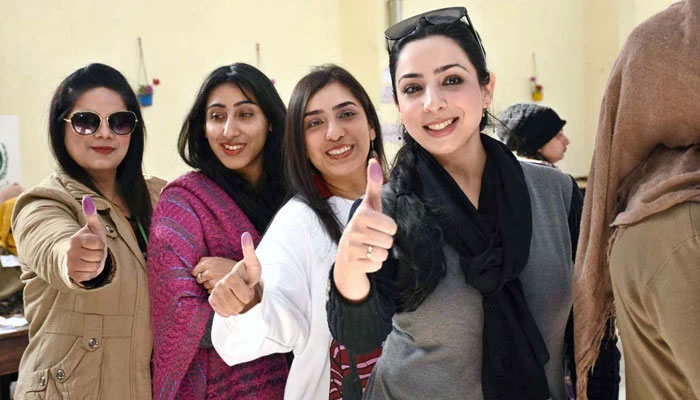
In Pakistan's political parties' committee rooms, women's voices remain faint, with their presence often limited to designated quotas rather than as equal partners in democracy. This reality demands action.
Despite constitutional guarantees and legislative efforts, women's political participation remains largely symbolic rather than substantive. Current statistics show women occupy just 15.5 per cent of National Assembly seats, with only 3.5 per cent winning through general elections, while the rest enter through quotas. Provincial disparities amplify this problem: Punjab has 79 female representatives with just 10 elected on general seats, while Khyber Pakhtunkhwa has only six women representatives.
The constitutional framework -- including Article 25 guaranteeing equal rights and the Political Parties Order 2002 requiring reserved seats -- appears comprehensive, but implementation falls short. The Election Commission Act 2017 mandates 5.0 per cent of party tickets go to female candidates, yet the dismal 3.5 per cent representation on general seats suggests parties offer superficial compliance rather than genuine promotion of women's electoral success.
Women in politics often find themselves relegated to women's wings, treated as auxiliary units. Party resources flow along gender lines, creating invisible barriers to advancement. Political party central committees maintain a female-to-male ratio of approximately 1:8, reflecting a stark institutional imbalance.
Pakistan's 15.5 per cent female representation falls significantly behind international examples like Rwanda (63.75 per cent) and Sweden (47 per cent). Persistent barriers include patriarchal norms, restricted mobility in conservative regions, misused religious narratives, and significant financial obstacles -- especially for women not from politically connected families.
The quota system has improved numerical representation but not substantive empowerment. Women in reserved seats, owing positions to party leadership rather than constituencies, often face constraints on their independence and are sidelined during key decisions.
Despite challenges, success stories exist -- from PM Benazir Bhutto to CM Maryam Nawaz and parliamentarians like Zartaj Gul, Naeema Kishwar Khan, Dr Nafisa Shah and Shazia Marri -- but these remain exceptions.
Comprehensive reforms are needed, including strengthening the Election Commission Act by increasing female candidate quotas from 5.0 per cent to 15 per cent, requiring 30 per cent of women among party office-bearers, establishing clear penalties for non-compliance, and mandating gender-responsive campaign finance regulations.
The path from quotas to equality requires changing both laws and mindsets. The constitution promises equality, yet political reality falls short, representing a statistical concern and a fundamental democratic deficit. Without urgent action, women's political representation will remain largely symbolic rather than the substantive force for change envisioned in Pakistan's founding principles.
As International Women's Day approaches, the imperative for legislative reform has never been more urgent. Parliament must amend the Election Commission Act to establish enforceable mechanisms that move beyond the current 5.0 per cent quota to a mandatory allocation of winnable constituencies for women candidates.
The Political Parties Act requires strengthening to compel parties to integrate women into their central decision-making bodies at a minimum ratio of 4:10, with clear financial penalties for non-compliance. Election laws should be revised to include campaign finance provisions specifically supporting women candidates and addressing the systemic resource disparities that undermine electoral competitiveness.
These legislative reforms represent not merely aspirational goals but essential steps to fulfill Pakistan's constitutional promise of equality and to transform women's political participation from token representation to substantive democratic power-sharing.
True democratic progress demands that we translate this year's International Women's Day rhetoric into concrete policy actions that dismantle structural barriers and create pathways to substantive political equality for Pakistan's women.
The writers are associated with the Sustainable Development Policy Institute, Islamabad (SDPI). The article does not necessarily represent the views of the organisation.


