
Garment industry rejects 12pc carbon adjustment factor in new policy
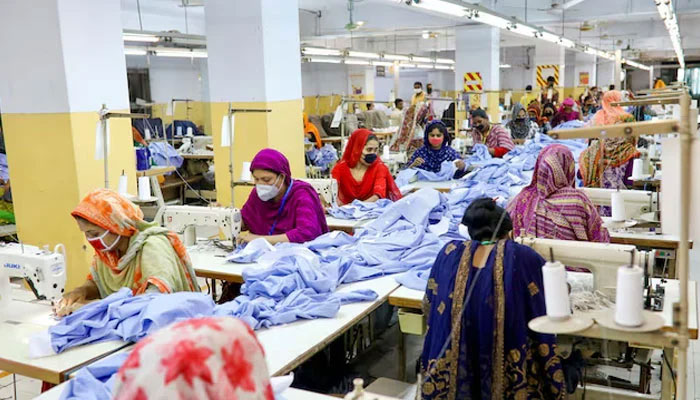
LAHORE: The Pakistan Readymade Garments Manufacturers and Exporters Association (PRGMEA) has criticised the country’s first-ever ‘National Carbon Market Policy’, launched in November 2024, stating that while it reflects the country’s commitment to reducing emissions, it falls short compared to regional counterparts in ambition, sectorial coverage and global integration. This, the association argues, could limit its effectiveness in attracting climate finance and investment.
PRGMEA Regional Chairman Dr Ayyaz Uddin, in a statement issued on Monday, acknowledged the policy as a significant step towards integrating carbon trading into the country’s broader climate strategy. However, he urged the government to promote investments in carbon capture and storage (CCS) and renewable energy through public-private partnerships. He also recommended revising the high 12 per cent carbon adjustment factor (CAF) to a more flexible rate to encourage participation from startups and small and medium enterprises (SMEs).
Dr. Ayyaz further suggested launching nationwide awareness campaigns and capacity-building programmes to engage communities and the private sector. He highlighted the need to decentralise governance, foster regional collaboration, and enable cross-border carbon trading to enhance the policy’s effectiveness.
He noted that Pakistan has pledged to reduce its greenhouse gas (GHG) emissions by 50 per cent by 2030 – 15 per cent unconditionally and 35 per cent contingent on international support. In contrast, India has committed to a 45 per cent reduction in emissions intensity of GDP by 2030, China aims to peak emissions by 2030 and achieve carbon neutrality by 2060, while Bangladesh targets a 5.0 per cent unconditional reduction (12 million tonnes) and an additional 10 per cent reduction (24 million tonnes) conditional on international support, with a strong focus on renewable energy.
Dr Ayyaz highlighted that Pakistan’s sectorial coverage remains narrow, with high-emission industries like cement, steel and transportation underrepresented in its carbon reduction strategy. In contrast, India and China prioritise these sectors. Moreover, Pakistan lags behind in adopting advanced technologies such as green hydrogen production and CCS, which are critical for achieving long-term climate goals.
Pakistan is currently developing a nascent voluntary carbon market without a formal compliance framework. In comparison, India’s carbon market is more advanced with its well-established Perform, Achieve, and Trade (PAT) Scheme (since 2012) and ongoing discussions around a broader carbon trading mechanism under the proposed Carbon Credit Trading Scheme (CCTS).







-
 South Korea: Two Killed As Military Helicopter Crashes During Training
 -
 Elon Musk Unveils SpaceX’s Moon-first Strategy With ‘self Growing Lunar City’
 -
 Donald Trump Slams Bad Bunny's Super Bowl Performance: 'Absolutely Terrible'
 -
 Jake Paul Criticizes Bad Bunny's Super Bowl LX Halftime Show: 'Fake American'
 -
 Prince William Wants Uncle Andrew In Front Of Police: What To Expect Of Future King
 -
 Antioxidants Found To Be Protective Agents Against Cognitive Decline
 -
 Hong Kong Court Sentences Media Tycoon Jimmy Lai To 20-years: Full List Of Charges Explained
 -
 Coffee Reduces Cancer Risk, Research Suggests
 -
 Katie Price Defends Marriage To Lee Andrews After Receiving Multiple Warnings
 -
 Seahawks Super Bowl Victory Parade 2026: Schedule, Route & Seattle Celebration Plans
 -
 Keto Diet Emerges As Key To Alzheimer's Cure
 -
 Chris Brown Reacts To Bad Bunny's Super Bowl LX Halftime Performance
 -
 Trump Passes Verdict On Bad Bunny’s Super Bowl Halftime Show
 -
 Super Bowl 2026 Live: Seahawks Defeat Patriots 29-13 To Win Super Bowl LX
 -
 Kim Kardashian And Lewis Hamilton Make First Public Appearance As A Couple At Super Bowl 2026
 -
 Romeo And Cruz Beckham Subtly Roast Brooklyn With New Family Tattoos