
Climate’s gendered toll
In rural areas of country especially, women play crucial role in agricultural sphere
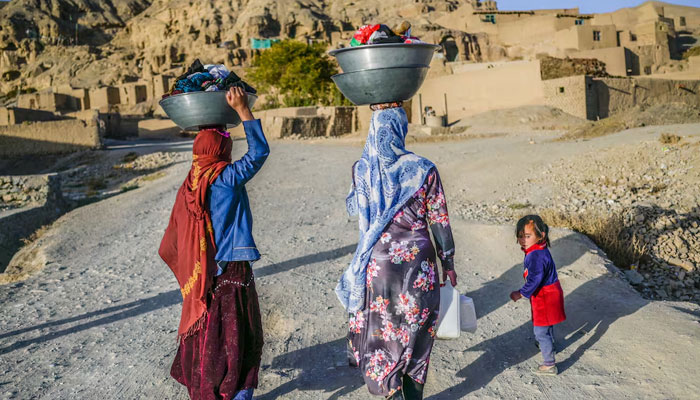
Gender inequality in Pakistan is worsening as a result of climate change. Relatively speaking, women are in more desperate situations because of the prevailing socio-economic, cultural, and legal disparities.
In the rural areas of the country especially, women play a crucial role in the agricultural sphere. They tend to work as low-paid labourers or unpaid workers on family farms. Women lack access to land, credit, agricultural inputs and traditional farming methods, which is why changes in environmental conditions like floods, cyclones, droughts, and extreme rainfall severely threaten their ability to feed their families. These circumstances severely menace food security and income for women, making it harder for everyone to recover or adapt to changing environmental conditions.
Women in rural areas are also solely responsible for gathering firewood, water, and other necessities. Due to climate change, forests and water sources are depleting which makes achieving basic household needs much more difficult. This amplifies their workload and restricts the time allotted to education, community engagement, and income-generating activities.
Climate change causes the increase of diseases like malaria, dengue, and cholera in Pakistan, particularly in those areas which are prone to disasters. Women, as the primary caregivers in most households, accept increased responsibilities in caring for sick family members. This unpaid caregiving obligation decreases their ability to get an education, seek paid employment or participate in social and political activities. It further strengthens old-style gender roles.
Besides, climate-induced food shortages disproportionately affect women and children. In times of food scarcity, cultural norms often prioritise men and boys in the distribution of food, leading to higher rates of malnutrition among women and girls. Malnutrition weakens women’s health, making them more vulnerable to illness and reducing their capacity to contribute to household income.
Each year millions of people get displaced due to natural disasters in Pakistan. Of that displacement, most importantly women and girls are highly vulnerable and face heightened risks of sexual violence, trafficking, and exploitation in makeshift shelters or during the migration. Displaced women often lose access to education, healthcare, and economic opportunities, further marginalise them.
Displacement disrupts traditional community structures and social support networks that women rely on in times of crisis. In new environments, they may struggle to rebuild these networks, leaving them more isolated and vulnerable to exploitation.
In the aftermath of natural disasters, social instability and economic stress often lead to an increase in gender-based violence (GBV). Women and girls in disaster-affected areas in Pakistan are at a higher risk of domestic violence, sexual harassment, and forced marriages. Displaced women are especially vulnerable in emergency shelters, where overcrowding and the breakdown of social norms increase the likelihood of violence.
Economic hardship caused by climate change, such as crop failure and loss of income, leads to a rise in early marriages as families seek to reduce the financial burden by marrying off their daughters. This practice deprives girls of education and future economic independence, perpetuating the cycle of poverty and inequality.
Natural disasters, such as floods and droughts, often lead to the destruction of schools and the displacement of communities. Girls are more likely to be pulled out of school to help with household chores, care for younger siblings, or support family livelihoods during times of crisis. In rural areas, the lack of access to education infrastructure post-disaster disproportionately affects girls’ ability to continue their education.
As families face increasing financial strain due to climate-induced agricultural loss or displacement, they may prioritise boys’ education over girls. Girls are often expected to help at home or are married off early to ease the financial burden, reducing their long-term opportunities for personal and economic development.
Women in Pakistan, especially in rural areas, are often excluded from community and political decision-making processes, including those related to climate change adaptation and disaster management. Although they are heavily affected by environmental changes, their voices are rarely heard in the planning and implementation of climate resilience strategies. This exclusion leaves women’s specific needs and perspectives unaddressed in climate policies.
In many parts of Pakistan, cultural norms limit women’s participation in public life. Men typically dominate decisions about land ownership, water management, and disaster response, even though women bear the brunt of climate-related challenges at the household level. This reinforces women’s marginalisation and limits their ability to contribute to solutions for climate adaptation.
Women in Pakistan often have limited access to land and property rights due to legal and cultural barriers. Without secure land tenure, women are less able to make decisions about land use or to invest in climate-resilient agricultural practices. This limits their ability to adapt to climate change, especially in rural areas where land is crucial for livelihoods.
Women have less access to financial resources, such as credit and loans, which are critical for adopting climate-resilient technologies and diversifying income sources. Microfinance initiatives that target women have had some success, but overall, the gender gap in access to financial services remains a major obstacle to women’s climate resilience.
In rural Pakistan, many households still rely on traditional biomass fuels like firewood and dung for cooking and heating. Women, who are responsible for gathering these resources, are particularly affected by environmental degradation caused by climate change. It makes firewood inadequate and forces them to travel longer distances to collect it. This increases their time burden, decreases their ability to pursue other economic or educational opportunities, and exposes them to health risks because of indoor air pollution from burning biomass fuels.
Women in Pakistan often do not have access to clean and cheap energy sources like solar or biogas, which could lessen their dependency on traditional fuels and improve their quality of life. With no access to sustainable energy solutions, women will always remain trapped in energy poverty. Not only this but it also limits their ability to adapt to climate change and contribute to wider social and economic development.
Regardless of their vulnerabilities, women – particularly in rural areas – possess valuable knowledge about local ecosystems and resource management. They regularly manage water, food, and fuel supplies within households. It makes them key players in climate adaptation strategies. Programmes that empower women through education and access to resources can harness their local expertise to create more effective climate resilience solutions.
In certain communities, women have taken leadership roles in climate adaptation projects, such as establishing cooperatives to improve agricultural practices or leading reforestation efforts. Empowering women through leadership training and financial inclusion can help bridge the gender gap and build stronger, more resilient communities.
In Pakistan, climate change is amplifying existing gender inequalities by disproportionately affecting women’s livelihoods, increasing their caregiving burden, heightening their vulnerability to violence and limiting their access to education, resources and decision-making processes. The social, cultural, and economic barriers that women face make it harder for them to adapt to the impacts of climate change, deepening the gender equality gap.
However, women are also key agents of change, and empowering them with education, financial resources and leadership opportunities can help mitigate the effects of climate change and promote gender equality. Addressing these challenges requires gender-sensitive climate policies that focus on reducing women’s vulnerabilities while recognising and enhancing their role in climate adaptation and resilience-building efforts in Pakistan.
The writer is an assistant director, Climate Change
Adaptation at the Pakistan Red Crescent Society (PRCS),
Islamabad.







-
 'Euphoria' Star Eric Made Deliberate Decision To Go Public With His ALS Diagnosis: 'Life Isn't About Me Anymore'
 -
 Toy Story 5 Trailer Out: Woody And Buzz Faces Digital Age
 -
 Andrew’s Predicament Grows As Royal Lodge Lands In The Middle Of The Epstein Investigation
 -
 Rebecca Gayheart Unveils What Actually Happened When Ex-husband Eric Dane Called Her To Reveal His ALS Diagnosis
 -
 What We Know About Chris Cornell's Final Hours
 -
 Scientists Uncover Surprising Link Between 2.7 Million-year-old Climate Tipping Point & Human Evolution
 -
 NASA Takes Next Step Towards Moon Mission As Artemis II Moves To Launch Pad Operations Following Successful Fuel Test
 -
 GTA 6 Price Leaked Online Ahead Of Rockstar Announcement
 -
 Eric Dane Got Honest About His Struggle With ALS In Final Public Appearance: 'No Reason To Be In A Good Spirit'
 -
 Google AI Overviews And Mental Health: Why Experts Say It’s ‘very Dangerous’
 -
 Prince Harry Issues A Statement For His 'incredible' WellChild Children
 -
 5 Famous Celebrities Who Beat Cancer
 -
 Spinosaurus Mirabilis: New Species Ready To Take Center Stage At Chicago Children’s Museum In Surprising Discovery
 -
 ByteDance Expands Artificial Intelligence Operations In US
 -
 Angelina Jolie’s Breast Cancer Surgeon Appreciates Her For Calling Scars 'a Choice': 'They Are Choices To Survive'
 -
 Detective Chief Inspector Reveals How Andrew Got Treated In Police Custody