
Ban on plastic bags below 75 microns imposed to boost recycling efforts
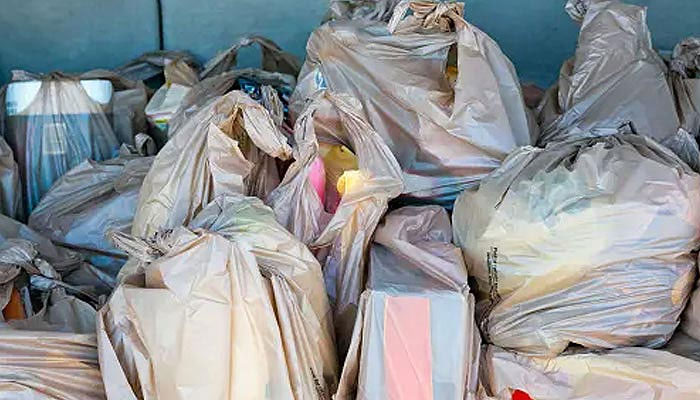
Islamabad : Punjab’s Environmental Protection Agency (EPA) Director General Imran Hamid Sheikh announced that the provincial government is taking bold measures to combat pollution, including a ban on plastic bags thinner than 75 microns and promoting plastic recycling.
In an interview, Imran Hamid stated that Punjab is now implementing aggressive policies and emergency measures under the leadership of Maryam Nawaz Sharif to tackle environmental issues.
Specifically, they are focusing on recycling plastic materials into useful products such as chairs, benches and kids'' swings, he added.
He stated that while a complete ban on plastic bags is not yet in place, a strict prohibition has been imposed on the use of plastic bags thinner than 75 microns, and such bags will no longer be accepted.
He explained that to gather accurate data on plastic usage, the government is transitioning from irregular to regular supply chains, enabling them to track and monitor consumption, production and supply of plastic materials.
DG also revealed that Pakistan generates a staggering 3.3 million tons of plastic waste annually, highlighting the enormity of the plastic pollution problem in the country.
This alarming figure underscores the need for effective waste management strategies and policies to mitigate the environmental and health impacts of plastic waste, he added.
He emphasized that the government is conducting extensive awareness drives not only in rural areas but also in urban schools and colleges, aiming to educate the younger generation about the importance of proper waste disposal and the hazards of plastic pollution.
He stressed that a collaborative effort between the private and public sectors is crucial to effectively combat the issue of plastic pollution, emphasising that collective responsibility and partnership are necessary to achieve meaningful results.
He also voiced concern that the widespread use of plastic materials in cooking and heating food is posing serious health risks, including the increased likelihood of cancer and other diseases, highlighting the need for safer and healthier alternatives.







-
 Royal Family Shares Princess Anne's Photos From Winter Olympics 2026
 -
 Tori Spelling Feels 'completely Exhausted' Due To THIS Reason After Divorce
 -
 SpaceX Successfully Launches Crew-12 Long-duration Mission To ISS
 -
 PlayStation State Of Play February Showcase: Full List Of Announcements
 -
 Ed Sheeran, Coldplay Caught Up In Jeffrey Epstein Scandal
 -
 Paul Anthony Kelly Reveals How He Nailed Voice Of JFK Jr.
 -
 US, China Held Anti-narcotics, Intelligence Meeting: State Media Reports
 -
 Victoria, David Beckham React To Marc Anthony Defending Them Amid Brooklyn Drama
 -
 Victoria Wood's Battle With Insecurities Exposed After Her Death
 -
 Prince Harry Lands Meghan Markle In Fresh Trouble Amid 'emotional' Distance In Marriage
 -
 Goldman Sachs’ Top Lawyer Resigns Over Epstein Connections
 -
 How Kim Kardashian Made Her Psoriasis ‘almost’ Disappear
 -
 Gemini AI: How Hackers Attempt To Extract And Replicate Model Capabilities With Prompts?
 -
 Palace Reacts To Shocking Reports Of King Charles Funding Andrew’s £12m Settlement
 -
 Megan Fox 'horrified' After Ex-Machine Gun Kelly's 'risky Behavior' Comes To Light
 -
 Prince William's True Feelings For Sarah Ferguson Exposed Amid Epstein Scandal