
Pakistan’s net metering capacity surges 294%, raising grid concerns
Latest figures reflect grid-linked rooftop solar power only, with off-grid capacity not included
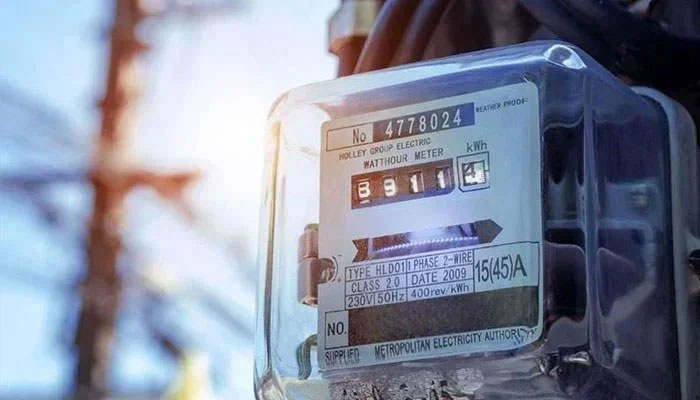
ISLAMABAD: Pakistan’s net metering power capacity has surged to over 2,498 MWs in FY2023-24, up from 633 MWs in 2021-22, marking a 294 per cent increase over the past two years.
While the adoption of net metering has been faster in state-owned distribution companies (Discos) than in the privatized K-Electric, however the overall rise in solar capacity, including off-grid, is raising challenges for the national grid.
The latest figures reflect grid-linked rooftop solar power only, with off-grid capacity not included. However, estimates suggest that Pakistan’s total imported solar capacity has surpassed 10,000 MWs over this period. While the increase in solar energy generation is a step toward cleaner power, it has created financial and technical hurdles for the energy sector.
The government views the surge in solar energy as a challenge to the grid, with non-solar consumers bearing the disproportionate burden. As more consumers reduce their reliance on grid electricity or generate their own power, the cost of maintaining grid capacity is increasingly borne by those who continue to use it. This shift in energy consumption is creating a financial imbalance in the sector.
To address these challenges, the government is considering reducing the tariff for electricity generated through rooftop solar systems. The proposal suggests cutting the compensation rate from Rs21 per unit to Rs7.5–11 per unit and potentially revising the existing ratio from two solar units for every grid unit to six solar units for one grid unit.
Of the total net-metering capacity, state-owned distribution companies (Discos) have collectively installed 2,165 MWs under Pakistan’s net metering system, accounting for 86.7 per cent of the total capacity. In contrast, privatized K-Electric, which serves Karachi, has installed just 333 MWs, or 13.3 per cent. This disparity highlights differing levels of policy execution and consumer engagement between Discos and K-Electric.
The net metering capacity at K-Electric was only 101 MWs in 2021-22, while Discos had installed 633 MWs. Since then, K-Electric’s self-generation adoption has increased by 229.7 per cent, compared to 242 percent for ex-Wapda Discos.
“Discos have made progress in net metering, but growth remains inconsistent due to bureaucratic hurdles, lack of consumer awareness and regional disparities,” said an energy policy analyst.
Experts point to K-Electric’s slow pace of policy execution and delays in approving net metering applications as key challenges. “In a city like Karachi, where solar potential is high and energy demand continues to grow, K-Electric’s pace of adoption is underwhelming,” remarked an industry expert.
This slower adoption in Karachi, Pakistan’s financial hub, underscores the potential of net metering that remains untapped, even as the overall solar capacity in the country grows rapidly.
Notably, in November 2024, the National Electric Power Regulatory Authority (NEPRA) issued a show-cause notice to K-Electric for repeatedly failing to comply with directives concerning net metering applications. Multiple reports indicated that K-Electric had declined numerous requests, citing overloaded common distribution systems and Pole-Mounted Transformers (PMTs) as the cause of the issue. Despite these challenges, Nepra’s latest State of Industry Report 2023-24 indicates that Pakistan is on track to exceed its net metering target of an additional 3,420MW before the 2031 deadline. The Integrated Generation Capacity Expansion Plan (IGCEP) 2022-31 had set the target, and NEPRA credits the rapid adoption of rooftop solar solutions—driven by falling solar panel prices and financial incentives for consumers—for accelerating progress.
The number of net metering consumers in Pakistan skyrocketed to 157,844 by June 30, 2024, compared to just 75,724 in the previous fiscal year. The total capacity added during FY2023-24 reached 1,181 MWs, nearly double the 583 MWs added in the previous year, bringing the cumulative installed capacity to 2,498 MWs. Despite ongoing resistance from distribution companies, including K-Electric, in facilitating connections, the sharp rise in consumers and generation capacity underscores an increasing reliance on alternative energy sources outside the national grid. This growing trend indicates that more consumers are turning to solar power to reduce their reliance on conventional electricity, even as the grid faces pressure from a surge in self-generation.


