
Iran protests Afghan dam project in new water dispute
Iran voices “strong protest and concern over disproportionate restriction of water entering Iran” due to Pashdan Dam project
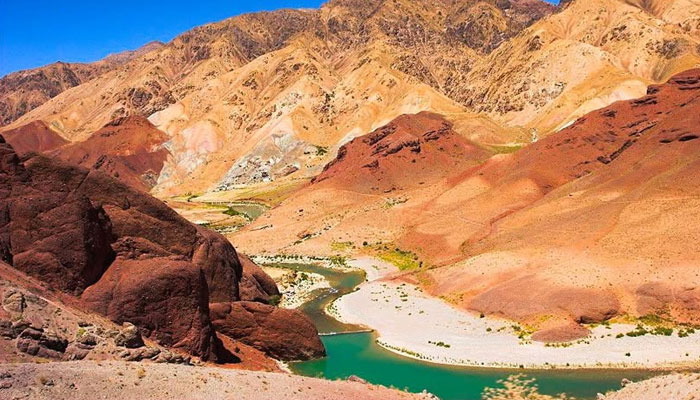
TEHRAN: Iran’s foreign ministry said on Friday that an upstream dam being built by neighbouring Afghanistan on the Harirud River restricts water flow and could be in violation of bilateral treaties.
Water rights have long been a source of friction in ties between the two countries, which share a more than 900-kms border.
Esmaeil Baqaei, spokesman for Tehran’s foreign ministry, voiced on Friday “strong protest and concern over the disproportionate restriction of water entering Iran” due to the Pashdan Dam project.
He said in a statement that the Iranian concerns had been communicated “in contact with relevant Afghan authorities”.
“Exploitation of water resources and basins cannot be carried out without respecting Iran´s rights in accordance with bilateral treaties or applicable customary principles and rules, as well as the important principle of good neighbourliness and environmental considerations,” Baqaei added.
Abdul Ghani Baradar, Afghanistan’s deputy prime minister for economic affairs, said in a video statement last month that the Pashdan project was “nearing completion and water storage has commenced”.
According to the video, the dam in Herat province will store approximately 54 million cubic meters of water, irrigate 13,000 hectares of agricultural land and generate two megawatts of electricity.
In April, Baradar said the dam was a “vital and strategic project” for Herat province.
The foreign ministry statement on Friday follows remarks by an Iranian water official, similarly criticising the dam construction.
“The situation has led to social and environmental issues, particularly affecting the drinking water supply for the holy city of Mashhad”, Iran´s second-largest and home to a revered shrine near the Afghan border, national water industry spokesman Issa Bozorgzadeh was quoted as saying on Monday by official news agency IRNA.
Harirud River, also known as Hari and Tejen, flows from the mountains of central Afghanistan to Turkmenistan, passing along Iran´s borders with both countries.
In his statement, Baqaei said Iran expects “Afghanistan... to cooperate in continuing the flow of water from border rivers” and to “remove the obstacles created” along their path.
In May 2023, Iran issued a stern warning to Afghan officials over another dam project, on the Helmand River, saying that it violates the water rights of residents of Sistan-Baluchistan, a drought-hit province in southeastern Iran.







-
 Matthew Perry’s Stepmother Makes Grief-stricken Request Ahead Of Ketamine Queen's Sentencing
 -
 Sia Breaks Silence On Child Custody Agreement: 'I Trying To Buy Peace'
 -
 Elon Musk Moves To Remove Sam Altman As OpenAI Calls Lawsuit ‘harassment’
 -
 Kate Middleton Finally Sees Andrew Mountbatten-Windsor For ‘what He Really Is’: Insider
 -
 Artemis II Mission Drives New Moon Race Momentum
 -
 ‘Sonic Boom’ Rocks New Jersey After Rare Daytime Meteor Sighting: NASA Confirms
 -
 Katy Perry Shares Glammed Up Photo With Justin Trudeau: 'Never Knew Karma Could Be So Rewarding'
 -
 Trump Says US To Ease Strait Of Hormuz Traffic Crisis
 -
 TikTok Announces Second Billion-euro Data Centre Investment In Finland: Here’s Why
 -
 Blue Jays Manager John Schneider Ejected During Fifth Inning Dispute Against Dodgers
 -
 Prince Harry, Meghan Markle’s Brand ‘recoverable’ Despite Netflix As Ever Setback
 -
 Yamamoto Dominates Blue Jays Again As Dodgers Pitcher Silences Boos In Strong Return To Toronto
 -
 Tori Spelling Issues First Statement After Horrific California Car Crash
 -
 Oilers Vs Mammoth: Keller Scores In Overtime As Utah Completes Comeback Win Over Edmonton
 -
 Nikki Glaser Reveals Her Most 'embarrassing' DWTS Moment
 -
 Panthers Vs Canadiens: Suzuki Scores Late As Montreal Edges Florida 4-3 In Thriller