
Lost heritage
Muslims participated alongside their Hindu fellow villagers and other residents of area
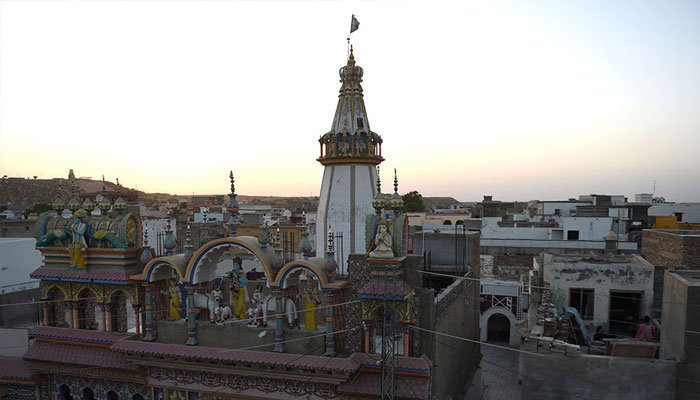
In Mithi recently, as Hindus in India and across the world celebrated Diwali, the town also joined in the festivities. Muslims participated alongside their Hindu fellow villagers and other residents of the area.
There was no sense of division, no discrimination, and no rhetoric suggesting that Hindus in Pakistan were somehow traitors or outsiders who belonged in India. This, then, is the culture to which we belong – a culture that should have thrived in our country 75 years after its creation. The fact that such harmony has largely been lost is nothing short of a tragedy.
We must reflect on our shared past. Why is it that brides in Pakistan have traditionally worn red? Why are henna and ceremonies like mehndi and mayun so integral to weddings and other celebrations? These customs stem from centuries of coexistence with Hindus. These cultural legacies are significant and worth preserving. It is crucial to remember that we share a deep cultural bond with Hindus, and a considerable number of them continue to live in Pakistan despite many migrating to India due to the discrimination they face.
To truly rediscover our heritage, we must look to the East. Why is it that many Sindhis, particularly those living in Karachi, are unfamiliar with the Sindhi language and its rich poetic and literary traditions? These traditions are taught only briefly in schools or, in some elite institutions, not at all. The situation in Sindh, however, is still better compared to Punjab, where Punjabi is entirely absent from the school curriculum. Children who speak Punjabi at home are compelled to learn in Urdu or English – languages alien to their upbringing. This cultural alienation has far-reaching consequences. Punjabi is often dismissed as the language of ‘servants’, disregarding its deep literary heritage associated with luminaries like Bulleh Shah, Amrita Pritam, and Waris Shah.
If Punjabi children were exposed to the poetry and writings of these great figures, they would grow up with a better understanding of their roots, their history, and their identity. Unfortunately, this cultural richness has been stolen from them. Although Balochi and Pashto are taught in their respective provinces, their instruction remains limited. This reinforces the perception that these languages are less significant compared to the increasingly prioritised English.
While it is important to integrate English into education given its global significance, this should not come at the expense of the languages that have shaped generations. Instead of valuing our indigenous languages, we have increasingly turned towards the West and, more troublingly, towards the Middle East. Some among us consider Arabic to be a ‘more Muslim’ language than Urdu or Punjabi. This perspective is perplexing.
Take, for instance, Iran – a state that proclaims itself an Islamic republic and enforces Islamic laws in various spheres of life. Yet, Iranians proudly speak Farsi and cherish its traditions. They do not feel the need to replace their native language with Arabic to affirm their faith. The same is true of other Muslim-majority countries, including Turkey, Indonesia, Malaysia, and Egypt.
We need to reclaim our heritage and recognise its value. It offers unity and fosters togetherness among people. This was beautifully exemplified in Sindh during the recent Rawadari March, which brought together Sindhis from diverse backgrounds. Accompanied by traditional music played on indigenous instruments, the march was a celebration of harmony and inclusivity.
Our musical heritage, much like our linguistic traditions, is at risk of being forgotten. Too much has already been lost, and too little has been preserved. We must look inward to reconnect with our past rather than constantly seeking validation from foreign shores. Embracing our cultural roots will not diminish our religious identity; on the contrary, it will enrich it by grounding us in a deeper understanding of who we are.
The urgency of preserving our heritage cannot be overstated. Our diversity, whether expressed through Punjabi, Sindhi, Balochi, or Pashto, is a treasure that must be safeguarded. These languages and traditions should be passed down from generation to generation, ensuring their survival in an ever-changing world.
After all, there is a reason why brides in the Middle East wear white. Their inspiration comes from the West. Ours, by contrast, comes from the East – a legacy we must honour and uphold. By doing so, we ensure that our past is not just a memory but a vibrant part of our present and future.
The writer is a freelance columnist and former newspaper editor. She can be reached at: kamilahyat@hotmail.com







-
 Is X Down Globally? Thousands Of Users Report Problems
 -
 Trump’s China Trip Rescheduled For May Amid Conflict With Iran
 -
 AI Music Tools Surge As Industry Faces Shift In Creation
 -
 Shaquille O'Neal Addresses Claims He Sent Explicit DMs To Sabrina Carpenter
 -
 24 Dead In Bangladesh After Bus Plunges Into River During Ferry Boarding
 -
 Dana Carvey Recalls Doing 'SNL' Creator Lorne Michaels' Impersonation: 'My First Reaction Is Terror'
 -
 Everything We Know About Taylor Swift And Travis Kelce Honeymoon Plans
 -
 Metformin’s Hidden Brain Pathway Uncovered After 60 Years
 -
 How Dogs Became Man’s Best Friend 15,800 Years Ago: New Study Reveals
 -
 Prince Harry And Meghan Markle Respond To Major Meta And YouTube Ruling
 -
 Why Josh Duhamel Believes His Fans Will Be 'alienated' If He Talks Politics
 -
 Melania Trump Appears With Humanoid Robot At White House
 -
 ‘Addictive By Design’: Meta, YouTube Found Liable In Historic Verdict
 -
 Bruce Willis' Mom Marlene Makes Another Family Amid Son's Battle With Dementia
 -
 Roblox Safety Warning For Parents: Developer Says Kids Need 24/7 Monitoring
 -
 Chelsea Handler Explains Why She Dates Younger Men