
Nearly half of tropical coral species face extinction
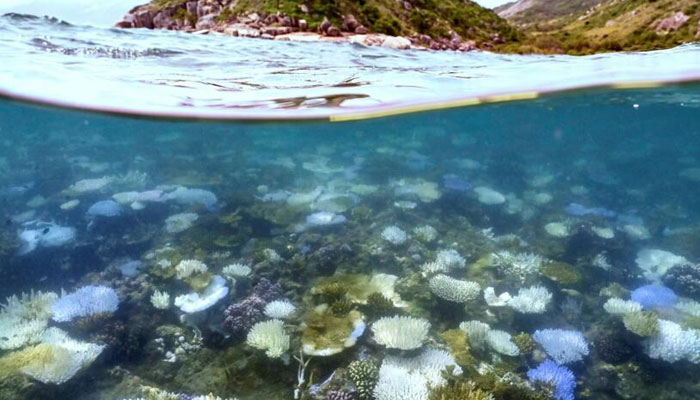
PARIS: Almost half of all warm-water species of coral are threatened with extinction -- and climate change is the chief culprit, a new report said on Wednesday.
The updated risk assessment from the International Union for Conservation of Nature (IUCN) was announced at the COP29 climate summit in Azerbaijan, which is being skipped by the leaders of many top polluting nations.
Oceans have absorbed around 90 percent of the excess heat in the atmosphere due to the release of carbon dioxide and other greenhouse gases.
Rising ocean temperatures have spurred mass bleaching events at coral reefs across the world, threatening crucial ecosystems for marine life as well as the livelihoods of people who rely on them.
The updated assessment of the IUCN´s Red List of Threatened Species looked at reef-building corals, which live in warm, shallow waters in tropical areas.
Its analysis found that 892 reef-building coral species are now considered threatened, representing 44 percent of the total. This marked a significant increase from the last assessment in 2008, when a third of all species was listed as threatened.
The organisation is still assessing the extinction risk for cold-water coral, which lives in deeper, darker ocean waters, making it difficult to study.
The IUCN called on negotiators at the COP29 conference to act quickly to reduce planet-heating fossil fuel emissions.
“Healthy ecosystems like coral reefs are essential for human livelihoods -- providing food, stabilising coastlines, and storing carbon,” IUCN chief Grethel Aguilar said in a statement.
“Climate change remains the leading threat to reef-building corals and is devastating the natural systems we depend on.”
As well as global warming, pollution, disease, unsustainable fishing and agricultural runoff also threaten the world´s coral.
Most reef-building coral is found across the Indo-Pacific region, such as Australia´s Great Barrier Reef which suffered one its worst-ever bleaching events this year.
The IUCN´s updated assessment included results from a study about reef-building coral in the Atlantic Ocean, which was published in the PLOS One journal on Wednesday.







-
 Prince William Warned His Future Reign Will Be Affected By Andrew Scandal
 -
 Amy Madigan Reflects On Husband Ed Harris' Support After Oscar Nomination
 -
 Is Studying Medicine Useless? Elon Musk’s Claim That AI Will Outperform Surgeons Sparks Debate
 -
 Margot Robbie Gushes Over 'Wuthering Heights' Director: 'I'd Follow Her Anywhere'
 -
 'The Muppet Show' Star Miss Piggy Gives Fans THIS Advice
 -
 Sarah Ferguson Concerned For Princess Eugenie, Beatrice Amid Epstein Scandal
 -
 Uber Enters Seven New European Markets In Major Food-delivery Expansion
 -
 Hollywood Fights Back Against Super-realistic AI Video Tool
 -
 Pentagon Threatens To Cut Ties With Anthropic Over AI Safeguards Dispute
 -
 Meghan Markle's Father Shares Fresh Health Update
 -
 Samsung Galaxy Unpacked 2026: What To Expect On February 25
 -
 Travis Kelce Takes Hilarious Jab At Taylor Swift In Valentine’s Day Post
 -
 NASA Confirms Arrival Of SpaceX Crew-12 Astronauts At The International Space Station
 -
 Can AI Bully Humans? Bot Publicly Criticises Engineer After Code Rejection
 -
 Search For Savannah Guthrie’s Abducted Mom Enters Unthinkable Phase
 -
 Imagine Dragons Star, Dan Reynolds Recalls 'frustrating' Diagnosis