
Political stability: Key driver of economic growth
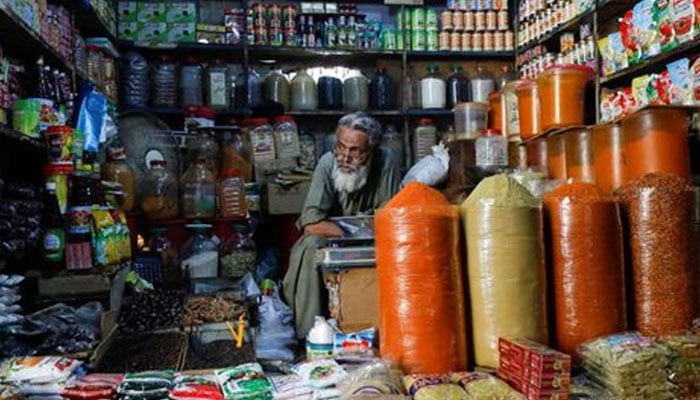
LAHORE: Stable governments have played a significant role in helping India and China achieve sustained economic growth, particularly following liberalization and reform policies. Bangladesh has also benefited from stability over the past decade, while Pakistan has struggled due to instability and inconsistent policies.
Official records show that over the last 50 years, the number of prime ministers in India, Pakistan, and Bangladesh, as well as the heads of state in China, has varied significantly due to differences in their political systems and governance models.
Political stability has had a positive economic impact in many countries. India’s economic growth has seen both stable and unstable periods. The 1991 liberalization under prime minister PV Narasimha Rao marked a significant shift towards a market-based economy, boosting long-term growth. The government of Narendra Modi has continued to emphasize economic reforms and infrastructure development. Since 1991, India’s economic policies have remained generally stable, focusing on liberalization, privatization, and globalization.
Bangladesh’s economy has experienced remarkable growth, particularly in the textile and manufacturing sectors. The long-term leadership of Sheikh Hasina since 2009 provided political stability and ensured consistent pro-business policies. During her tenure, Bangladesh focused on exports, infrastructure development and social programmes, which contributed to its economic success.
China’s one-party system has allowed for consistent long-term planning and policy implementation. Since Deng Xiaoping’s economic reforms in 1978, China has pursued market-oriented policies while maintaining state control over key sectors. Political stability has been a major factor behind China’s rapid economic rise, making it the world’s second-largest economy. The country’s stable leadership has enabled sustained growth in industrial output, infrastructure, and global integration.
In contrast, Pakistan’s economic progress has been hindered by political instability, military coups, and inconsistent economic policies. Frequent disruptions in democratic processes and the introduction of populist measures have undermined long-term development. The frequent changes in leadership, along with fluctuating economic policy approaches -- ranging from nationalization to privatization and populism -- have resulted in inconsistent economic outcomes. Political instability has also led to economic stagnation, characterized by high external debt, reliance on foreign aid, and a weak industrial base.
Since gaining independence in 1947, India has had 15 prime ministers. Over the past 50 years (since 1974), there have been nine prime ministers, including Indira Gandhi (1966–1977, 1980–1984) and Narendra Modi (2014–present).
Bangladesh, which became independent in 1971, has had 12 prime ministers over the past 50 years, from Sheikh Mujibur Rahman (1972–1975, as prime minister and then president) to Sheikh Hasina (1996–2001, 2009–2024). Most recently, Dr Muhammad Yunus assumed office in 2024.
China, governed by a one-party system under the Communist Party, has had stable leadership over the past 50 years. Notable leaders include Mao Zedong (1949–1976), Hua Guofeng (1976–1981), Deng Xiaoping (de facto leader, 1981–1989), Jiang Zemin (1989–2002), Hu Jintao (2002–2012), and Xi Jinping (2012–present).
In contrast Pakistan has seen greater political instability. In the last 50 years, it has had 18 prime ministers. These include Zulfikar Ali Bhutto (1973–1977), Muhammad Khan Junejo (1985–1988), Benazir Bhutto (1988–1990 and 1993–1996), Nawaz Sharif (1990–1993, 1997–1999, and 2013–2017), Zafarullah Khan Jamali (2002–2004), Shaukat Aziz (2004–2007), Yousaf Raza Gillani (2008–2012), Raja Pervez Ashraf (2012–2013), Imran Khan (2018–2022), Shehbaz Sharif (2022–2023) Anwaar-ul-Haq Kakar (2024–as caretaker), Shehbaz Sharif (2024-present). Pakistan’s history of coup and the frequent dismissal of elected governments have been significant contributors to its political instability.
Consistent economic policies and political stability have been key drivers of growth in India, China and Bangladesh, placing them among global leaders in economic development. In contrast, Pakistan’s inconsistent policies have resulted in weaker economic performance, leaving it among the nations with low growth rates.






-
 Daniel Radcliffe Admits To Being Self Conscious While Filming 'Harry Potter' In Late Teens
 -
 Director Beth De Araujo Alludes To Andrew's Arrest During Child Trauma Talk
 -
 Video Of Andrew 'consoling' Eugenie Resurfaces After Release From Police Custody
 -
 'Harry Potter' Alum Daniel Radcliffe Gushes About Unique Work Ethic Of Late Co Star Michael Gambon
 -
 Japan: PM Takaichi Flags China ‘Coercion,’ Pledges Defence Security Overhaul
 -
 Angorie Rice Spills The Beans On Major Details From Season 2 Of ' The Last Thing He Told Me'
 -
 Questions Raised Over Andrew Mountbatten-Windsor's Line Of Succession
 -
 'Shameless' Sarah Ferguson 'pressuring' Princess Eugenie, Beatrice For Major Reason
 -
 Teacher Arrested After Confessing To Cocaine Use During Classes
 -
 Paul McCartney Talks 'very Emotional' Footage Of Late Wife Linda In New Doc
 -
 Princess Beatrice, Princess Eugenie's Response To Andrew's Arrest Revealed
 -
 King Charles And Princess Anne Bestow Honours At Windsor Castle
 -
 King Charles 'worried' As Buckingham Palace, Royal Family Facing 'biggest Crisis'
 -
 Milo Ventimiglia Recalls First Meeting With Arielle Kebbel On The Sets Of 'Gilmore Girls' Amid New Project
 -
 Eric Dane Infuriated After ALS Diagnosis As He Feared The Disease Would Take Him Away From His Girls
 -
 It's A Boy! Luke Combs, Wife Nicole Welcome Third Child