
Minimum age for women’s marriage
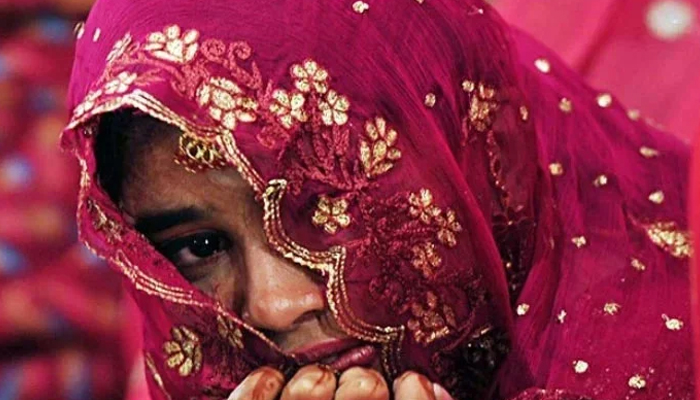
In 1929, the Child Marriage Restraint Act set the minimum marriage age in Pakistan at eighteen for boys and sixteen for girls. Consequently, Pakistan now holds the tragic distinction of having the sixth highest number of women married before the age of 18 globally.
According to the Pakistan Demographic and Household Survey, 40 percent of girls in the country are married by the time they are 18 years old. 18% of Pakistani women have had their first birth by age 18; 9% have begun child bearing between 15-19 years and 7% are already mothers in those ages leading to one of the highest infant mortality rates in South Asia.
The most widely accepted definition of a child is anyone under the age of 18 years, in line with the Convention on the Rights of the Child which all countries but the US have signed up to. Even Pakistan’s own Juvenile Justice System (Act 2018) defines a child as someone under the age of 18, in accordance with international standards.
Child marriage is an outright denial of children’s fundamental rights and a form of violence against children. In Pakistan, where child marriage is socially and culturally accepted and, in some cases, driven by religious beliefs, adolescents’ ability to make free and informed choices is severely limited. Child marriage denies girls the right to make important decisions that affect their lives, health and well-being. It makes them more vulnerable to mental, emotional, and physical abuse. When married early, girls are in effect denied opportunities of education and broadening their horizons, are ill prepared for their roles as informed mothers, and inadequately equipped to face livelihood demands
Unable to refuse unprotected sex, these young women are exposed to sexually transmitted diseases placing their babies too at high risk. Early marriage often makes girls more vulnerable to pregnancy-related problems that can lead to lifelong complications. These complications are one of the leading causes of death among young mothers.
Moreover, in Pakistan, girls under the age of 18 can marry without having the rights of an adult. Why allow girls to marry at an age when, for example, they do not have the right to vote or make medical decisions for themselves? They are also denied the right, recognized in religion, to “free and full” consent to a marriage. Furthermore, according to Pakistan’s law, 18 years of age is necessary to enter into an agreement; otherwise, such an agreement is null and void. So, where does the agreement of nikah stand when one party is under 18 years of age? Furthermore, this practice violates the right to equality protected under Article 25 of Pakistan’s Constitution, 1973 and is unconstitutional, as it sets different minimum ages for marriage between genders. While the age for boys is set at 18, it remains 16 for girls, openly discriminating based on gender.
In a groundbreaking move, the Sindh Assembly revolutionized this standard by passing the Sindh Child Marriages Restraint Act in 2014, elevating the minimum marriage age for both girls and boys to eighteen, thereby repealing the archaic 1929 legislation. In addition, it is not that Punjab doesn’t consider someone under the age of 18 a child. According to the Punjab Marriage Restraint Act 2015, anyone under the age of 18 is a child. A girl under the age of ‘18’ is also a ‘child’. It is just that Punjab graciously allows child marriage for girls.
Within this context, on 09 April 2024, the Lahore High Court in case titled Azka Wahid versus Province of Punjab & others held that the definition of ‘child’ in Section 2(a) of the Child Marriage Restraint Act 1929 (1929 Act) is discriminatory and unconstitutional. Justice Shahid Karim wrote in his five-page verdict that the different ages for marriage for males and females are unconstitutional. He stated that “the words in section 2(a) viz. ‘if a male ... and if a female is under sixteen years of age,’ being unconstitutional, are held to be without lawful authority and of no legal effect. They are struck down.” The court directed the Punjab government to publish the revised law of the Child Marriage Restraint Act on its website within 15 days in a clear indication of the urgency of these issues.
This judgment was passed on April 15, 2024, with a deadline of 15 days for the Punjab Government. Today, nearly three months have passed with no notable action, adding yet another feather to the cap of the current government while we serve witness to a government’s blatant failure to adhere to the court’s rulings of what is in the name of justice and equality. Moreover, the Punjab government should also issue directions to the Nikah Registrars in this respect and should also make changes accordingly in the Nikah Registration form/Form II.
And so, we call for change. The law and the court stand with the people of Pakistan. We call for our rights. We call for equality. We call for legislation. It is late, yes, we are already late. But it is never too late.
(The writer is a human rights activist focusing on gender-based violence and welfare of women).







-
 Trump Announces A Rise In Global Tariffs To 15% In Response To Court Ruling, As Trade Tensions Intensify
 -
 Chappell Roan Explains Fame's Effect On Mental Health: 'I Might Quit'
 -
 AI Processes Medical Data Faster Than Human Teams, Research Finds
 -
 Sarah Ferguson’s Friend Exposes How She’s Been Since Andrew Mountbatten-Windsor’s Release
 -
 Jelly Roll Explains Living With 'severe Depression'
 -
 Charli XCX Applauds Dave Grohl’s 'abstract' Spin On Viral ‘Apple’ Dance
 -
 Anna Sawai Opens Up On Portraying Yoko Ono In Beatles Film Series
 -
 Eric Dane's Wife Rebecca Gayheart Shares Family Memories Of Late Actor After ALS Death
 -
 Palace Wants To ‘draw A Line’ Under Andrew Issue: ‘Tried And Convicted’
 -
 Eric Dane's Girlfriend Janell Shirtcliff Pays Him Emotional Tribute After ALS Death
 -
 King Charles Faces ‘stuff Of The Nightmares’ Over Jarring Issue
 -
 Sarah Ferguson Has ‘no Remorse’ Over Jeffrey Epstein Friendship
 -
 A$AP Rocky Throws Rihanna Surprise Birthday Dinner On Turning 38
 -
 Andrew Jokes In Hold As BAFTA Welcomes Prince William
 -
 Sam Levinson Donates $27K To Eric Dane Family Fund After Actor’s Death
 -
 Savannah Guthrie Mother Case: Police Block Activist Mom Group Efforts To Search For Missing Nancy Over Permission Row