
Quaid and the challenges of post-independence relations with India
Jinnah, gentleman-statesman, expressed his views forcefully yet politely in meetings with Congress leaders and British
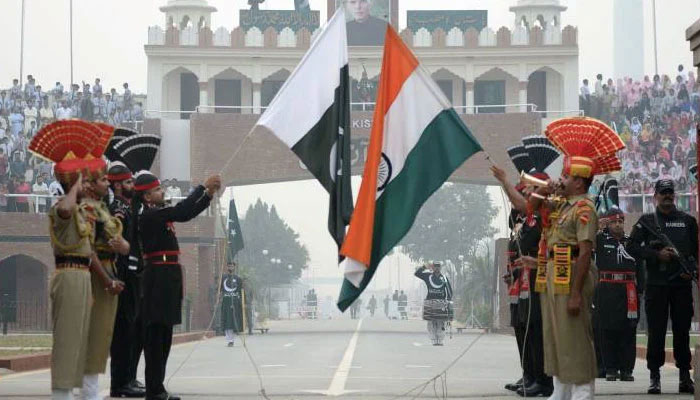
Independence Day 2024 arrives amid suspended communication and tense calm in Pakistan-India relations. Internally, Pakistan is grappling with political turmoil following the elections. As the nation celebrates its Independence Day, it is worth reflecting on the time when Muslims and Hindus of India realised they could not coexist peacefully and concluded that partition was the best solution. Despite centuries of shared history and norms, both communities saw themselves as distinct nations.
On August 14-15, 1947, Pakistan and India emerged as two separate political entities, neighbours, and antagonists. From the outset, the two nations became enemies, with communal violence escalating into a war over Kashmir-a conflict that remains unresolved over the years. Relations between Pakistan and India have remained acrimonious and hostile, both bilaterally and in multilateral forums, with many issues still unresolved.
To understand the dynamics between the two nations, it is insightful to revisit the Partition era and examine how the Quaid, Muhammad Ali Jinnah, viewed India. His correspondence with Congress leader and later Prime Minister Jawaharlal Nehru from the late 1930s reflects Jinnah’s forthright stance on issues such as language, culture, communalism, and Congress’s role. Jinnah, a gentleman-statesman, expressed his views forcefully yet politely in meetings with Congress leaders and the British.
Violence between the two communities before and during Partition was the culmination of communal differences highlighted during the independence movement. Disputes over the transfer of assets, water sharing, and boundary issues further strained relations. The tribal invasion of Kashmir following the Maharaja’s accession to India plunged the neighbours into a prolonged conflict. Despite early efforts to address the issue, including India’s agreement to hold a plebiscite and a UN resolution calling for it, the Kashmir dispute has persisted.
The conflict could not be resolved through war in 1965, and an indigenous uprising in the late 1980s reignited tensions. Indian repressive policies and military presence in Kashmir have further complicated the situation. In August 2019, the Indian government took the drastic step of revoking Article 370, stripping Kashmir of its special status and plunging the region into chaos. The Kashmir dispute remains a bitter legacy of Partition, casting a dark shadow over Pakistan-India relations.
At the time of Independence, Jinnah’s poor health and responsibilities as Governor-General, along with emerging issues with India, prevented many issues from being addressed. Yet, he remained optimistic about future relations. On August 7, 1947, he departed New Delhi with a clear message: “The past must be buried, and let us start afresh as two independent sovereign states of Hindustan and Pakistan. I wish Hindustan peace and prosperity.”
Despite this gesture of goodwill, Jinnah was clear about his views on India and bilateral relations. In an October 1947 interview with a Reuters correspondent, he ruled out the possibility of a “Constitutional union” between the two states. He stated, “Pakistan has come to stay and will stay. But we are always ready to come to an understanding or enter into agreements with Hindustan as two independent, equal states, just as we have our alliances, friendships, and agreements with any other foreign nation.” This stance could be seen as a blueprint for Pakistan’s foreign policy, emphasising equality and openness to agreements with India and other nations.
In a March 1948 interview with a Swiss journalist, Jinnah spoke about the possibility of peacefully settling India-Pakistan issues. He said, “Yes, provided the Indian government will shed the superiority complex and deal with Pakistan on an equal footing and fully appreciate the realities.” This statement still resonates today as India views itself as a rising power and major player, often not considering Pakistan an equal. Jinnah foresaw such attitudes and highlighted them soon after Independence despite his health and challenges.
The Quaid’s vision, and statements can still guide us in building a Pakistan that he envisioned—a liberal, democratic, progressive country that guaranteed equal rights to all its citizens, irrespective of race, gender, and religion. In August 1947, he spoke of ‘Peace within, Peace without,’ a poignant message that has been ignored. While problems with India have been a constant, ‘problems within’ have largely been allowed to emerge, and often ignored, problems relating to democratic dispensation, and governance. The country’s present predicament, in terms of political uncertainty, governance issues, and rule of law point in this direction. The country’s leadership, its intelligentsia, and common citizens, all have a role to play in realising the ideals that the Quaid set forth for the new country at the time of Independence.
—The author is a former faculty member at the Quaid-i-Azam University and can be reached at pakirish@yahoo.com.







-
 King Charles ‘worried’ For Prince William As Heir Doesn’t Have Temperament To Be King
 -
 France Records Around 1,000 Excess Deaths During Deadly Heatwave
 -
 Kris Jenner Crowns Khloe Kardashian 'most Amazing Mother' In Birthday Tribute
 -
 David Beckham Melts Hearts With His Unseen Baby Snaps As Celebrated Mom Sandra
 -
 Which Countries Will Ban Grand Theft Auto VI At Launch?
 -
 Prince Harry’s ‘emotional Safe Haven’ In UK Revealed
 -
 North West Debuts Daring New Facial Piercings At Paris Fashion Week
 -
 Why Tech Firms Are Blaming AI For The Massive Surge In Device And Console Prices
 -
 Prince William’s Secret To A Successful Marriage With Kate Middleton Comes To Light
 -
 Google Gemini AI Capacity Shortage Delays Meta's AI Projects: Report
 -
 Holly Madison Reveals Why She Underwent Plastic Surgery After Pregnancies
 -
 Dean McDermott Expresses Gratitude As He Marks Three Years Of Sobriety
 -
 South Korea, Japan Deepen Defense Ties In Major Security Push
 -
 Andrew Mountbatten-Windsor’s Fears Over His Own Life And Life Span Turn Worrying: ‘You Can’t Erase This!’
 -
 Katy Perry's Long-awaited Return Ends In Disappointment
 -
 Eva Green Hospitalized After Injury On ‘Wednesday’ Set