
UN report puts Pakistan population at 404.68m in 2092
Pakistan’s population is expected to surpass that of Indonesia in 2048 when it will reach 331.29 million
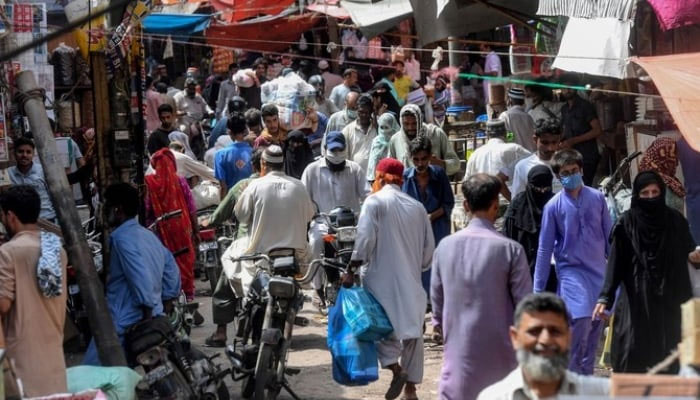
NEW YORK: A key UN report has placed Pakistan, whose current population is over 245 million, in the group of countries whose population is expected to increase through 2054 and could potentially peak in the second half of the century or later.
According to the current projects in the UN’s World Population Prospects 2024 report, Pakistan will reach its peak population in 2092 of 404.68 million people.
It said that Pakistan’s population is expected to surpass that of Indonesia in 2048 when it will reach 331.29 million. Between 1998 and 2017, Pakistan’s average population growth rate was 2.40%, the report said. For a population of over 220 million, this is a growth of about 5.28 million people per year. Pakistan has one of the highest birth rates of 22 births per 1,000 people, it was pointed out. “Very few women use any type of birth control in Pakistan, and the surging population can put too much pressure on water and sanitation systems, result in millions of unemployed people, and overwhelm health and education systems.”
Compared to the other countries in the region, the growth rate of Pakistan is about 2.1 percent higher, it said. The report predicted that in about 35 years, if this growth continues, the population of Pakistan will eventually become double of what it was back in 2001. Judging from how the population has grown significantly over just ten years, this “doubled population” figure does not seem to be far off, it said.
The current growth rate in Pakistan is close to 2%, but this is expected to halve to less than 1% by the year 2050 – at which point it is predicted to cross the 300 million threshold.
The report also said that the global population reached nearly 8.2 billion by mid-2024 and is expected to grow by another two billion over the next 60 years, peaking at around 10.3 billion in the mid-2080s. It will then fall to around 10.2 billion, which is 700 million lower than expected a decade ago. That’s just one of the key findings revealed in the report published by the UN Thursday.







-
 RAYE Achieves First-ever Milestone On The UK Album Charts
 -
 Kate Beckinsale Unleashes Fury On Mark Ruffalo After His Shocking Stance On Her Firing
 -
 How A New Blood Test Detects Active, Infectious Tuberculosis: Here’s Everything To Know
 -
 King Charles And David Beckham Bond Over Surprising Common Passion
 -
 Vanessa Trump Sparks Fans Reactions As She Rejects Rumours Of Rift With Tiger Woods
 -
 Nick Jonas Remembers Late Pal Maya Kibbel On Her Birthday: 'I Miss You'
 -
 Lisa Kudrow Reflects On Being 'forgotten Friend'
 -
 Erine Hudson Reveals His Biggest Fear Before Recording Punch Scene In 'Boston Blue'
 -
 Young People Quit UK Jobs Due To Health Issues, Study Finds
 -
 Why Are Banks Subscribing To Grok To Secure The SpaceX IPO?
 -
 Brandy Discusses Shocking Career Switch: ‘My Dream’
 -
 Prince Edward Delivers King Charles Secret Message To Andrew?
 -
 Music Legend James Gadson Receives Numerous Tributes After Death
 -
 Billy Ray, Noah Cyrus Take Fans 'on Our Way' In Heartwarming New Song
 -
 Sofia Richie Grainge's Newborn Son's Nursery Is An Inspiration: Watch
 -
 Robert Pattinson 'number One Thing' He Judges In Movies Amid 'The Drama' Release