
Pakistan’s credit-to-GDP ratio among lowest in the region
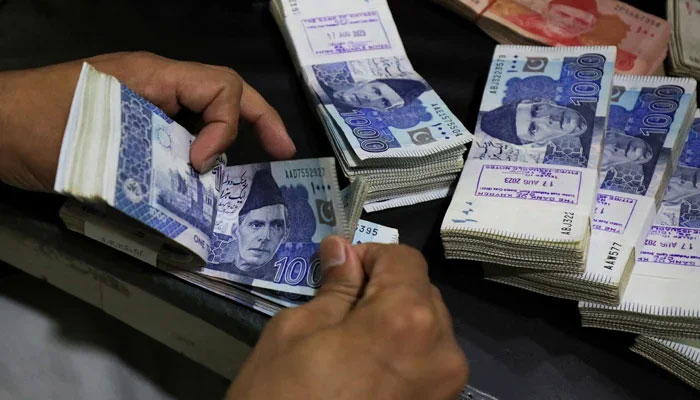
KARACHI: Pakistan’s credit-to-GDP ratio has been steadily decreasing over the decades and is one of the lowest in the region, primarily due to high interest rates, crowding out effects, energy crises, and banks’ preference to lend only to blue-chip corporates, according to the Pakistan Economic Survey 2023-24 released on Tuesday.
The economic survey stated that from 2011 to 2020, Pakistan’s credit-to-GDP ratio was 15.2 per cent. It cited Pakistan’s performance throughout several decades in comparison to a group of emerging markets and selected economies.
China came in the first place with a credit-to-GDP ratio of 149.6 per cent, followed by South Africa at 122.3 per cent and Qatar at 71.4 per cent.
The survey comes a day after the State Bank of Pakistan reduced its key interest rate by 150 basis points to 20.5 per cent, marking the first rate cut in four years.
Per the survey: Pakistan’s economy grew by 2.38 per cent in the current fiscal year as opposed to a contraction of 0.21 percent in FY23.
Compared to a five-year average increase of 3.0 per cent, the agriculture sector saw the highest growth of 6.25 per cent after 18 years. In FY24, the industrial sector expanded by 1.21 per cent, led by a 2.42 per cent increase in manufacturing.
Due to its ability to stimulate investment, employment, and the formation of new businesses, the private sector is now acknowledged as being essential to economic development.
“Over the decades, Pakistan’s credit to GDP ratio has been cautiously declining,” the survey says. “It is one of the lowest in the region, which hampered growth prospects and impacted poverty and employment generation,” it adds.
In Pakistan, the sectors that contribute most to GDP receive a greater share of credit, so the manufacturing sector accounts for the largest portion of total credit allocation, the survey adds.
Bank credit is heavily biased towards large corporations, leaving consumers and small and medium businesses underserved. This unequal distribution of credit has remained largely unchanged for decades.During July-March FY2024, within the private sector credit, private sector businesses’ credit demand increased by Rs307.8 billion compared with Rs271.1 billion during the same period last year, highlights the economic survey.


