
Political economy of education in Pakistan
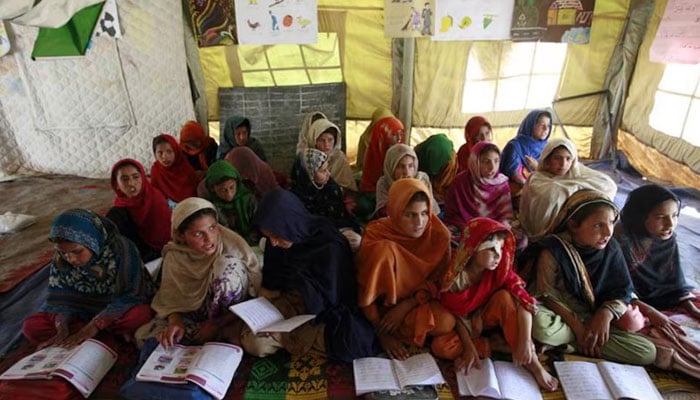
The perspective of political economy of education is a lens to examine how politics and economics impact the education system. It analyses education's ultimate goals from a political-economic standpoint. In Pakistan, the political economy of education is a complex issue involving multiple stakeholders, such as policymakers, implementers, international organisations, the private sector, and civil society.
From a political economy perspective, the education system in Pakistan can be analysed by examining the interplay between political, economic, and social factors that shape its structure, funding, and outcomes. This perspective highlights the power dynamics, resource distribution, and institutional arrangements that influence educational policies and practices.
We can observe variations in roles such as providing skills for industry consumption and promoting existing production systems in society; the education economy is central to such analysis. Institutions and policies must be vigilant regarding the demand and supply in the education market. We don't want specific disciplines to become 'over-educated' for existing jobs, both nationally and internationally. The idealisation of an equitable and just society can be seen in the societal division of labour. Amid conflicting power relations, political economy concerns itself with inequality and establishing a just system in society through the educational system.
Martin Carnoy (1985), an American labour economist and Vida Jacks Professor of Education at the Stanford Graduate School of Education, discussed few general approaches to the political economy of education, referencing French institutional functionalists such as Pierre Bourdieu and Jean-Claude Passeron (1977). Carnoy explains that the principal function of schooling is to reproduce the hierarchical relations between different groups or classes in the society and to legitimise those relations. The raison d'tre of formal education is to perpetuate existing power relations specifically, the domination of one group over others-from generation to generation without resorting to violence.
However, in the Marxian analysis, schools and educational institutions are viewed through the broader lens of the capitalist system and its inherent class relations. According to this perspective, schools do not independently create power or class hierarchies; rather, they reflect and reinforce the class structure that is defined by the mode of production in society.
The Marxian framework posits that the economic base, or the system of production, fundamentally determines the social superstructure, which includes institutions like schools. Therefore, the class relations embedded in the production process-such as who owns the means of production and who sells their labour-are mirrored in the educational system. Schools, from this viewpoint, serve to perpetuate the existing class structure by transmitting dominant ideology and preparing individuals to to fit into their roles within the capitalist economy.
Therefore, this analysis suggests that educational inequalities and hierarchies are not merely issues of educational policy but are deeply rooted in the broader capitalist system. Schools function to reproduce the labor force required by the capitalist system, instilling values, skills, and behaviors aligned with the needs of production and the interests of the ruling class.
Analyzing the Pakistani education system from political economic perspective involves examining how the system reflects and reinforces the broader class relations and economic structures inherent in the country's mode of production. Here are some key points to consider the present structure of education system in Pakistan, such as power dynamics and governance. Political interference in the policies, without special focus on the specialisation of policies, is pervasive. Like other sectors, the education system in Pakistan also faces elite capture, with powerful ruling elites siding with elite and private educational institutions, perpetuating a historical legacy.
The historical context of education in Pakistan dates back to the British colonial era, when the education system was designed to serve colonial administrative needs rather than the development of local population. This legacy has left long-lasting impact on the structure and priorities of Pakistan's education system. Successive governments have introduced multiple education policies aimed at reforming and improving the system, but these policies failed to produce the desired results.
The policy of a single national curriculum is the latest attempt to standardise education across all provinces. However, institutions are focusing on the curriculum without addressing the evaluation and examination system for assessment of students' performance. Will it enhance the standard of education, or further deteriorate it, remains a question mark. Implementing one curriculum system means dividing the content among the school systems which have uneven conditions. This may prove counter-productive. Such policies often reflect the political priorities of the ruling elites.
According to World Bank Open Data, the most recent report shows that Pakistan allocated only 1.7% of its total GDP for education in 2022-2023, which is the lowest in the region. However, according to the benchmark set by UNESCO's Education 2030 Framework for Action, countries should allocate at least 4% to 6% of GDP to education. This disparity has resulted in a low level of research, inadequate infrastructure, low levels of learning, and productivity among youth, ultimately affecting national productivity. Seeing this situation the question arises, "is education a priority in our national policy?" So far, we have not achieved universal enrollment rate, even at the primary education level. Moreover, resources allocated for higher education have recently been reduced, which will decrease in value due to inflationary adjustments.
The decentralisation and Provincial Autonomy issue also influence educational outcomes. The 18th Amendment to the Constitution of Pakistan devolved education to the provinces, aiming to bring decision-making closer to local needs. However, this has also resulted in disparities in educational quality and access, reflecting the varying capacities and priorities of provincial governments and institutional inefficiencies.
Neoliberalism in education is a major concern within the political economy of education. Neoliberalism, as a framework carried out by the capitalist system, prioritises profit generation and utilises it for rent-seeking in political processes, such as elections, pressure groups, and lobbying. This approach seeks private gains from institutions and enables regulatory powers in their interests. Consequently, the education sector operates under neoliberal governance, framing the purpose of education in terms of investments made in students' human capital development. The value of student learning is often seen solely in relation to their future earnings. Therefore, the central question for state institutions and market structures is to consider the purpose of education. If knowledge and education are viewed as commodities, they serve the interests of capitalist and market forces exclusively.
Neoliberalism's impact on the curriculum is evident when educational institutions are directed to develop content related to market and industry demands. While such programs receive funding and support from higher education or international sources, disciplines in the social sciences are often marginalised as they may not produce content directly linked with industry.
In Pakistan, this shift began prominently in higher education with lopsided policies favouring natural sciences exclusively. This has not only limited the scope for social sciences research but also detrimentally impacted intellectual development. What we observe today is a gradual decline in critical thinking, philosophical exploration, and a lack of diverse research interests and intellectual pursuits. During the developmental stages of a society, the intelligentsia plays a crucial role.
There is a stark contrast in equality and fairness within the private sector. While they may offer higher-quality education, they also exacerbate social inequalities. Wealthier families can afford superior schooling, while poorer families are left reliant on under-resourced public educational institutes. This phenomenon further reinforces power structures through educational institutions.
The international organisations' Global Education Goals highlight a disconnect in Pakistan's educational policies. While the Sustainable Development Goals (SDGs), particularly SDG 4, aim to ensure inclusive and equitable quality education and promote lifelong learning opportunities for all, there is a lack of institutional framework to support these goals. Inconsistent policies further disrupt long-term planning and implementation. Political instability affects the consistency and effectiveness of education reforms.
Moreover, the education bureaucracy in Pakistan often faces issues of capacity, coordination, and accountability. Consequently, we are losing on our strategic Interests and priorities. Education is crucial for human capital development, which is essential for economic growth and competitiveness. However, political and economic elites may prioritise short-term gains over long-term investments in education.
The political economy perspective on education in Pakistan reveals a complex landscape shaped by power relations, economic constraints, social inequalities and institutional challenges. Addressing these issues requires a holistic approach considering the interconnectedness of political, economic, and social factors. Policy reforms should aim to enhance governance, ensure equitable resource distribution, and foster an inclusive education system that can contribute to sustainable development and social cohesion in Pakistan. We observe a proliferation of higher educational institutions that may over-educate a certain class without fostering intellectual growth.





-
 Kris Jenner Crowns Khloe Kardashian 'most Amazing Mother' In Birthday Tribute
 -
 Which Countries Will Ban Grand Theft Auto VI At Launch?
 -
 Prince Harry’s ‘emotional Safe Haven’ In UK Revealed
 -
 North West Debuts Daring New Facial Piercings At Paris Fashion Week
 -
 Why Tech Firms Are Blaming AI For The Massive Surge In Device And Console Prices
 -
 Prince William’s Secret To A Successful Marriage With Kate Middleton Comes To Light
 -
 Google Gemini AI Capacity Shortage Delays Meta's AI Projects: Report
 -
 Holly Madison Reveals Why She Underwent Plastic Surgery After Pregnancies
 -
 Dean McDermott Expresses Gratitude As He Marks Three Years Of Sobriety
 -
 South Korea, Japan Deepen Defense Ties In Major Security Push
 -
 Andrew Mountbatten-Windsor’s Fears Over His Own Life And Life Span Turn Worrying: ‘You Can’t Erase This!’
 -
 Katy Perry's Long-awaited Return Ends In Disappointment
 -
 Eva Green Hospitalized After Injury On ‘Wednesday’ Set
 -
 Britney Spears' Sons Land Major Paris Fashion Week Gig
 -
 Rob Lowe Confirms 'St. Elmo’s Fire' Sequel After 41 Years
 -
 'Elle' Star Honours Late James Van Der Beek Before His Final Onscreen Role