
A viable Pakistan?
Promising so-far-undelivered has been a repeated pattern in Pakistan’s unfortunate journey
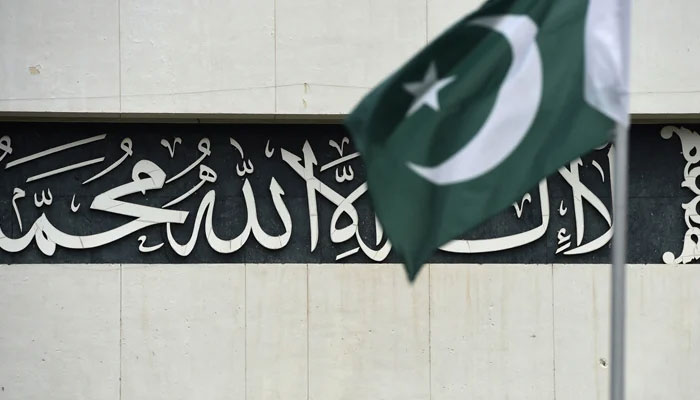
The promise of turning around Pakistan’s destiny has been boldly made under regime after regime, without much success. It was therefore hardly surprising that this sorry history repeated itself when Prime Minister Shehbaz Sharif – the latest in a long lineup of leaders – made that claim upon taking charge.
Put another way, promising the so-far-undelivered has been a repeated pattern in Pakistan’s unfortunate journey. Within this history, notably tragic for the country’s mainstream population, Pakistan’s leaders have taken their fellow citizens for granted.
For instance, in tandem with the country’s worsening healthcare systems to cite a glaring example, prominent leaders have repeatedly opted for overseas medical care for themselves and their family members. Ironically, their commitment to decisively lift Pakistan’s healthcare facilities has received little more than lip service.
The same pattern has repeated itself in the areas of education and rule of law – the two things at the heart of essential basics but only for those with mighty clout. Eventually, Pakistan has been divided among those with access to these fundamental rights as opposed to those without similar access.
In this background, the pursuit of success to make Pakistan a viable country is fundamentally tied to turning around its economy for all segments of the population. This however remains an unfulfilled dream in the absence of a set of credible choices, all at the center of Pakistan’s oft-ignored national agenda.
In recent times, the creation of a special investment facilitation council or SIFC has been repeatedly presented as the new road to lifting Pakistan’s inbound investments as never before. And yet, the success of the SIFC as the main driver of an economic recovery must be anchored upon a three-tiered reform plan.
First, beyond the push to attract overseas capital, it is equally vital to attract local stakeholders in agriculture under the SIFC theme. Unless Pakistanis themselves enter the fray to join the SIFC arena, the plan will remain detached from Pakistan’s mainstream population. On the contrary, involving different segments of Pakistani stakeholders in this vital new journey will create a fresh push with much excitement locally. In time, this excitement is bound to attract new Pakistani and foreign investors to SIFC-related projects, while lifting its recognition as a game changer for Pakistan.
Second, matters fundamental to basic individual rights must gain far more recognition than before, as central pillars in stabilizing Pakistan’s overall unity and a stronger sense of nationhood. For far too long have the double standards pursued in this area marginalized a large segment of the population.
It is hardly surprising that Pakistanis left on the periphery of receiving their basic rights have felt increasingly marginalized. Such individuals and communities spell disaster for any country once they feel expelled from the national mainstream and choose to pursue their local interests. As Pakistan pursues the target of revitalizing its economy, it is essential that ending the marginalization of individuals and communities must become a central pillar in a new journey.
Finally, it is vital to address several themes under the umbrella of rule of law. For instance, a widespread incidence of tax evasion has caused irreparable harm to not only Pakistan’s economic interests. It has also aided lawlessness in ways seldom seen before. A failure to address this challenge over time has weakened Pakistan’s economic framework in ways such as the overall tax collection lagging repeatedly behind the country’s growing needs.
Meanwhile, Pakistan’s prospects for becoming an increasing destination for world-class investors remain weak for now. Today, prospective domestic and foreign investors remain wary of taking up stakes in Pakistan-based projects. Reversing that mood requires two equally vital initiatives for the future.
On the one hand, a re-assertion of Pakistan’s rule of law must begin with the application of law across the board, without fear or favour. For too long have the ruling elite bent rules and laws to support their interests, while their opponents have suffered. A change in this area will require reforms targeting enforcers such as the police and the large network of lower courts nationwide. And a convincing change must equally target Pakistan’s high-end decision-makers such as members of parliament, the cabinet, key members of political parties and senior members of key national institutions.
On the other hand, a series of reforms must be carried out forcefully with the introduction of tough new affirmative action policies. Briefly, users of government-run educational institutions that function with subsidized rates of imparting education must benefit from the same quality of education as their compatriots in Pakistan’s high-end educational institutions, notably privately run world-class institutions. Ultimately, such initiatives will narrow the divide between the well-endowed versus the poverty-stricken Pakistanis and help to make the country more viable with a promising future.
The writer is an Islamabad-based journalist who writes on political and economic affairs. He can be reached at: farhanbokhari@gmail.com







-
 Suri Cruise Legally Ditches Famous Surname
 -
 Meta Accused Of Disregarding Teen Harm Research In Landmark Child Safety Trial
 -
 Prince George Deeply Bonds With Royals ‘who Want Nothing From Him’
 -
 Sarah Drew Recalls Ed Harris's Emotional Support On 'Radio' Set
 -
 'Love Island' Crowns Winners After Final Twist
 -
 Alan Ritchson Addresses His Ugly Encounter With Neighbour In Front Of His Children
 -
 Eric Roberts Shares Message After Missing Daughter Emma's Big Day
 -
 US Consulate In Toronto Targeted In Shooting For Second Time This Year
 -
 Sarah Ferguson Left Wealth Of £600M As Ex-boyfriend ‘always Took Care Of Her’
 -
 Usher Fan Defends Herself After Awkward Onstage Moment Goes Viral
 -
 Justin Baldoni's Company Loses Suit Against New York Times, Hit With Huge Bill
 -
 Camila Mendes Breaks Silence On Eating Disorder And Panic Attacks
 -
 Paris Knife Attack: Man Arrested After Three Women Stabbed Near Porte De Clichy
 -
 Oliver Tree’s Mother Recalls Their Final Conversation In Emotional Tribute
 -
 Robert Downey Jr. Surprised ‘Doomsday’ Directors With ‘Doctor Doom’ Voice
 -
 Dolly Parton's Family Suffers Another Loss