
Haji Malang Dargah ‘on radar of Hindutva extremists’ after Ram Mandir’s opening
To learn more about the controversy, Cherylann Mollan of the BBC paid a visit to the shrine
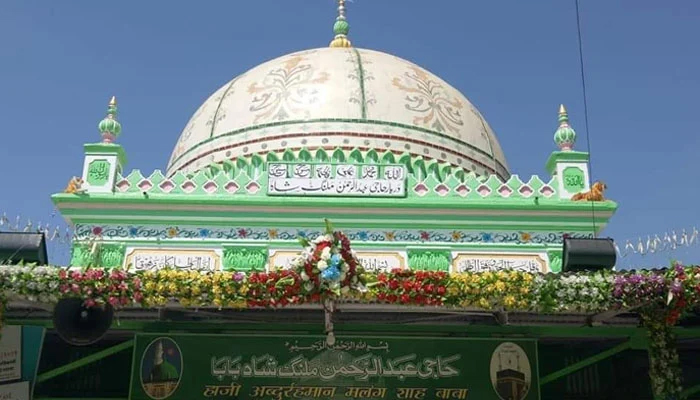
NEW DELHI: A prominent Indian political figure declared that he wished to “liberate” Haji Malang Dargah, a Sufi shrine that is visited by Indians of all religions, just for Hindus.
To learn more about the controversy, Cherylann Mollan of the BBC paid a visit to the shrine.
Reaching the coveted Sufi saint’s tomb, which is now a site of disputed history, tradition, and faith, requires climbing approximately 1,500 stairs carved out of rock. It is not an easy undertaking.
Situated atop a hill near Mumbai in the western state of Maharashtra, the Haji Malang Dargah (shrine) is believed to contain the burial of an Arab missionary who arrived in India over 700 years ago.
Despite being at the core of a theological conflict, the dargah, like many other Sufi shrines across India, is seen as a symbol of absorption and tolerance.
At the saint’s tomb when the BBC journalist visited, flowers and a chadar—a piece of fabric donated as a sign of respect in Sufi traditions—were being offered by Muslims and Hindus alike. It is believed that requests made with a “pure heart” will always come true.
This spirit of polite coexistence is reflected in the administrative board of the shrine, whose hereditary custodians are from a Hindu Brahmin family, although two of its trustees are Muslims.
However, at a political gathering earlier this month, Maharashtra Chief Minister Eknath Shinde sparked controversy by bringing up a long-forgotten assertion. He stated his intention to “liberating” the building, which is usually regarded as a dargah, and claimed that it is a Hindu temple. In response to the BBC’s request for comment, Shinde remained silent.







-
 Blake Lively, Justin Baldoni's Legal Case Receives Latest Update
 -
 Kylie Jenner Says Goodbye To Her Halloween Era: 'I've Retired It'
 -
 Mel B Reveals Why Spice Girls Documentary May Never Happen
 -
 Maggie Gyllenhaal Recalls Emotional Impact Of Seeing Husband With Other Woman
 -
 Scarlett Johansson Shares Wild First Concert Story
 -
 Inside King Charles, Queen Camilla's First US State Visit
 -
 Tiger Woods' Situation Deemed 'too Far Down The Line' After DUI Crash
 -
 List Of Blake Lively’s Dismissed And Allowed Claims Against Justin Baldoni
 -
 Dolly Parton's Rare Approach To Battle Grief Following Tragic Loss Of Late Husband Laid Bare
 -
 How Queen Elizabeth's Silence Impacted Diana And Meghan
 -
 Olivia Munn Raves About Her 'Your Friends & Neighbors' Costar James Marsden
 -
 Khloe Kardashian Gets Candid About Weight Loss Struggles
 -
 Jon Hamm Weighs In On ‘dark’ Modern Dating Culture: 'I Was Never Really Good At Dating Anyway'
 -
 Miley Cyrus Receives Heartfelt Praise From 'Love On The Spectrum's Logan Pereira
 -
 DeepSeek V4 Model Bets On Huawei Chips As Demand Surges
 -
 Ty Herndon Talks 'building A Future' With Partner Amid Memoir Release